


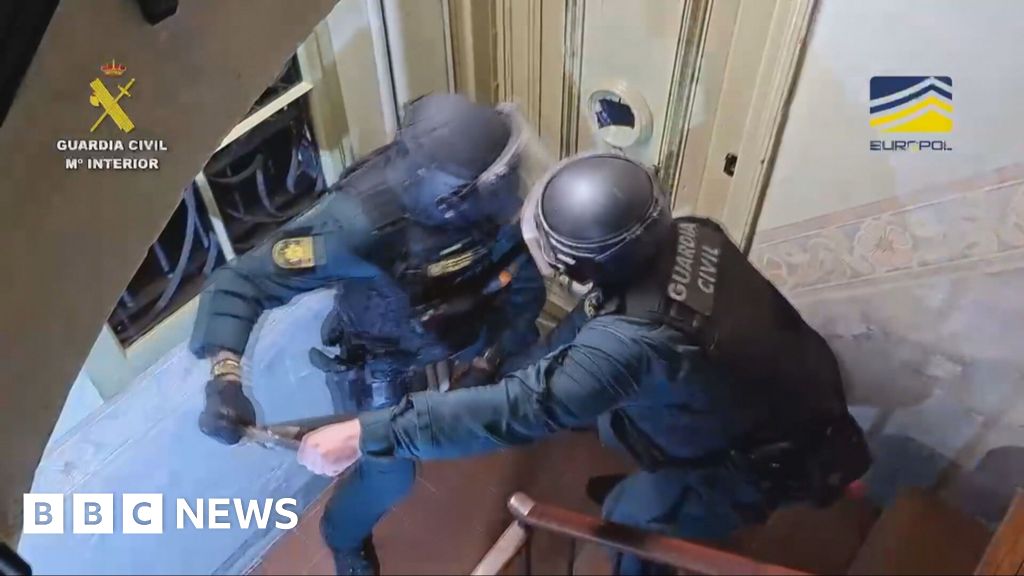

Global Crime Crackdown: Spanish Police Uncover Disturbing Images in Costa del Sol Raid
A Chilling Discovery on the Sunny Shores of Spain
Under the golden skies of Spain’s Costa del Sol, a dark underworld has been exposed. Spanish police, in a targeted operation against the notorious Lyons crime group, uncovered a trove of disturbing images—raising urgent questions about the reach and brutality of organized crime in Europe. The raid, part of a broader crackdown on international syndicates, underscores the escalating battle between law enforcement and criminal networks thriving in tourist havens. As authorities analyze the evidence, the case reverberates beyond Spain, highlighting the global struggle against transnational crime.
The Raid: A Blow to the Lyons Crime Network
Acting on intelligence, Spanish police launched a coordinated strike against alleged members of the Lyons crime group—a syndicate with suspected ties to drug trafficking, money laundering, and violent extortion. The operation, which unfolded in the upscale coastal towns of Marbella and Estepona, yielded not only arrests but also a cache of unsettling photographs. While authorities have not disclosed the full content, sources suggest the images may depict criminal activities, posing serious legal and ethical concerns.
The Costa del Sol, long a playground for Europe’s elite, has also become a hotspot for organized crime. The region’s luxury villas and bustling nightlife provide ideal cover for illicit operations, drawing gangs from across the continent. The Lyons group, believed to have international connections, exemplifies how criminal enterprises exploit globalized financial systems and weak jurisdictional boundaries.
Global Context: The Rising Tide of Transnational Crime
This raid is not an isolated incident. From Italy’s ‘Ndrangheta to Mexico’s Sinaloa Cartel, criminal networks are expanding their influence, leveraging technology and corruption to evade detection. Europol estimates that organized crime generates over €100 billion annually in the EU alone, with drug trafficking accounting for nearly half. The Lyons case fits a broader pattern—crime syndicates using tourist-friendly regions as logistical hubs.
Spain, with its porous borders and high cashflow economy, has long been a strategic base for gangs. The country’s proximity to North Africa makes it a key transit point for drug smuggling, while its real estate market offers ample money-laundering opportunities. The European Union has ramped up cross-border policing efforts, but the challenge remains immense.
Why This Matters: Security Implications Worldwide
The implications of this raid extend far beyond Spain. Organized crime fuels instability, corrupts institutions, and undermines economic growth. The discovery of these images—potentially linked to violence or exploitation—serves as a grim reminder of the human cost behind the illicit trade.
For policymakers, the case reinforces the need for stronger international cooperation. Criminal networks operate without borders, yet law enforcement often remains constrained by jurisdictional limits. Interpol and Europol have made strides in intelligence-sharing, but gaps persist. Meanwhile, the rise of encrypted communications and cryptocurrency has given gangs new tools to evade capture.
For the public, the raid is a wake-up call. The glamorous façade of destinations like the Costa del Sol can mask a dangerous reality. Tourists and expats, often unaware of the criminal undercurrents, may inadvertently become entangled in money laundering or fraud schemes.
The Road Ahead: Can Authorities Turn the Tide?
Spanish police have vowed to dismantle the Lyons network completely, but the fight is far from over. Past operations have shown that arresting mid-level operatives rarely cripples these organizations—leadership simply relocates or rebrands. Experts argue that only sustained financial investigations, coupled with international asset seizures, can deliver lasting damage.
Governments are also under pressure to address root causes: inequality, weak governance, and lax regulations that enable criminal enterprises to flourish. Spain has introduced tougher anti-money laundering laws, but enforcement remains inconsistent.
Conclusion: A Global Fight Against Shadows
The images seized in this raid are more than evidence—they are a snapshot of a hidden war. As criminal networks grow bolder, the response must be equally relentless. Spain’s crackdown is a critical step, but true victory will require unprecedented global collaboration. From the sun-drenched villas of Marbella to the boardrooms of Brussels, the battle against organized crime is one the world cannot afford to lose. The stakes—security, justice, and the rule of law—are simply too high.
