



Tuapse Refinery Attack Escalates Tensions Between Russia and Ukraine
Dramatic Blaze Ignites Fears of Wider Conflict
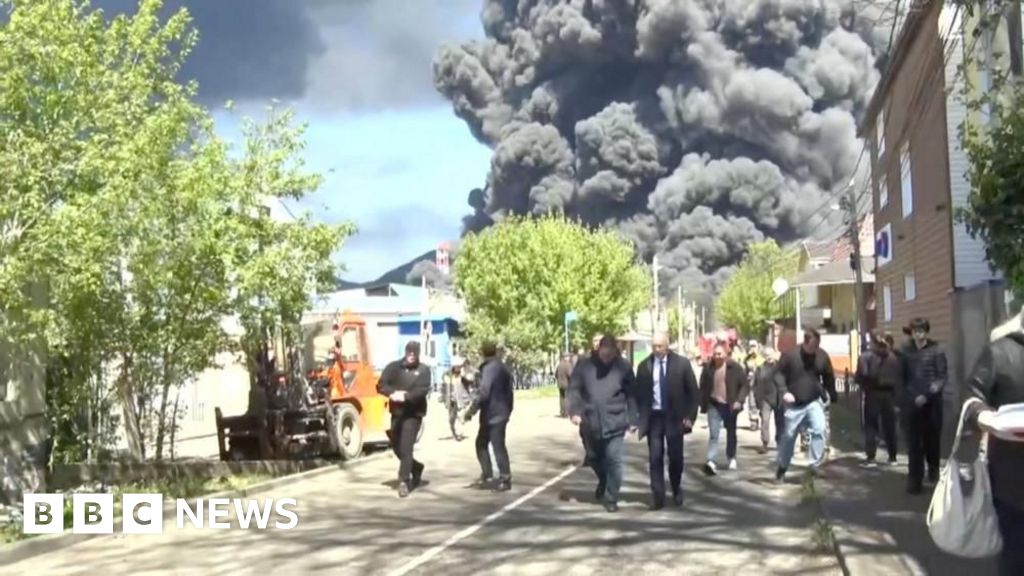
A massive fire erupted at an oil refinery in Tuapse, southern Russia, late Tuesday night, sending thick plumes of smoke into the sky and forcing nearby residents to evacuate. Russian officials swiftly blamed Ukrainian drone strikes for the attack, accusing Kyiv of deliberately targeting critical energy infrastructure to destabilize global markets. The incident marks the latest escalation in a shadow war between the two nations, raising concerns over energy security and the potential for further retaliation.
The Attack: What Happened?
Local authorities reported multiple explosions at the Tuapse refinery, a key facility operated by Rosneft, Russia’s state-owned oil giant. Emergency services struggled for hours to contain the blaze, which disrupted operations and triggered safety warnings for surrounding neighborhoods. While Ukrainian officials have not officially claimed responsibility, sources within Kyiv’s security apparatus have hinted at a broader strategy to cripple Russia’s war economy by striking fuel production sites.
This is not an isolated incident. Over the past year, Ukraine has increasingly targeted Russian energy infrastructure, including refineries, storage depots, and pipelines, in an effort to reduce Moscow’s ability to fund its military operations. The Tuapse attack follows similar strikes in recent weeks, including a major fire at a refinery in Ryazan, deep inside Russian territory.
Kremlin’s Response: Accusations and Warnings
The Kremlin condemned the attack as an act of “economic terrorism,” warning that such strikes could trigger severe consequences. Russian Foreign Ministry spokesperson Maria Zakharova accused Western nations of enabling Ukraine’s campaign, stating, “These attacks are not just against Russia—they are an assault on global energy stability.”
Moscow has long argued that Ukraine’s targeting of refineries disrupts oil exports, which could lead to price volatility in international markets. Russia remains one of the world’s top oil producers, and any sustained damage to its refining capacity could have ripple effects on fuel supplies worldwide.
Global Energy Markets on Edge
The attack comes at a precarious time for global energy security. Oil prices have already been fluctuating due to geopolitical tensions in the Middle East, OPEC+ production cuts, and rising demand. Analysts warn that if Ukraine continues its refinery strikes—and if Russia retaliates by restricting exports—markets could face further instability.
“Even a small disruption in Russian refining can tighten global fuel supplies,” said energy analyst Mark Williams. “If these attacks persist, we could see higher gasoline and diesel prices, particularly in Europe and Asia, which rely heavily on Russian exports.”
The situation is further complicated by Western sanctions on Russian oil, which have forced Moscow to seek alternative buyers in China, India, and other non-aligned nations. Any major supply shock could force these countries to compete more aggressively for available barrels, driving prices upward.
Broader Security Implications
Beyond energy markets, the Tuapse attack underscores the growing risk of escalation in the Russia-Ukraine conflict. While Kyiv’s strategy aims to degrade Moscow’s military logistics, Russia has repeatedly warned that such strikes cross a red line. Some security experts fear that if Ukraine inflicts enough economic damage, the Kremlin may resort to harsher retaliatory measures—including expanded missile strikes on Ukrainian cities or even direct confrontation with NATO.
“The longer this shadow war continues, the greater the chance of unintended consequences,” said defense analyst Natalia Kovalchuk. “Both sides are testing limits, and miscalculations could spiral into a wider confrontation.”
Why This Matters Beyond the Battlefield
The conflict is no longer confined to frontlines in eastern Ukraine. By targeting energy infrastructure, Ukraine is waging an economic war with global repercussions. For ordinary consumers, this could mean higher fuel costs. For governments, it raises difficult questions about energy diversification and security. And for the broader international community, it signals that the war is entering a more unpredictable phase—one where economic disruption could become as potent as military action.
Conclusion: A Dangerous New Front in the War
The Tuapse refinery attack is more than just another strike in a long-running conflict—it is a stark reminder of how deeply interconnected global security and energy markets are. As Ukraine seeks to weaken Russia’s war machine and Moscow vows retaliation, the world watches nervously, aware that the next escalation could send shockwaves far beyond the Black Sea. In an era where energy is both a weapon and a vulnerability, the stakes have never been higher.
