


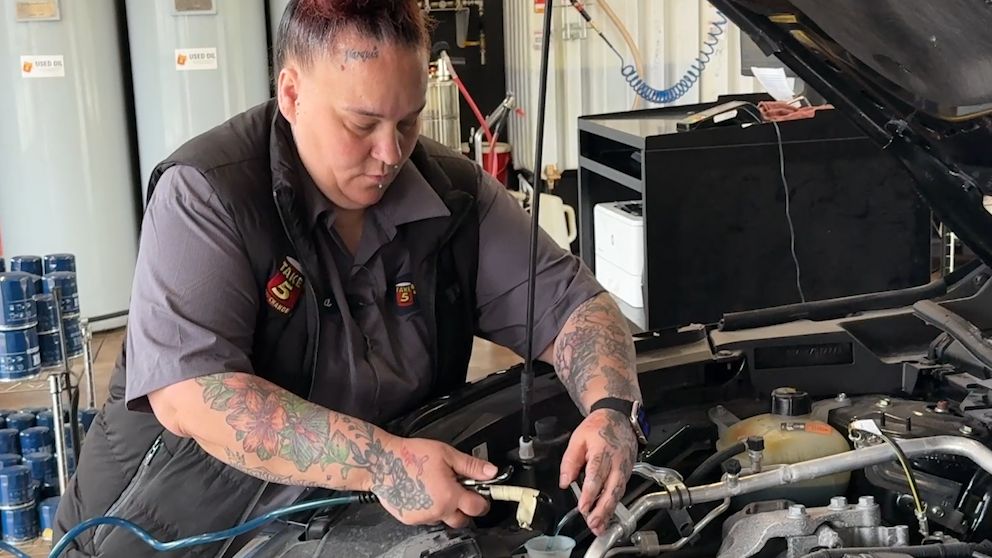

Women in Auto Industry: Breaking Barriers and Shifting Gears
Columbus, Ohio — While women account for nearly half of the U.S. workforce, their representation in the auto repair industry remains strikingly low. According to the U.S. Bureau of Labor Statistics, fewer than 11% of auto technicians are women—a gap that advocates say needs urgent attention.
But change is slowly accelerating. Across the country, more women are stepping into garages and repair shops, challenging stereotypes and proving their place in a field long dominated by men.
A Mechanic’s Journey
At Take 5, an auto service center in Columbus, shop manager Melissa McKnight is a rare sight in more ways than one. With over two decades in the industry, she’s spent much of her career as the only woman in the room.
“I’ve always loved working with cars,” McKnight said. “It’s about helping people get back on the road safely.”
A mother of 11, she’s passed her passion for mechanics to her children—four of whom now work in the field. Her daughters often shadow her, learning the ropes in an environment where women remain a minority.
“Men sometimes assume we can’t do the job,” McKnight said. “But we can—and we do.”
The Gender Gap in Auto Repair
The numbers tell a clear story. Despite women making up 47% of the overall U.S. workforce, their presence in auto repair hovers below 11%. Experts say outdated perceptions and lack of representation deter many from pursuing careers in the industry.
“There’s hesitation—women wonder if they’ll be welcomed or if they can succeed,” said Amy Hine, Vice President of Operations Excellence at Take 5. “The answer is absolutely yes.”
Hine, who climbed the ranks from pit technician to executive, emphasizes mentorship and visibility. The company actively promotes women into leadership roles, hoping to inspire the next generation.
“We want women to see leaders like me and know this is a career where they can thrive,” Hine said.
A Road Ahead for Change
The auto industry is facing a technician shortage, with more than 70,000 job openings projected annually through 2034. Advocates say this presents a prime opportunity to recruit and train more women.
For McKnight, the key is persistence. “You can do anything if you put your mind to it,” she said. “I want young women to know this is a career where they belong.”
While progress won’t happen overnight, stories like McKnight’s are shifting perceptions—one repair at a time.
— Reported by Nexio News
