


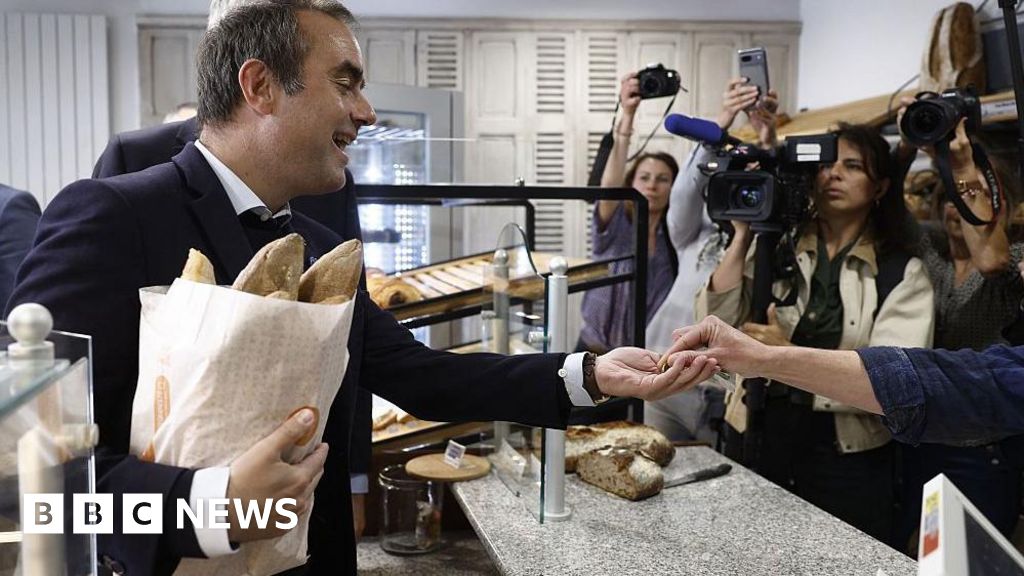

French Minister’s Labour Day Bakery Visit Sparks Controversy Amid Global Labour Rights Debate
The streets of Paris were eerily quiet on Labour Day, a day traditionally reserved for rest and solidarity among workers. Yet, amidst the silence, French Minister of the Armed Forces Sébastien Lecornu stood at the counter of a bustling boulangerie, purchasing bread in a symbolic act that has ignited a firestorm of criticism from unions and labour activists. The visit, seen by many as a direct challenge to France’s commitment to workers’ rights, comes at a time when labour protections are under scrutiny worldwide.
A Controversial Act on a Symbolic Day
Labour Day, celebrated globally on May 1, commemorates the struggles and achievements of the labour movement. In France, it is a mandatory day off, enshrined in law to honour workers’ rights and ensure rest for all. For unions, the day is sacrosanct—a time to reflect on hard-won victories and advocate for further protections. Lecornu’s decision to visit an open bakery on this day has been interpreted as a provocative gesture, particularly given the government’s recent clashes with labour groups over pension reforms and working conditions.
The bakery in question, like a handful of others in Paris, chose to remain open on Labour Day—a move condemned by union leaders who argue that such practices undermine the spirit of the holiday. “May 1 is a day for workers, not for commerce,” said Philippe Martinez, head of the CGT union, in a statement. “This sends a dangerous message that profit outweighs people.”
Global Context: Labour Rights in Flux
The controversy in France echoes broader tensions in the global labour landscape. From the United States to India, workers are grappling with precarious employment, stagnant wages, and the erosion of protective laws. The rise of gig economies and automation has further exacerbated these challenges, leaving many feeling vulnerable and undervalued. In this context, Labour Day has taken on renewed significance as a rallying point for advocacy and resistance.
In Europe, the debate over labour rights is particularly acute. France, often seen as a bastion of worker protections, has recently witnessed heated protests over President Emmanuel Macron’s pension reforms, which raised the retirement age from 62 to 64. Critics argue that such measures reflect a broader trend of governments prioritising economic efficiency over social welfare. Lecornu’s bakery visit, though seemingly innocuous, has been framed as emblematic of this shift.
Why It Matters: The Stakes for Workers Worldwide
The fallout from Lecornu’s actions extends far beyond France. At a time when labour rights are increasingly under threat, symbols matter. By flouting the spirit of Labour Day, critics argue, the French government risks normalising practices that undermine workers’ well-being. This is particularly concerning in a globalised economy where multinational corporations often exploit lax labour laws in developing countries to maximise profits.
Moreover, the incident highlights the growing disconnect between political leaders and the working class. In an era marked by rising inequality and social unrest, governments must tread carefully to avoid alienating the very citizens they are meant to serve. Lecornu’s visit, though perhaps intended as a gesture of normalcy, has instead reinforced perceptions of insensitivity and detachment from the struggles of ordinary workers.
The Human Element: Voices from the Ground
For the bakery’s employees, Labour Day was just another workday. “I don’t have a choice,” said one worker, who asked to remain anonymous. “If the bakery is open, I have to be here. But it’s hard to see everyone else enjoying the holiday while we’re stuck inside.”
Her sentiments reflect a broader reality for millions of workers worldwide who are compelled to work on public holidays, often without adequate compensation. For them, Labour Day is not a celebration but a reminder of the inequalities that persist in the global workforce.
Looking Ahead: A Call for Solidarity
As the dust settles on this controversy, one thing is clear: the fight for labour rights is far from over. In France and beyond, workers are demanding greater protections, fair wages, and dignity in the workplace. Governments and corporations alike must heed these calls, recognising that a thriving economy cannot be built on the backs of exploited workers.
The symbolism of Labour Day serves as a powerful reminder of what can be achieved when workers unite for their rights. As the world continues to grapple with economic uncertainty and social upheaval, the lessons of solidarity and resilience embodied by the labour movement are more relevant than ever.
A Strong Closing: A Day to Reflect, Not Divide
Sébastien Lecornu’s bakery visit may have been intended as a gesture of normalcy, but it has instead sparked a heated debate about the values we hold dear. Labour Day is not merely a day off; it is a testament to the progress we have made—and the work that remains to be done. As the world watches France navigate this controversy, the hope is that it will serve as a catalyst for renewed commitment to the rights and dignity of workers everywhere. In a world increasingly defined by division, Labour Day reminds us of the power of unity and the enduring struggle for justice.
