



Nvidia CEO Jensen Huang Embraces Local Flavor with Beijing’s Iconic Fried Bean Sauce Noodles
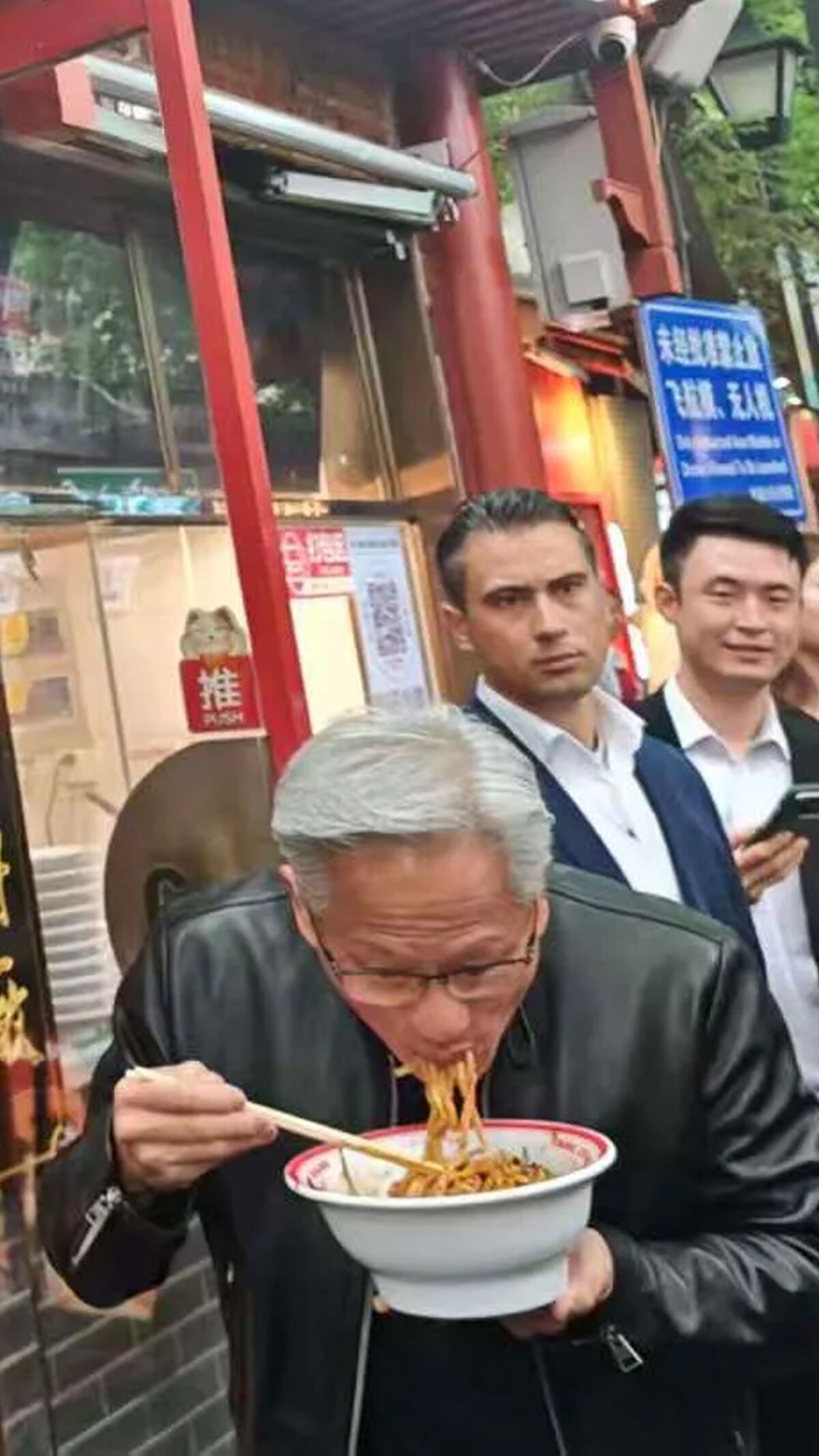
BEIJING, China — In a moment that captured both the simplicity and cultural richness of Beijing, Nvidia CEO Jensen Huang was photographed enjoying a bowl of the city’s famous fried bean sauce noodles during his visit to the Chinese capital. The sight of the tech billionaire casually dining on the street corner, surrounded by the bustling energy of Beijing’s everyday life, quickly became a talking point for locals and global observers alike. Huang’s unpretentious embrace of the local staple underscored his visit to China, coinciding with former U.S. President Donald Trump’s state visit, and highlighted the intersection of global business, culture, and diplomacy.
Huang, whose company Nvidia has become a powerhouse in the global semiconductor and artificial intelligence industries, has long been a prominent figure in the tech world. His appearance in Beijing, however, showcased a different side of the CEO—one that resonated deeply with the Chinese public. The image of Huang savoring Zhajiangmian, a beloved Beijing dish, served as a subtle yet powerful gesture of cultural appreciation and connection.
A Culinary Icon Meets a Tech Titan
Zhajiangmian, often referred to as Beijing’s “signature noodles,” is a humble yet iconic dish that has been a staple of the city’s culinary landscape for generations. Made with hand-pulled noodles topped with a savory fermented soybean paste and garnished with diced vegetables, the dish is a favorite among locals and a must-try for visitors seeking an authentic taste of Beijing. Its affordability and accessibility have made it a symbol of everyday life in the capital.
Huang’s decision to enjoy the dish on the sidewalk, rather than in a high-end restaurant, was seen as a nod to the dish’s cultural significance. Observers noted that his casual demeanor and willingness to immerse himself in the local scene stood in stark contrast to the often formal and scripted nature of high-profile business and diplomatic visits.
The moment was documented by photographers and quickly circulated on social media, where it garnered widespread attention. Comments ranged from admiration for Huang’s down-to-earth approach to lighthearted jokes about the universal love for noodles. The image also sparked discussions about the role of cultural diplomacy in fostering international business relationships.
A Broader Context: China’s Tech Landscape and Global Tensions
Huang’s visit to Beijing comes at a critical juncture for both Nvidia and the global tech industry. As geopolitical tensions between the United States and China continue to escalate, particularly in areas like semiconductor technology and artificial intelligence, companies like Nvidia find themselves navigating a complex and increasingly fragmented landscape.
Nvidia, a leader in GPU (graphics processing unit) technology, has long been a key player in China’s tech ecosystem. The company’s products are integral to a wide range of applications, from gaming to AI research, and its collaboration with Chinese firms has been a cornerstone of its global strategy. However, recent U.S. export restrictions on advanced semiconductor chips have posed significant challenges for Nvidia’s operations in China, prompting the company to adapt its approach.
Against this backdrop, Huang’s visit to Beijing takes on added significance. While his decision to indulge in Zhajiangmian may seem like a simple act, it reflects a deeper understanding of the importance of cultural engagement in maintaining business relationships. For Chinese observers, Huang’s embrace of local culture serves as a reminder of the mutual benefits of collaboration between Chinese and international tech firms.
Cultural Diplomacy in the Global Tech Sphere
Huang’s Beijing noodle moment is emblematic of a broader trend in the tech industry, where cultural diplomacy is increasingly seen as a valuable tool for navigating geopolitical complexities. In an era marked by heightened nationalism and protectionism, gestures that bridge cultural divides can help foster goodwill and mitigate tensions.
For Nvidia, which has faced scrutiny over its compliance with U.S. export controls, such gestures are particularly important. By demonstrating an appreciation for Chinese culture, Huang sends a message that Nvidia remains committed to its partnerships in the region, even as it adapts to evolving regulatory challenges.
This approach is not unique to Nvidia. Other tech leaders, including Apple CEO Tim Cook and Tesla CEO Elon Musk, have also used cultural gestures to strengthen ties with China. Cook, for instance, has frequently spoken about his admiration for Chinese culture and has been photographed visiting local markets and engaging with Chinese consumers. Musk, meanwhile, has cultivated a strong personal brand in China, often sharing his enthusiasm for Chinese cuisine and traditions.
A Moment That Resonates
The significance of Huang’s noodle outing extends beyond its immediate cultural appeal. It underscores the importance of authenticity and relatability in leadership, qualities that resonate deeply in an increasingly interconnected world. In a time when global tensions often dominate headlines, moments of genuine human connection serve as a reminder of the shared experiences that bind us together.
For the Chinese public, Huang’s choice to enjoy Zhajiangmian on the street corner was more than just a gesture—it was a statement of respect for local traditions and a celebration of the everyday moments that define life in Beijing. In a world where technology often feels distant and impersonal, such moments offer a refreshing glimpse of humanity.
Conclusion: A Balanced Perspective
As the global tech industry continues to grapple with geopolitical challenges, figures like Jensen Huang serve as a reminder of the importance of cultural engagement in fostering collaboration and understanding. His Beijing noodle moment, while seemingly simple, offers profound insights into the power of cultural diplomacy and the enduring appeal of shared human experiences.
In the end, whether enjoying a bowl of Zhajiangmian on a busy sidewalk or navigating the complexities of global tech policy, Huang’s actions reflect a nuanced understanding of the world—a perspective that values both innovation and tradition, ambition and empathy. As the tech industry charts its course in an uncertain future, such moments of connection may prove to be more important than ever.
