



Asteroid 2026 JH2 Set for Close Flyby of Earth: A Cosmic Event Worth Watching
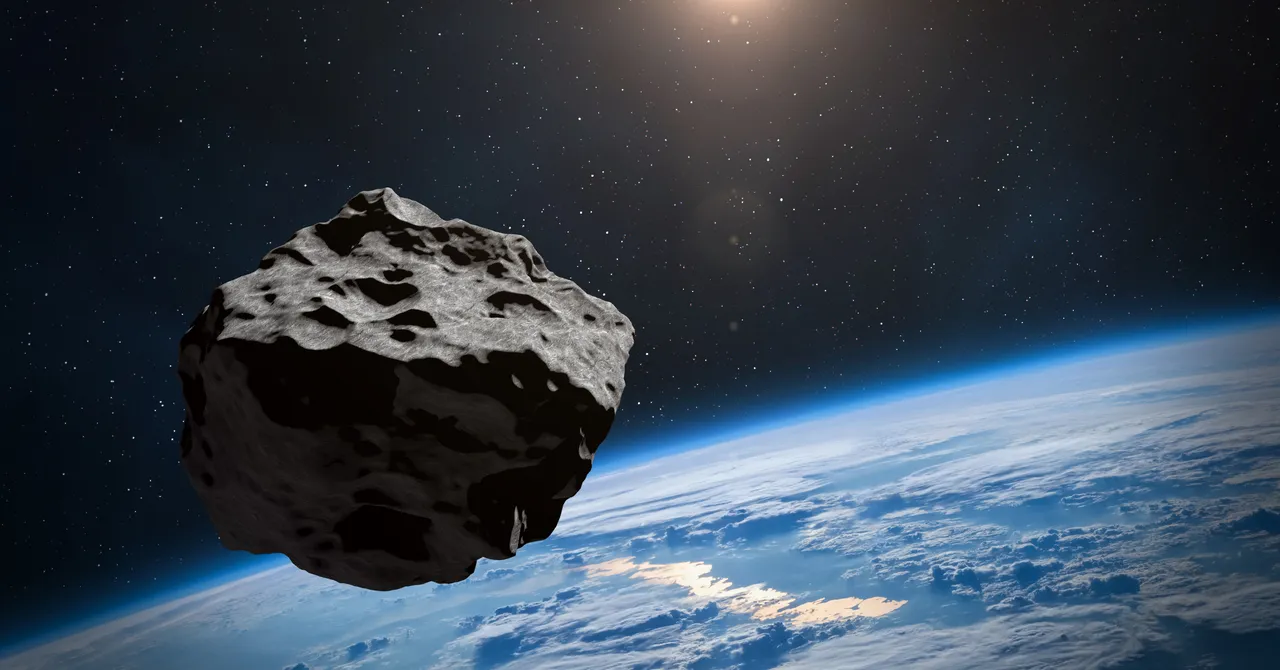
On May 18, 2026, Earth will witness a celestial spectacle as Asteroid 2026 JH2, a space rock approximately 20 meters (66 feet) in diameter, makes a remarkably close pass by our planet. Comparable in size to Chicago’s iconic Cloud Gate sculpture, this Apollo-type Near-Earth Object (NEO) will zip past at a distance of about 57,000 miles—closer than the moon, which orbits Earth at an average distance of 238,900 miles. While the asteroid poses no threat to Earth, its proximity offers a rare opportunity for astronomers, space enthusiasts, and the public to observe a cosmic event that underscores the dynamic nature of our solar system.
The Virtual Telescope Project, a global initiative that provides real-time astronomical observations, will host a live broadcast of the event, allowing viewers worldwide to witness the asteroid’s journey. For those equipped with telescopes, the occasion presents a chance to glimpse a visitor from the depths of space as it traverses the void near our home planet.
Understanding Asteroid 2026 JH2
Asteroid 2026 JH2 belongs to the Apollo group of NEOs, a classification defined by their orbital characteristics. Apollo-type asteroids have semi-major axes larger than Earth’s, meaning their average distance from the sun exceeds one astronomical unit (AU, the Earth-sun distance). However, their perihelion—the closest point to the sun in their orbit—is less than 1.017 AU. This combination places them on trajectories that can bring them close to Earth’s orbit, making them a subject of keen interest for planetary defense and scientific study.
Discovered through ongoing efforts by NASA’s Center for Near-Earth Object Studies (CNEOS) and other international observatories, Asteroid 2026 JH2 is one of tens of thousands of NEOs tracked by scientists. While many of these objects pass Earth regularly, few come as close as this asteroid will in 2026. Its near-miss, however, is not unprecedented. In recent years, smaller asteroids have ventured even closer—sometimes skimming just hundreds of miles above Earth’s surface. For instance, Asteroid 2025 TF passed a mere 260 miles from Earth, highlighting the frequency of such encounters in the grand scheme of cosmic activity.
A Close Encounter Without Alarm
Despite the asteroid’s close proximity, experts emphasize that there is no cause for concern. According to NASA and other space agencies, Asteroid 2026 JH2 has been meticulously tracked and poses no risk of impacting Earth. While sensational headlines often describe such events as “grazing” or “near-misses,” the scientific community maintains a balanced perspective. Such flybys, while fascinating, are a routine part of Earth’s interaction with its cosmic neighborhood.
Dr. Sarah Thompson, an astronomer at the University of Cambridge, explains, “Asteroids like 2026 JH2 serve as reminders of the dynamic nature of our solar system. While they offer valuable opportunities for scientific study, the likelihood of a catastrophic impact remains extremely low, thanks to advanced detection and monitoring systems.”
Indeed, the scientific understanding of NEOs has improved significantly in recent decades. Programs like NASA’s Planetary Defense Coordination Office and initiatives such as the European Space Agency’s Hera mission are dedicated to identifying, tracking, and mitigating potential threats from space. These efforts ensure that even if an asteroid were on a collision course with Earth, humanity would have ample time to prepare and respond.
A Global Opportunity for Engagement
The upcoming flyby of Asteroid 2026 JH2 is more than just a scientific curiosity—it’s a chance for the public to engage with astronomy on a personal level. The Virtual Telescope Project’s live broadcast will provide real-time footage of the asteroid as it approaches its closest point to Earth, complete with expert commentary and insights into its significance.
For amateur astronomers, the event is an excellent opportunity to test their equipment and skills. Observing fast-moving objects like Asteroid 2026 JH2 can be challenging, but the thrill of capturing such a fleeting moment in space is unparalleled. Even for those without access to telescopes, the live broadcast promises to be an educational and awe-inspiring experience, bridging the gap between scientific research and public understanding.
A Broader Context
Asteroid flybys like this one highlight the importance of continued investment in planetary defense and space exploration. While Asteroid 2026 JH2 is harmless, its journey serves as a reminder of the need for vigilance. Larger asteroids, though rare, have the potential to cause significant damage if they collide with Earth.
Efforts to mitigate such risks are already underway. NASA’s Double Asteroid Redirection Test (DART) mission, for example, recently demonstrated the feasibility of altering an asteroid’s trajectory through kinetic impact. Such technologies, combined with enhanced detection capabilities, are critical components of a robust planetary defense strategy.
Moreover, the study of NEOs provides valuable insights into the formation and evolution of our solar system. By analyzing their composition, orbits, and behavior, scientists can piece together the story of how planets, moons, and other celestial bodies came to be.
A Cosmic Reminder
As Asteroid 2026 JH2 whizzes past Earth in May 2026, it will serve as a vivid reminder of humanity’s place in the vast expanse of space. While the event poses no danger, it underscores the importance of ongoing efforts to understand and protect our planet from potential cosmic threats.
For astronomers, it’s an opportunity to gather data and refine their understanding of NEOs. For the public, it’s a chance to marvel at the wonders of the universe and reflect on the fragility of our planet in the face of cosmic forces.
In the end, Asteroid 2026 JH2’s close encounter with Earth is both a scientific highlight and a moment of shared awe—an invitation to look up and appreciate the dynamic, ever-changing nature of our celestial neighborhood. As Dr. Thompson aptly puts it, “Every passing asteroid is a reminder that we are part of something much larger than ourselves. It’s a humbling and inspiring realization.”
