



Foreign Investors Flee Indian Equities Amid AI-Driven Shift Towards Asian Tech Markets
Global funds pivot towards cheaper AI-focused opportunities, raising concerns for India’s booming stock market.
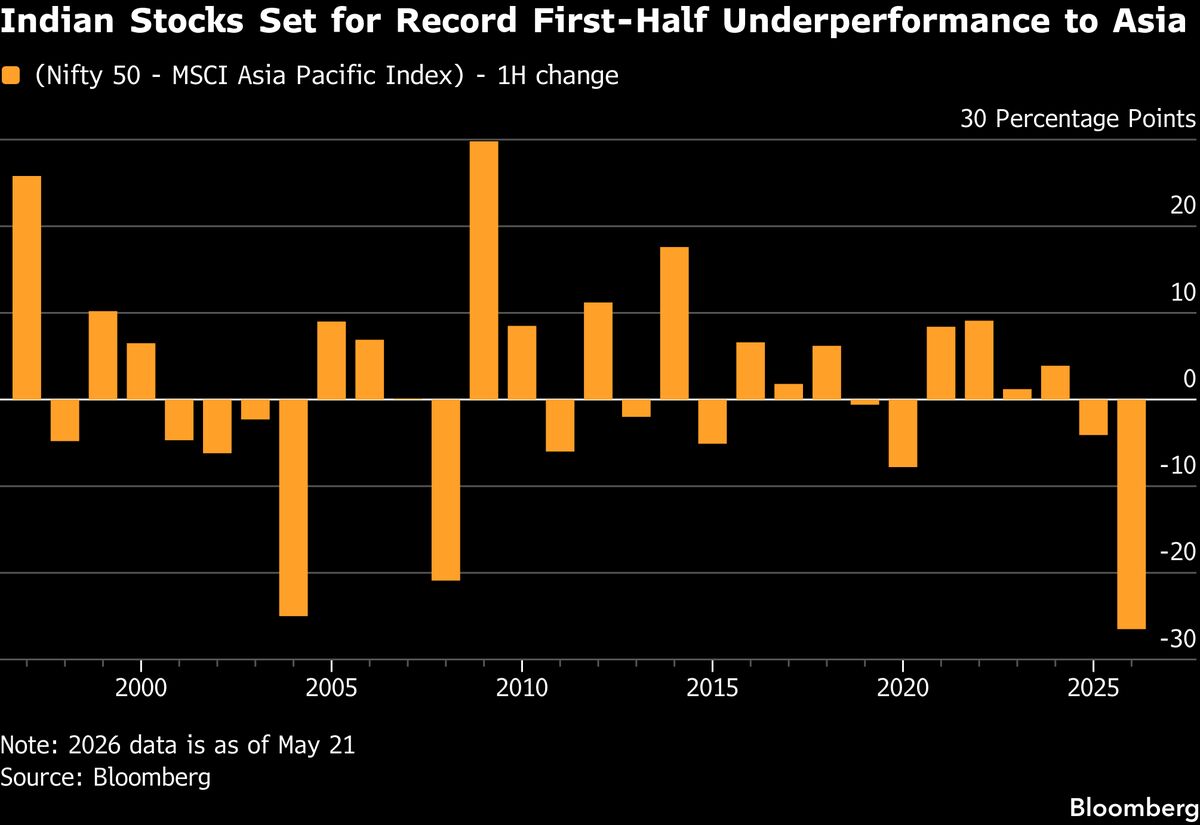
In a surprising turn of events, India’s once-thriving equity market is facing sustained pressure as foreign investors redirect their funds towards artificial intelligence (AI)-driven opportunities across Asia. According to a recent report by BofA Global Research, the allure of stronger earnings potential and lower valuations in other Asian markets is prompting a prolonged exodus from Indian equities, a trend that could extend well into next year.
This seismic shift comes at a time when India’s stock market has been celebrated as one of the world’s best-performing, buoyed by robust economic growth, a thriving startup ecosystem, and a burgeoning middle class. However, the rise of AI as a transformative force in global markets is reshaping investor priorities, with funds now gravitating towards Asian tech hubs offering cutting-edge innovation at more attractive price points.
The Rise of AI: A Game Changer for Investor Sentiment
Artificial intelligence has emerged as a dominant theme in global markets this year, with companies leveraging AI technologies to drive efficiency, innovate products, and unlock new revenue streams. Countries like Taiwan, South Korea, and Japan have positioned themselves as key players in the AI supply chain, housing major semiconductor manufacturers and tech giants that are integral to the development of AI applications.
These markets, according to BofA analysts, are now offering compelling investment opportunities. Their valuations remain significantly lower compared to India’s premium-priced equities, even as they promise higher earnings growth linked to AI advancements. This discrepancy has prompted global fund managers to rethink their allocations, with India bearing the brunt of this recalibration.
India’s Valuation Dilemma
India’s equity market has long commanded premium valuations, reflecting investor confidence in its growth story. The MSCI India Index, for instance, currently trades at a forward price-to-earnings ratio of over 20, significantly higher than its Asian counterparts. While this premium was previously justified by India’s superior economic outlook and structural reforms, the AI boom has tilted the scales in favor of other markets.
Experts argue that India’s tech sector, while growing, has yet to fully capitalize on the AI revolution. Unlike Taiwan’s TSMC or South Korea’s Samsung, which are at the forefront of AI-related innovations, Indian tech firms remain largely focused on IT services and outsourcing. This lag in AI-driven growth has made Indian equities appear less attractive in the eyes of global investors seeking exposure to the next wave of technological disruption.
The Impact on Indian Markets
The outflow of foreign funds has already begun to weigh on India’s stock market. The benchmark Nifty 50 Index has experienced heightened volatility in recent months, with foreign institutional investors (FIIs) offloading billions of dollars worth of shares. This marks a stark reversal from the exuberant inflows seen in 2021 and early 2022, when India was hailed as a safe haven amid global economic uncertainty.
The withdrawal of foreign capital could also complicate the Reserve Bank of India’s (RBI) efforts to stabilize the rupee, which has faced pressure due to rising global interest rates and a strengthening US dollar. A sustained sell-off in equities may exacerbate capital flight, further denting investor sentiment in the region.
Broader Implications for Emerging Markets
India’s current predicament underscores a broader trend reshaping emerging markets. As AI and advanced technologies redefine global industries, investors are increasingly prioritizing regions with a competitive edge in innovation. This shift poses challenges for economies like India, which have traditionally relied on domestic consumption and services-driven growth to attract foreign capital.
However, analysts caution against writing off India’s equity market entirely. The country’s long-term growth story remains intact, supported by favorable demographics, rapid digitalization, and ongoing economic reforms. While the AI-driven pivot may dampen short-term performance, India’s ability to adapt and integrate emerging technologies could ultimately restore its appeal among global investors.
Looking Ahead: A Test of Resilience
As the AI revolution gains momentum, India faces a critical test of its market resilience. Policymakers and corporate leaders must navigate an increasingly competitive landscape, investing in innovation and infrastructure to position the country as a contender in the global tech race.
For now, the foreign selling trend is expected to persist, with BofA forecasting further outflows in the coming months. However, the report also highlights potential silver linings, noting that a correction in valuations could attract bargain-hunting investors once global sentiment stabilizes.
Conclusion
The shifting tides of global investment underscore the transformative power of artificial intelligence, reshaping priorities and redistributing capital across markets. While India’s equity market faces headwinds in the near term, its long-term potential remains a compelling narrative for investors worldwide. As the AI-driven recalibration unfolds, the world will be watching to see how India adapts to this new era of technological dominance.
Balanced against the backdrop of innovation and economic ambition, the story of India’s markets is far from over—it is merely entering its next chapter.
