


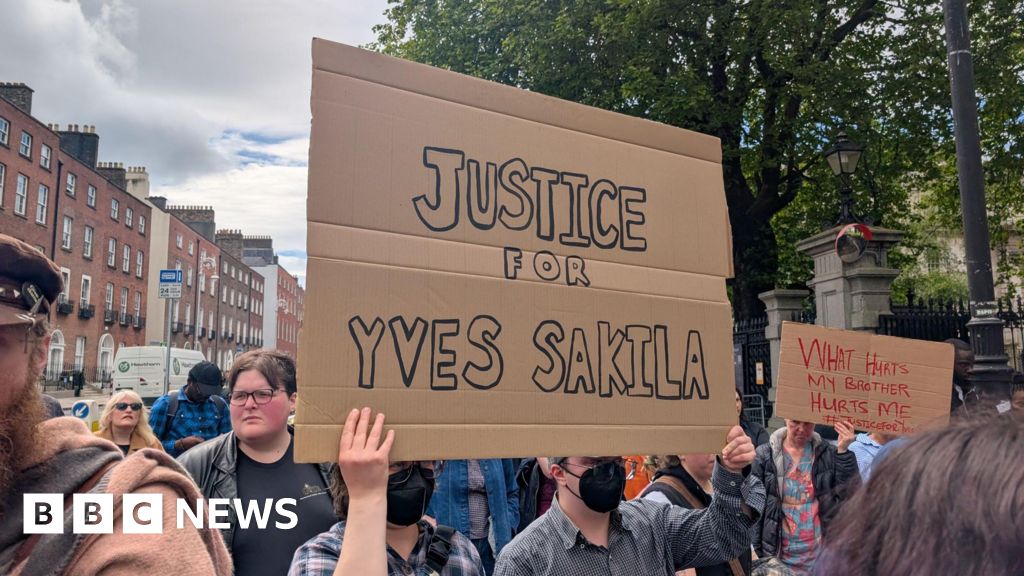

Tragic Death on Dublin Streets Sparks Global Conversation on Security and Inequality
In the heart of Dublin, one of Europe’s most bustling and vibrant cities, a tragic incident unfolded on Wednesday that has reverberated far beyond Ireland’s borders. Yves Sakila, a 35-year-old man, died on one of Dublin’s busiest shopping streets following an alleged shoplifting incident. The circumstances surrounding his death remain under investigation, but the event has ignited a firestorm of debate about security, poverty, and the increasingly visible cracks in global socio-economic systems. As protests and discussions erupt across continents, the world is reminded of the fragile balance between law enforcement, human dignity, and the broader issues of inequality that plague societies everywhere.
The Incident: What We Know So Far
The incident occurred on Henry Street, a major commercial hub in Dublin known for its bustling crowds and vibrant atmosphere. According to eyewitness accounts, Sakila was allegedly involved in a shoplifting attempt at a well-known retail store. Security personnel intervened, leading to a confrontation. Moments later, Sakila collapsed on the street. Emergency services were called, but despite their efforts, he was pronounced dead at the scene.
The exact cause of death has not yet been confirmed, and authorities are awaiting the results of a post-mortem examination. Both the store’s security team and local police are cooperating with the investigation.
Global Context: Rising Inequality and Urban Security
Sakila’s death is not an isolated incident. Across the globe, cities are grappling with the dual challenges of increasing economic inequality and the tightening of security measures in public spaces. From New York to Nairobi, stories of confrontations between security personnel and individuals accused of petty theft have become increasingly common.
The United Nations estimates that over 700 million people worldwide live in extreme poverty, surviving on less than $2.15 a day. For many, shoplifting is not a crime of opportunity but a desperate act of survival. While retailers and businesses have a right to protect their assets, the human cost of such confrontations has sparked outrage and calls for systemic change.
In Dublin, a city celebrated for its hospitality and warmth, the incident has exposed underlying tensions. Ireland, like many Western nations, has seen a rise in homelessness and poverty in recent years, exacerbated by the COVID-19 pandemic and soaring living costs.
Why This Matters: A Global Conversation
The death of Yves Sakila is a stark reminder of the intersection between security, poverty, and human rights. It highlights the urgent need for societies to address the root causes of inequality rather than relying on punitive measures that often escalate into tragedy.
Globally, the incident has reignited debates about how law enforcement and private security personnel are trained to handle such situations. In the United States, the Black Lives Matter movement has brought attention to the disproportionate use of force against marginalized communities. Similarly, in Europe, concerns about racial profiling and excessive security measures continue to dominate headlines.
Moreover, Sakila’s death underscores the broader issue of how cities manage public safety in an era of growing inequality. With urban populations projected to double by 2050, according to the World Bank, the pressure on infrastructure, resources, and security systems will only intensify.
Local Reactions and Protests
In Dublin, the incident has sparked widespread outrage. Hundreds of protesters gathered on Henry Street on Thursday, carrying signs that read “Justice for Yves” and “Poverty is Not a Crime.” Community leaders have called for a thorough and transparent investigation into the circumstances surrounding Sakila’s death.
Local politicians have also weighed in. “This tragedy should serve as a wake-up call for all of us,” said one Dublin city councilor. “We need to address the systemic issues that lead to such incidents, rather than simply reacting to the symptoms.”
Internationally, human rights organizations have expressed concern. Amnesty International released a statement emphasizing the need for accountability and urging governments to prioritize social welfare programs over punitive measures.
The Path Forward: Balancing Security and Compassion
As investigations continue, the question remains: how can societies strike a balance between protecting property and upholding human dignity? Experts argue that addressing the root causes of poverty and inequality is essential. This includes investing in affordable housing, healthcare, and education, as well as implementing policies that ensure fair wages and social safety nets.
Retailers and private security firms also have a role to play. Training programs that emphasize de-escalation techniques and cultural sensitivity could prevent similar tragedies in the future.
Conclusion: A Call for Global Reflection
The death of Yves Sakila serves as a sobering reminder of the challenges facing our interconnected world. It is a story of poverty, desperation, and the sometimes-fatal consequences of systemic failure. As Dublin mourns, the global community must reflect on the broader issues at play.
This incident is not just about one man’s tragic death; it is about the millions who live on the margins, struggling to survive in an increasingly unequal world. It is a call to action for governments, businesses, and individuals to prioritize compassion and justice over punishment and profit. In the words of one Dublin protester, “Yves’ death should not be in vain. Let it be the catalyst for change.”
As the sun sets on Henry Street, the echoes of this tragedy remind us that the fight for a fairer, more equitable world is far from over. The question now is whether we will rise to the challenge or allow history to repeat itself.
