


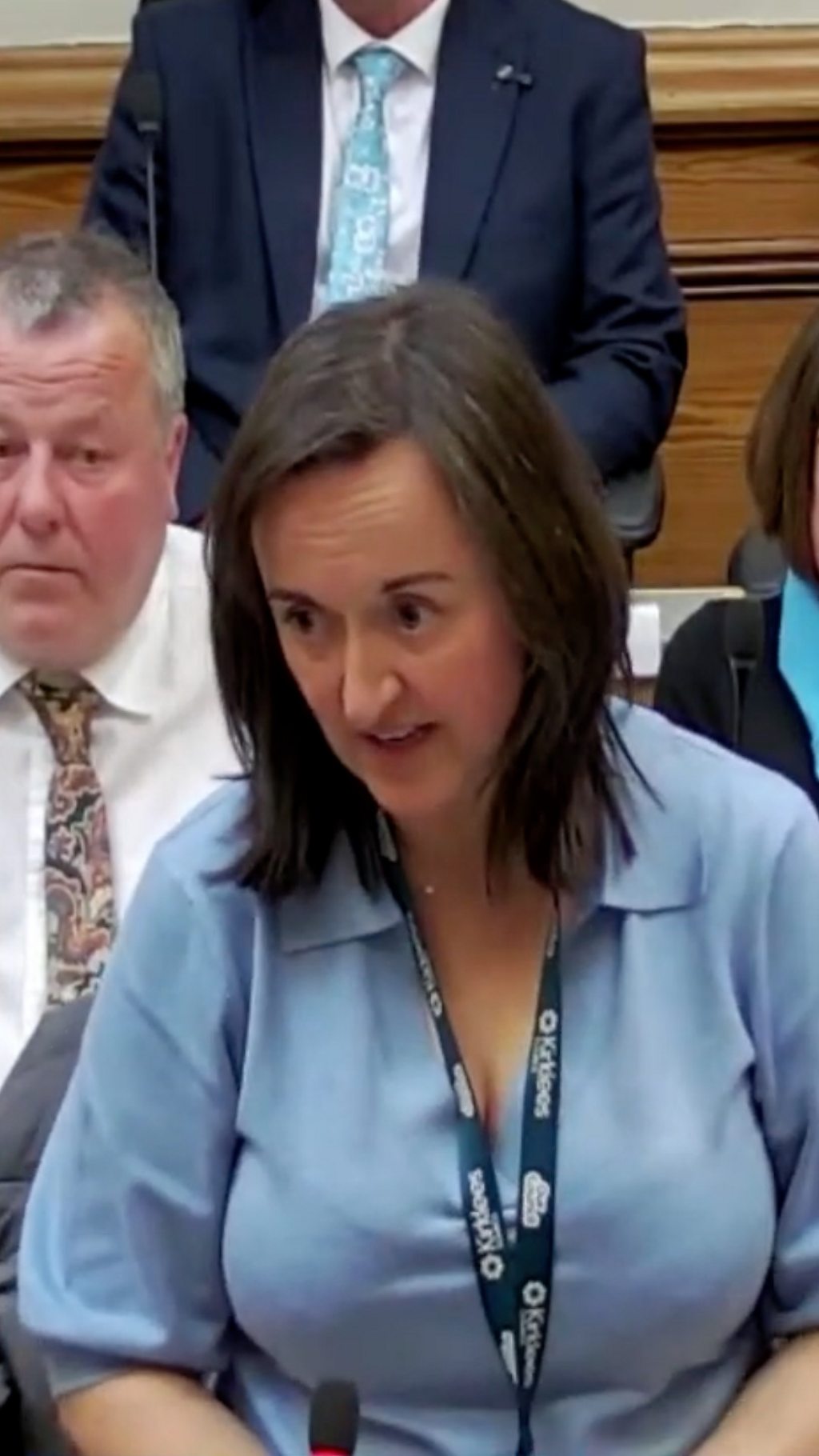

Kirklees Council in Turmoil as Leadership Vote Postponed Amid Confusion
Kirklees Council in West Yorkshire, England, remains leaderless and without a majority following a chaotic annual meeting that saw the election of a new council leader postponed. The delay came after newly elected councillors, including Reform UK leader Sarah Wood, admitted they were unfamiliar with procedural rules, casting confusion over the proceedings.
The council, comprising 69 seats, is now dominated by Reform UK, which clinched 29 seats in the elections, making it the largest party. However, without an outright majority, the party has been unable to assert control, leading to a leadership stalemate with the Green Party’s Andrew Cooper also vying for the top position. The impasse highlights the fragmented nature of the council and raises questions about its ability to govern effectively in the coming months.
The annual meeting, intended to establish a new leadership structure, descended into disarray when procedural misunderstandings emerged. Wood, a prominent figure within Reform UK, acknowledged her lack of familiarity with certain council rules, a sentiment echoed by other newly elected members. This forced the council to adjourn the vote, delaying the appointment of a leader until a future meeting.
The situation underscores the challenges faced by Reform UK, a relatively new political entity that has quickly risen to prominence in local politics. Its success in Kirklees reflects growing dissatisfaction with traditional parties but also exposes its inexperience in navigating complex governance structures.
Kirklees Council, responsible for key services such as education, housing, and waste management for over 430,000 residents, now faces uncertainty as it grapples with internal divisions. The absence of a clear majority and leadership threatens to stall critical decision-making processes, particularly as the council prepares to address pressing local issues, including budget constraints and rising demand for public services.
Reform UK’s rise in Kirklees is part of a broader trend across England, where smaller parties and independents are gaining ground. This shift is reshaping local governance and challenging the dominance of established parties like Labour and the Conservatives. However, the events in Kirklees also highlight the potential pitfalls of rapid political change, particularly when new parties lack the institutional knowledge to govern effectively.
The Green Party’s Andrew Cooper, a seasoned councillor with decades of experience, has positioned himself as a unifying figure capable of bridging divides within the council. His candidacy reflects the party’s ambition to play a central role in local politics, leveraging its influence to shape policies on environmental sustainability and social justice.
Analysts warn that the prolonged leadership vacuum in Kirklees could have far-reaching consequences for the region. Without a stable administration, the council may struggle to implement long-term projects and respond to emerging challenges, potentially eroding public trust in local government.
As Kirklees Council prepares to reconvene in the coming weeks, the focus will be on whether Reform UK and other parties can overcome their differences to form a functioning coalition. The outcome will not only determine the council’s trajectory but also serve as a litmus test for the viability of Reform UK’s political project.
The events in Kirklees are emblematic of a broader transformation in British politics, where fragmentation and unpredictability are becoming the norm. As smaller parties and independents continue to disrupt traditional power structures, the challenge will be to translate electoral success into effective governance. For Kirklees, the stakes are high, and the coming months will be a critical test of its ability to navigate uncharted political waters.
