



Geopolitical Tensions Threaten Global Energy Markets as Strait of Hormuz Risks Escalation
By [Your Name]
June 5, 2024
Oil Prices Could Surge to Record Highs if Middle East Conflict Disrupts Critical Shipping Lane
The specter of soaring energy prices looms large over the global economy as escalating tensions in the Middle East threaten to disrupt oil flows through the Strait of Hormuz—one of the world’s most critical maritime chokepoints. Analysts warn that a full-scale closure of the strait, through which nearly a fifth of global oil supply passes daily, could send crude prices skyrocketing beyond recent peaks, exacerbating inflationary pressures and rattling financial markets.
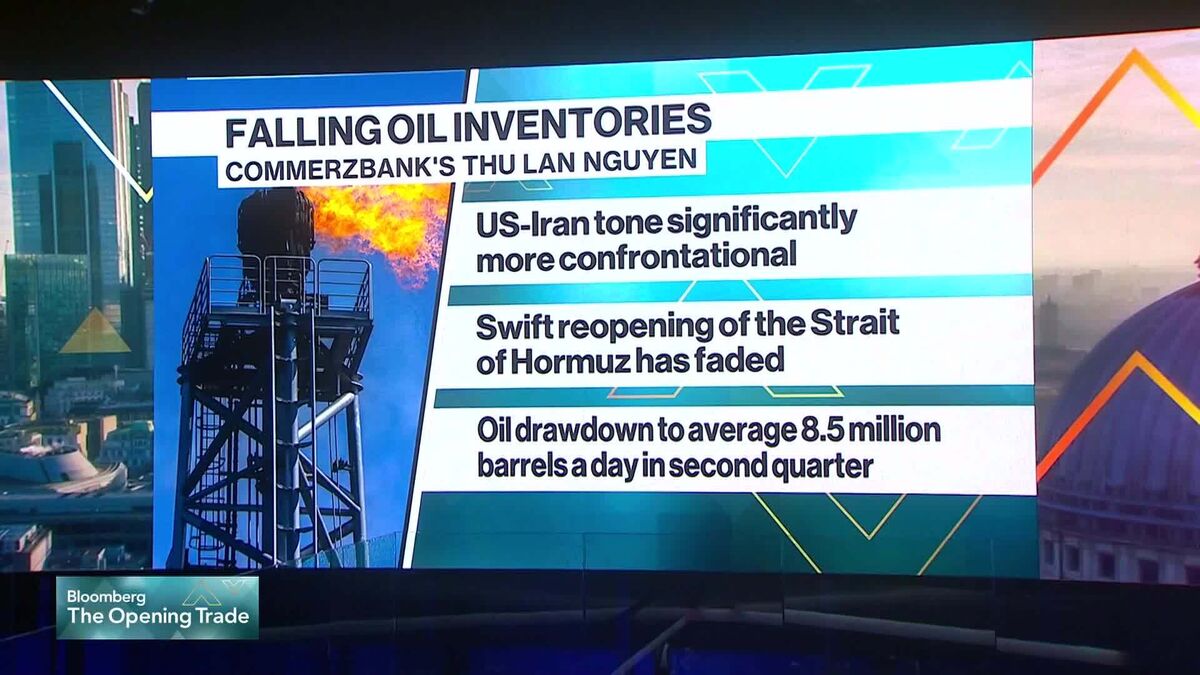
Thu Lan Nguyen, Head of FX and Commodity Research at Commerzbank, underscored the severity of the risk in a recent interview with Bloomberg Television. “If we enter the summer with the Strait of Hormuz closed, crude oil prices could surge toward recent highs—or even surpass them,” she cautioned. Such a scenario would reverberate across industries, from transportation to manufacturing, and strain consumers already grappling with elevated fuel costs.
Why the Strait of Hormuz Matters
The narrow waterway, flanked by Iran and Oman, serves as the primary transit route for oil exports from Saudi Arabia, Iraq, the UAE, Kuwait, and Qatar. An estimated 21 million barrels per day—about 21% of global petroleum liquids consumption—pass through the strait, making it indispensable to energy security. Any prolonged disruption could trigger a supply shock comparable to the 1973 oil embargo or the Gulf War price spikes.
Recent months have seen mounting friction in the region, with Iran-backed Houthi rebels targeting commercial vessels in the Red Sea and Tehran issuing veiled threats to block Hormuz in retaliation for Western sanctions. While outright closure remains unlikely, even temporary disruptions—such as attacks on tankers or heightened military posturing—could send shockwaves through markets.
Market Reactions and Historical Precedents
Oil prices have already shown sensitivity to Middle East instability. Brent crude, the international benchmark, briefly surpassed $90 per barrel earlier this year following Houthi attacks on shipping lanes. Analysts suggest a Hormuz blockade could propel prices toward $120–$150, levels last seen during the 2022 Ukraine crisis.
“The market is underpricing geopolitical risk,” Nguyen noted. “Traders assume cooler heads will prevail, but miscalculations happen.” Historical data supports her concern:
- 2019: After Iran seized a British tanker, Brent spiked 15% in days.
- 2008: Fears of an Israeli strike on Iran drove prices to a record $147.
- 1990: Iraq’s invasion of Kuwait triggered a 250% surge in months.
Global Economic Implications
Higher energy costs would ripple through economies at a precarious moment. The U.S. Federal Reserve and European Central Bank remain wary of inflation resurgence, while emerging markets—many reliant on imported fuel—face balance-of-payment strains.
Consumers: Gasoline and diesel prices would climb, squeezing household budgets.
Industries: Airlines, shipping, and petrochemical firms would see margins erode.
Investors: Equity markets, particularly energy-sensitive sectors, could face volatility.
Contingency Plans and Alternative Routes
Major oil importers, including China, India, and the EU, have emergency stockpiles, but these would only offset short-term disruptions. Saudi Arabia and the UAE have expanded pipelines to bypass Hormuz, yet capacity remains limited. The East-West Petroline (5 million bpd) and Abu Dhabi Crude Oil Pipeline (1.5 million bpd) could mitigate losses but not replace maritime flows entirely.
Meanwhile, the U.S. has reaffirmed its commitment to keeping Hormuz open, with the Fifth Fleet patrolling the area. However, experts warn that military escalation risks entangling global powers in a broader conflict.
A Fragile Balance
For now, markets are betting on restraint. OPEC+ maintains ample spare capacity, and non-OPEC producers like the U.S. could ramp up output. Yet as Nguyen observes, “Hope is not a strategy.” With summer demand peaking and geopolitical tinderboxes smoldering, the world may soon learn whether diplomacy or disruption will dictate the next chapter in energy markets.
As the stakes grow ever higher, one truth remains undeniable: In an interconnected global economy, the Strait of Hormuz isn’t just a regional flashpoint—it’s the world’s economic lifeline.
