


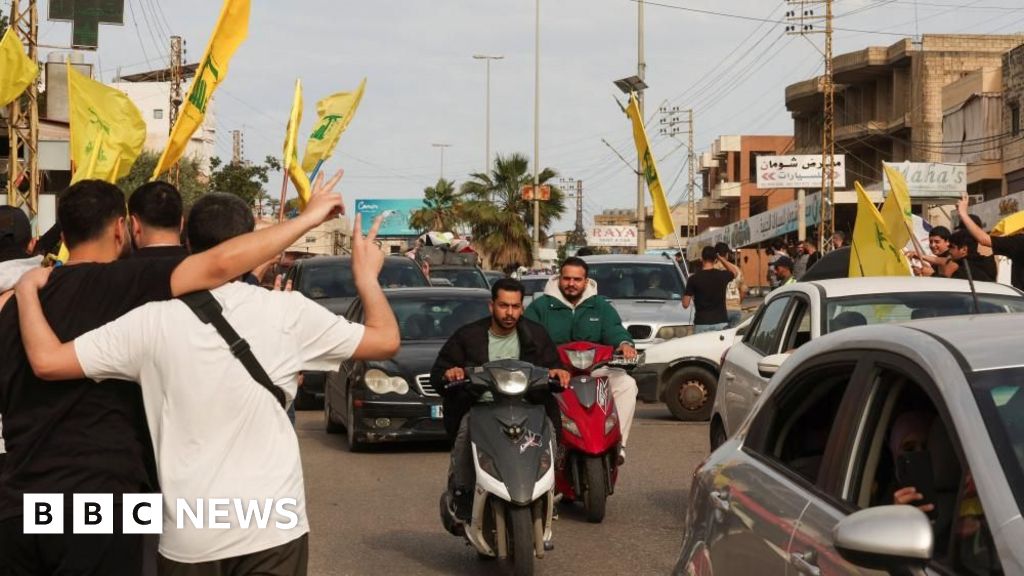

Hezbollah’s Arsenal: A Persistent Threat to Lebanon’s Stability and Global Security
A Nation Divided: The Lingering Shadow of Hezbollah’s Weapons
Lebanon stands at a crossroads, caught between internal divisions and external pressures as Hezbollah’s vast military arsenal continues to fuel regional tensions. The Iran-backed militant group, designated as a terrorist organization by the U.S. and much of the West, remains a dominant force in Lebanese politics—and its refusal to disarm has become a flashpoint for conflict. With Israel and the U.S. demanding Hezbollah’s demilitarization, and many Lebanese blaming the group for dragging their country into foreign wars, the stakes extend far beyond Beirut. In a region already on edge, Hezbollah’s weapons could be the spark that ignites a wider conflagration.
Why Hezbollah’s Disarmament Matters
Hezbollah’s military wing, estimated to possess over 150,000 rockets and missiles, operates independently of the Lebanese state. This parallel armed force undermines government authority and perpetuates Lebanon’s political paralysis. Critics argue that Hezbollah’s loyalty lies not with Lebanon but with Iran, which funds and arms the group as part of its broader “Axis of Resistance” against Israel and Western influence.
The group’s entanglement in regional conflicts—from Syria to Yemen—has drawn Lebanon into proxy wars, destabilizing the country and exacerbating its economic collapse. Meanwhile, Israel views Hezbollah as an existential threat, raising the risk of another devastating war like the 2006 conflict that left thousands dead.
Global Implications: A Proxy Battleground
The standoff over Hezbollah’s weapons is not just a Lebanese issue—it’s a microcosm of the broader struggle between Iran and its adversaries. The U.S. and Israel have repeatedly warned that Hezbollah’s growing precision-missile capabilities could trigger a catastrophic regional war. Washington has imposed sanctions on Hezbollah officials and pushed for diplomatic solutions, but Tehran’s unwavering support ensures the group remains heavily armed.
For Lebanon, already mired in economic ruin and political dysfunction, Hezbollah’s militarization deepens the crisis. The country’s fragile government struggles to assert sovereignty while the group’s actions invite foreign retaliation. Recent clashes along the Israel-Lebanon border have heightened fears of escalation, with both sides exchanging fire in the most serious tensions since 2006.
The Human Cost: Lebanon’s Suffering
Ordinary Lebanese bear the brunt of this geopolitical tug-of-war. The country’s financial meltdown has left millions in poverty, yet Hezbollah’s military expenditures continue unabated. Many citizens resent the group for prioritizing Iran’s agenda over Lebanon’s recovery.
“We’re tired of being pawns in someone else’s war,” said one Beirut resident, echoing widespread frustration. “Hezbollah’s weapons don’t protect us—they make us a target.”
What Comes Next?
With no clear path to disarmament, Lebanon remains trapped in a dangerous stalemate. International efforts to mediate have stalled, and Hezbollah shows no sign of relinquishing its arms. The U.S. and Europe continue to pressure Beirut, but without a unified Lebanese stance, progress is unlikely.
For now, the risk of conflict looms large. Any major escalation between Hezbollah and Israel could pull in Iran, the U.S., and other global players, turning Lebanon into the epicenter of a wider war.
Conclusion: A Ticking Time Bomb
Hezbollah’s weapons are more than a local dispute—they are a global security threat. As Lebanon teeters on the brink, the world watches nervously, knowing that the next flare-up could have far-reaching consequences. Whether through diplomacy or force, resolving this crisis is not just Lebanon’s burden but an urgent international imperative. The alternative—another devastating war—is a price the region, and the world, cannot afford to pay.
