


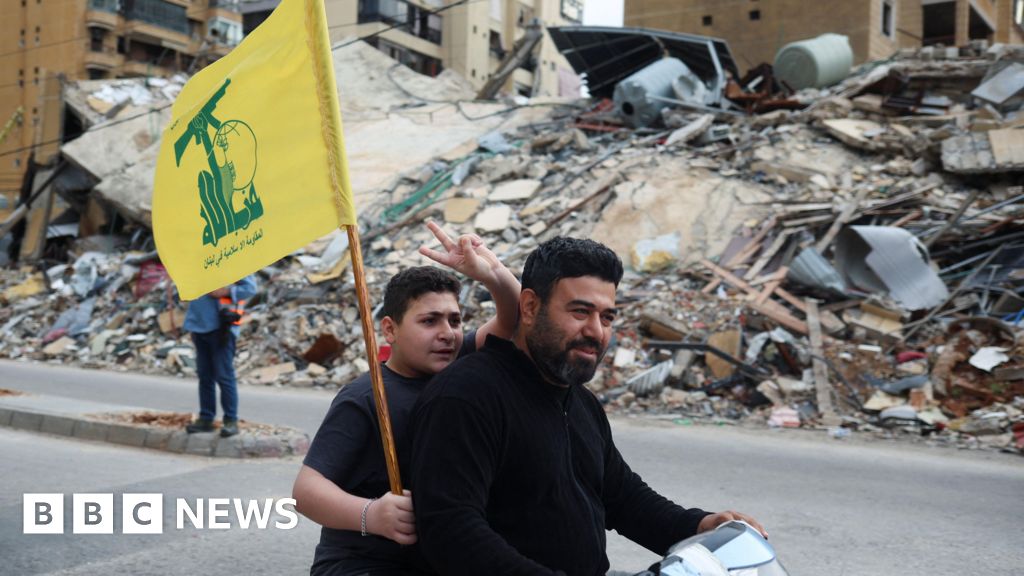

Tenuous Truce Holds Between Israel and Hezbollah as Global Powers Scramble to Prevent Wider War
The Middle East holds its breath as a fragile 10-day ceasefire takes effect between Israel and Lebanon’s Iran-backed Hezbollah, marking a rare pause in months of escalating cross-border violence. The temporary halt in hostilities, announced late Tuesday, comes amid high-stakes negotiations between the U.S. and Iran—raising cautious hopes for de-escalation even as regional tensions simmer near a boiling point.
A Fragile Ceasefire in a Volatile Region
The truce, brokered through indirect channels, follows weeks of intensified rocket fire and airstrikes that have displaced thousands on both sides of the Israel-Lebanon border. Hezbollah, a powerful Shiite militant group designated as a terrorist organization by the U.S. and its allies, has publicly endorsed the pause in fighting—a move analysts say signals Tehran’s tentative willingness to avoid further escalation.
Yet the ceasefire remains precarious. Both sides have accused the other of minor violations, and Israeli officials warn that military operations could resume “at any moment” if Hezbollah resumes attacks. The group, which commands an arsenal of over 150,000 rockets, has long served as Iran’s most potent proxy force, turning Lebanon into a potential flashpoint for a broader regional war.
The U.S.-Iran Shadow Diplomacy
Behind the scenes, the Biden administration is engaged in delicate, backchannel talks with Iranian officials to prevent the Israel-Hezbollah conflict from spiraling into a direct confrontation between Tehran and Washington. These discussions, confirmed by multiple diplomatic sources, focus on restraining Hezbollah’s actions while addressing Iran’s demands for sanctions relief—a contentious issue since the collapse of the 2015 nuclear deal.
The negotiations underscore a critical reality: the Middle East’s security landscape is increasingly shaped by indirect warfare between Iran and its adversaries. With Iranian-backed groups active in Iraq, Syria, and Yemen, any miscalculation along the Israel-Lebanon border risks triggering a multi-front crisis.
Global Stakes: Why This Truce Matters
The temporary ceasefire carries implications far beyond the Middle East. A full-scale war between Israel and Hezbollah could:
- Destabilize Global Energy Markets: Lebanon’s proximity to key Mediterranean shipping routes and its shared border with Syria—a vital corridor for oil and gas—makes the region a tinderbox for energy supply disruptions.
- Strain U.S.-Europe Relations: European leaders, already divided over Israel’s military campaign in Gaza, fear another protracted conflict could trigger mass refugee flows and further polarize domestic politics.
- Empower Hardliners in Iran: With Tehran facing economic turmoil and widespread protests, a regional conflict could bolster the regime’s narrative of resisting Western pressure—while derailing efforts to revive nuclear diplomacy.
A History of Unstable Truces
This is not the first time Israel and Hezbollah have stepped back from the brink. The 2006 war between the two sides ended in a UN-brokered ceasefire that failed to address underlying tensions, leaving the door open for future clashes. Today, with Hezbollah stronger than ever and Israel under pressure from hardline factions to take a tougher stance, the risks of repeat miscalculation are high.
Meanwhile, Lebanon’s collapsing economy and dysfunctional government have left it ill-equipped to mediate. The country, still reeling from the 2020 Beirut port explosion, faces a humanitarian catastrophe if fighting resumes—a scenario that could push its population deeper into despair.
The Human Cost of Brinkmanship
While diplomats maneuver, civilians bear the brunt of the violence. Over 50,000 Israelis near the northern border have been evacuated since October, while Lebanese villages have endured relentless shelling, destroying homes and infrastructure. “We’re tired of living in shelters,” said one resident of the Israeli town of Kiryat Shmona. “But we know this could all start again tomorrow.”
In Lebanon, where Hezbollah’s influence is both a shield and a liability, many fear being dragged into another unwinnable war. “No one wants this, but no one can stop it,” admitted a Beirut-based analyst, speaking on condition of anonymity.
What Comes Next?
The next 10 days will test whether the ceasefire can evolve into a more durable agreement—or collapse under the weight of mutual distrust. Key factors to watch:
- Hezbollah’s Discipline: Will the group’s fighters adhere to the truce, or will rogue actions spark renewed clashes?
- Iran’s Calculations: With presidential elections looming, will Tehran prioritize stability or escalate to divert domestic discontent?
- U.S. Leverage: Can Washington secure guarantees from both sides, or will political divisions in Israel and Iran undermine diplomacy?
As the world watches, one thing is clear: this ceasefire is not peace. It is a temporary pause in a decades-long shadow war—one that could still explode into the open, with consequences far beyond the rocky hills of southern Lebanon. For now, the guns are silent. But the clock is ticking.
