


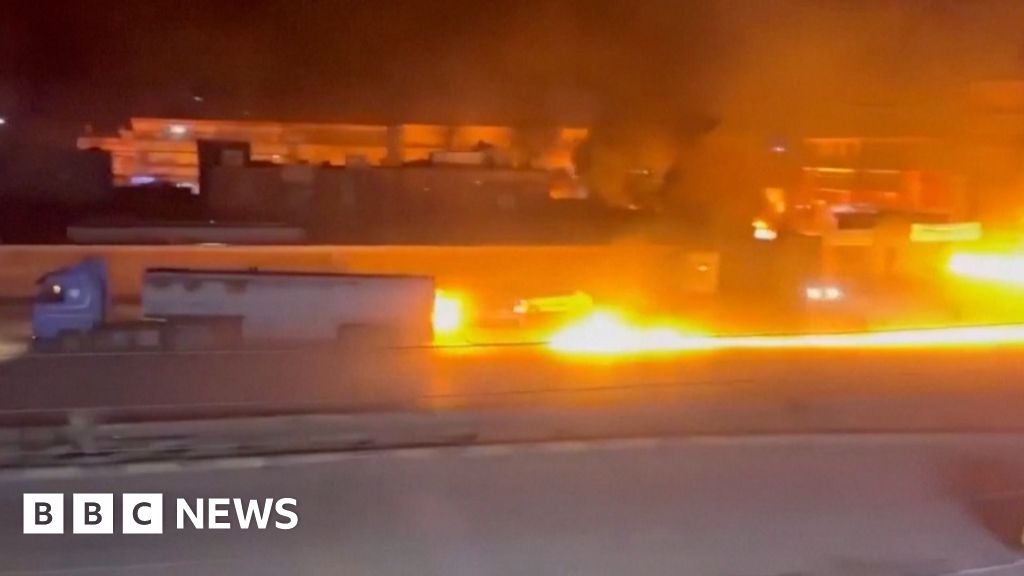

Burning Fuel Tanker Ignites Chaos in Syria’s Hasakah: Eyewitnesses Capture Dramatic Scenes
A Fiery Crisis Unfolds in Northern Syria
A fuel tanker transformed into a roaring inferno tore through the streets of Hasakah, Syria, this week, leaving a trail of destruction in its wake. Eyewitnesses described scenes of panic as the driver, in a desperate attempt to contain the blaze, steered the burning vehicle toward a fire station—only for the flames to spread, engulfing nearby cars and a bus. The incident, captured in harrowing footage, resulted in seven injuries and the destruction of at least 11 vehicles, according to Syria’s state-run SANA news agency.
The disaster highlights the fragility of infrastructure in war-torn northeastern Syria, where frequent fuel shortages and aging equipment heighten the risk of such catastrophes. As global energy markets remain volatile and regional tensions simmer, this incident serves as a stark reminder of the dangers faced by civilians in conflict zones.
What Happened? A Timeline of the Disaster
The crisis began when the fuel tanker caught fire at a gas station in Hasakah, a city already strained by years of conflict. Witnesses reported that the driver, realizing the danger, attempted to drive the burning truck toward a fire station—a move that inadvertently spread the flames. The resulting fireball engulfed nearby vehicles, sending thick plumes of black smoke into the sky.
Local emergency services struggled to contain the blaze, with firefighters battling the flames for hours. The Hasakah Health Directorate confirmed seven injuries, though the extent of their conditions remains unclear. No fatalities were reported, but the destruction of multiple vehicles underscores the potential for even greater tragedy.
Why This Incident Matters Globally
1. Syria’s Crumbling Infrastructure
Years of civil war, economic sanctions, and sporadic attacks have left Syria’s infrastructure in ruins. Gas stations and fuel depots often operate with outdated safety measures, increasing the likelihood of accidents. This incident is not an isolated event—similar fuel-related disasters have occurred across Syria, exacerbating humanitarian crises in regions already struggling with shortages.
2. The Broader Energy Crisis
Global fuel prices remain unstable due to the Russia-Ukraine war, sanctions on oil-producing nations, and supply chain disruptions. In Syria, where fuel is often smuggled or rationed, such volatility makes everyday life perilous. A single spark can trigger disaster, as seen in Hasakah.
3. Regional Security Implications
Hasakah lies in a contested area controlled by Kurdish-led forces but frequently targeted by Turkish airstrikes and Islamic State remnants. Any major disruption—whether accidental or deliberate—could escalate tensions in an already volatile region.
Eyewitness Accounts: Panic and Heroism
Local residents described scenes of chaos as the fire rapidly spread. “I saw the truck speeding down the road, completely on fire,” one witness told reporters. “People were running in all directions, trying to get away.” Others praised the driver’s attempt to minimize damage, though the outcome proved disastrous.
Firefighters faced significant challenges in controlling the blaze, with limited equipment and resources. Their efforts prevented further casualties, but the incident raises urgent questions about emergency preparedness in conflict zones.
A Pattern of Fuel-Related Disasters in War Zones
This is not the first time a fuel-related incident has caused devastation in Syria. In 2022, a similar explosion at a gas station in Aleppo killed over a dozen people. Across the Middle East and Africa, poorly maintained fuel infrastructure in conflict zones has led to catastrophic fires, highlighting a global safety crisis.
International organizations have repeatedly warned about the dangers of unregulated fuel transport in unstable regions. Yet without significant investment in infrastructure and safety protocols, such tragedies will continue.
Conclusion: A Wake-Up Call for Global Attention
The Hasakah fuel tanker fire is more than just a local accident—it is a symptom of deeper systemic failures in war-ravaged regions. As global powers focus on geopolitical rivalries, civilians in places like Syria remain vulnerable to preventable disasters. Without urgent action to improve infrastructure and emergency response capabilities, these incidents will keep recurring, with deadly consequences.
For now, the people of Hasakah are left picking up the pieces, their lives once again disrupted by flames in a city that has seen too much fire. The world would do well to take notice before the next spark ignites an even greater catastrophe.
