


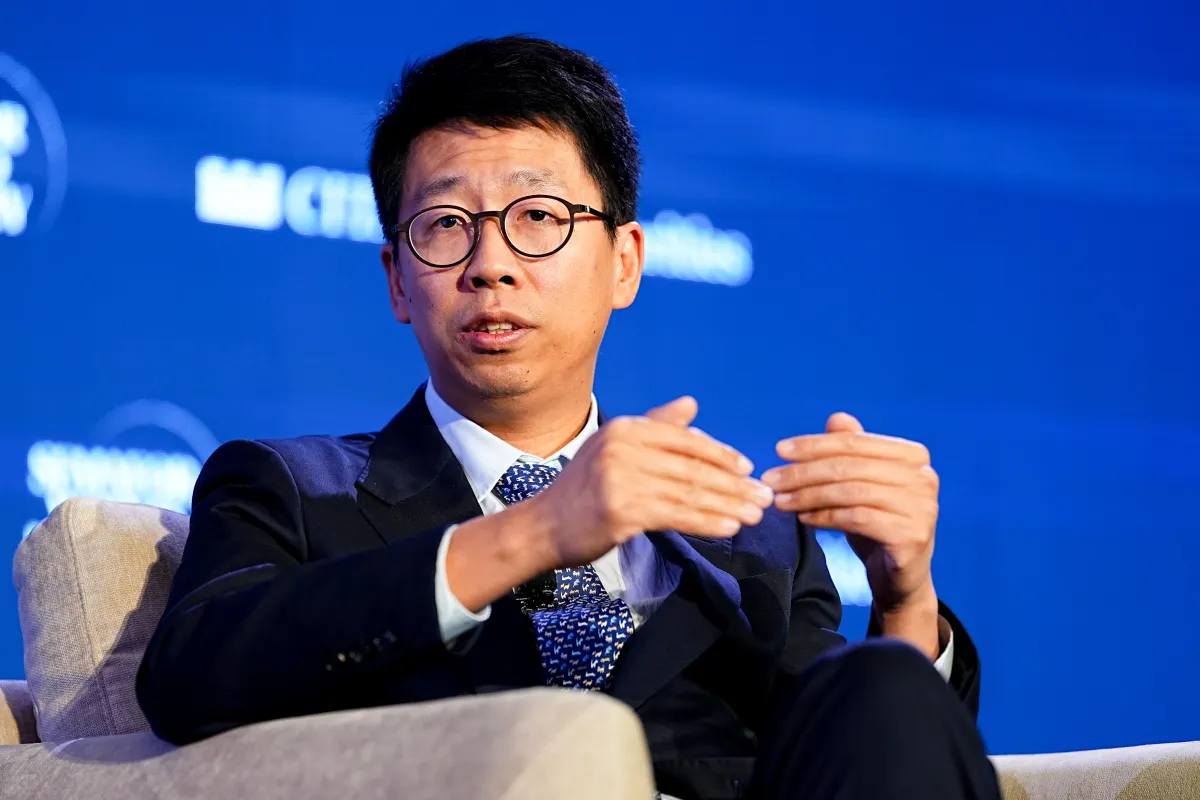

Airwallex’s Jack Zhang on Rejecting Stripe’s $1.2B Buyout and Building a Global Payments Empire
By [Your Name], Senior Financial Correspondent
MELBOURNE/SAN FRANCISCO — In 2018, Jack Zhang faced a life-changing decision. The then-34-year-old founder of Australian fintech startup Airwallex sat across from Michael Moritz, the legendary Sequoia Capital investor, in a San Francisco home overlooking the Golden Gate Bridge. Stripe, the payments giant led by Patrick Collison, had offered to buy Airwallex for $1.2 billion—an eye-watering 600x multiple on its $2 million annual revenue. The deal promised generational wealth, Silicon Valley prestige, and a shortcut to global scale.
Zhang said yes. Then he flew back to Melbourne, thought deeply, and changed his mind.
Six years later, that decision looks prescient. Airwallex now boasts $1.3 billion in annual revenue, processes nearly $300 billion in transactions, and operates in 50 markets—all while growing at 85% year-over-year. Stripe, meanwhile, remains a dominant force but faces increasing competition from Zhang’s homegrown empire.
The Path of Maximum Resistance
Zhang’s journey to fintech disruption was anything but conventional. Born in Qingdao, China, he moved to Melbourne at 15, alone and barely fluent in English. When his family’s finances collapsed, he worked four jobs—bartending, dishwashing, overnight shifts at a gas station, and picking lemons on farms—to fund a computer science degree at the University of Melbourne.
Before Airwallex, Zhang launched nearly a dozen ventures: a teenage magazine, a real estate firm, import-export businesses trading wine and textiles, even a burger chain. But it was a coffee shop that led to his breakthrough. While trying to pay international suppliers, he and co-founder Max Li encountered the inefficiencies of global payments: frozen transactions, exorbitant fees, and sluggish correspondent banking networks.
“That pushed me to really look at how correspondent banking works,” Zhang recalls. “How SWIFT works, and how we could build our own global money movement network.”
Licenses, Infrastructure, and the Long Game
Airwallex’s strategy hinges on owning the entire payment stack—a stark contrast to Stripe’s developer-friendly API approach. The company now holds 90 financial licenses worldwide, enabling it to operate as a quasi-bank in markets like Japan, where competitors must immediately transfer funds out.
Securing those licenses was grueling. In Japan, the process took seven years. In emerging markets, Airwallex acquired shell companies with legacy licenses, then rebuilt their tech from scratch. “You can’t just vibe-code an integration with Mexico’s central bank,” Zhang quips. “We have secure rooms where biometric scans are required just to access their systems.”
The payoff? Businesses can hold multi-currency balances, issue cards, and run payroll without moving money out of Airwallex’s ecosystem—saving 2-3% in FX fees per transaction.
Stripe vs. Airwallex: A Collision Course
For years, the two fintechs operated in parallel—Stripe dominating U.S. startups, Airwallex focusing on APAC enterprises. But as both expand globally, tensions are rising.
Stripe, valued at $159 billion, remains a Silicon Valley darling with deep developer loyalty. Airwallex, at an $8 billion valuation, targets CFOs and treasury teams, emphasizing cross-border efficiency over sleek APIs. “Our brand isn’t there yet with engineers,” Zhang admits. “That’s a harder competition to win.”
Investors are watching closely. Sequoia and Greenoaks Capital back both companies, creating rare cap-table overlaps. Zhang dismisses concerns: “They’re betting on a large market.”
The Road Ahead: AI, IPO, and Global Ambitions
Airwallex’s next phase involves AI-powered financial agents that don’t just analyze data but execute transactions autonomously. Zhang believes a decade of proprietary payment data gives Airwallex an edge no rival can quickly replicate.
An IPO looms—likely in 3-5 years—with targets of $20 billion in revenue and 1 million customers by 2030. Whether Airwallex can truly challenge Stripe’s dominance remains uncertain, but Zhang’s bet on the “path of maximum resistance” has already defied expectations.
As he puts it: “Building on someone else’s infrastructure isn’t scalable. We’re playing the long game.”
— Reporting from Melbourne, San Francisco, and Hong Kong.
