


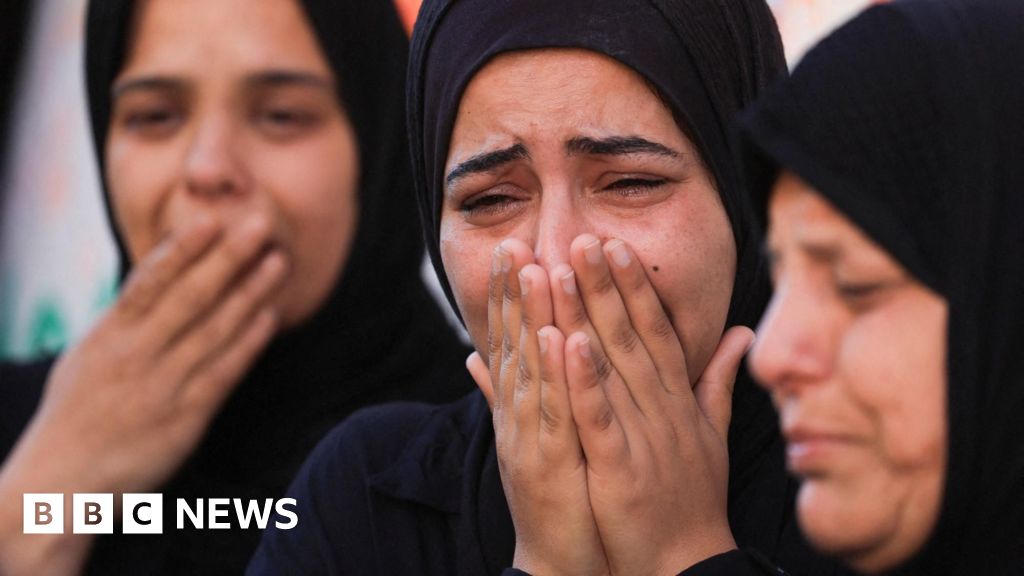

Deadly Strike Near Gaza Mosque Kills Civilians, Including Children, as Regional Tensions Escalate
Beit Lahia, Gaza Strip – A devastating airstrike struck a residential area near a mosque in the northern Gaza town of Beit Lahia on Wednesday evening, killing at least three children and several other civilians, according to local authorities. The attack has intensified fears of a broader humanitarian crisis in the besieged enclave and drawn condemnation from international observers as violence between Israel and Palestinian armed groups shows no signs of abating.
The strike marks one of the deadliest incidents in recent weeks, underscoring the relentless toll of the conflict on civilians, particularly in densely populated Gaza, where over two million people live under severe movement and resource restrictions. As global powers scramble to mediate, the incident raises urgent questions about the protection of non-combatants and the potential for further escalation in a region already teetering on the edge of wider conflict.
The Attack and Immediate Aftermath
Witnesses described scenes of chaos as the strike hit a residential building adjacent to the Al-Noor Mosque in Beit Lahia shortly after evening prayers. First responders rushed to pull survivors from the rubble, but at least eight fatalities—including three minors—were confirmed by Gaza’s Health Ministry. Several others remain in critical condition, with hospitals overwhelmed by casualties from near-daily bombardments.
While no group has yet claimed responsibility, Israeli military officials stated they were targeting “terror infrastructure” linked to Hamas, though they did not explicitly confirm involvement in this strike. Palestinian factions, meanwhile, denounced the attack as a deliberate act of aggression against civilians.
Escalating Violence in a Protracted Conflict
The strike comes amid a sharp uptick in hostilities following the collapse of a fragile ceasefire brokered by Egypt and Qatar last month. Since then, Israeli operations in Gaza and the West Bank have intensified, with near-daily raids and airstrikes aimed at dismantling militant networks. Hamas and Islamic Jihad have responded with sporadic rocket fire, though their capabilities remain diminished compared to previous conflicts.
The broader geopolitical stakes are high. The war in Gaza has repeatedly drawn in regional actors, from Hezbollah in Lebanon to Iranian-backed factions in Syria and Iraq. With U.S. and European diplomats warning of a potential “regional spillover,” the Beit Lahia strike risks further inflaming tensions at a time when global attention is divided by the Ukraine war and rising U.S.-China rivalry.
Why This Matters Globally
Beyond the immediate human tragedy, the incident underscores the persistent failure of international mechanisms to protect civilians in conflict zones. Gaza, under a 16-year blockade, faces severe shortages of medical supplies, electricity, and clean water, leaving its population acutely vulnerable. The U.N. has repeatedly warned of a looming famine, while rights groups accuse both sides of potential war crimes.
For Western governments, the conflict presents a dilemma: staunch allies like Israel face growing scrutiny over civilian casualties, while Hamas’s tactics draw condemnation. The U.S., EU, and Arab states are pushing for renewed truce talks, but with domestic political pressures on all sides—including Israel’s far-right government and Hamas’s hardline leadership—prospects for de-escalation appear slim.
Meanwhile, the war’s economic ripple effects are being felt worldwide. Disruptions to Middle Eastern stability threaten energy markets, while the humanitarian crisis fuels migration pressures and radicalization risks. For global security planners, Gaza remains a volatile flashpoint with implications far beyond its borders.
The Human Cost and Calls for Accountability
Among the dead in Beit Lahia was 7-year-old Ahmed Khalid, whose father, a shopkeeper, told reporters he had just returned from buying groceries when the strike reduced their home to rubble. “There was no warning, no time to run,” he said, his voice breaking. “They were just children.”
Such accounts have amplified demands for independent investigations. The International Criminal Court (ICC) has an ongoing probe into alleged war crimes in Palestine, but enforcement remains contentious. U.N. Secretary-General António Guterres reiterated calls for “an immediate humanitarian ceasefire” and adherence to international law, though such appeals have done little to slow the violence.
A Region on the Brink
As funerals were held in Gaza on Thursday, Israeli forces conducted further raids in the West Bank, killing at least two Palestinians in Jenin. With settler violence also surging, the risk of a full-scale uprising in the occupied territories looms larger. Meanwhile, Hezbollah and Israel continue exchanging fire along the Lebanese border, raising specters of a second front.
For now, diplomacy appears stalled. Egypt and Qatar remain key mediators, but Hamas insists on a full Israeli withdrawal from Gaza as a precondition for talks—a nonstarter for Prime Minister Benjamin Netanyahu’s government. The U.S. has urged restraint but continues arms shipments to Israel, drawing criticism from rights advocates.
Conclusion: A Cycle with No End in Sight?
The strike in Beit Lahia is a grim reminder of a conflict with no easy solutions. Each escalation deepens grievances, radicalizes new generations, and erodes the possibility of a negotiated peace. For the international community, the challenge is not just stopping the current bloodshed but addressing the root causes—a task that has eluded leaders for decades.
As night fell over Gaza on Thursday, mourners gathered for another burial. The names of the dead were added to a list that grows longer by the day. In a world beset by crises, the tragedy in Beit Lahia risks becoming another footnote—unless global powers finally reckon with the human cost of inaction.
