



US Economy Remains Resilient Amid Global Uncertainties, Says Marathon Asset Management CEO
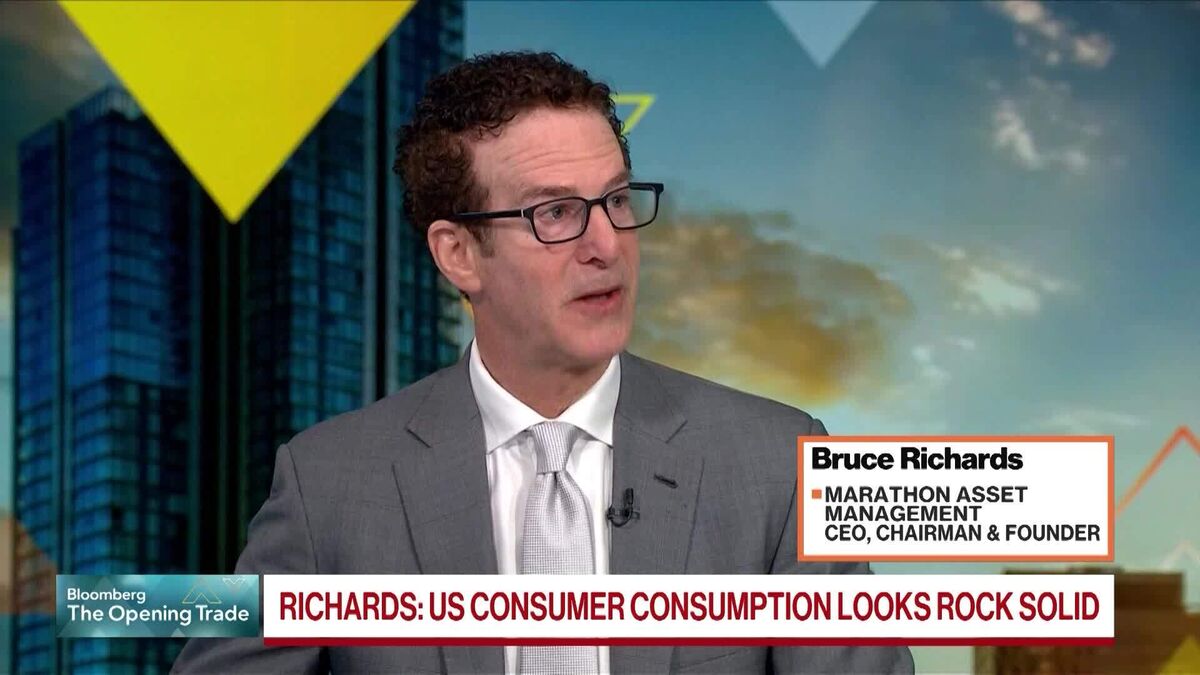
As global markets navigate a complex landscape of geopolitical tensions, inflation concerns, and fluctuating energy prices, Bruce Richards, CEO, co-founder, and chairman of Marathon Asset Management, has struck an optimistic tone about the state of the U.S. economy. In a recent interview on Bloomberg Television, Richards asserted that the U.S. economy is “in good shape” and highlighted the strength of consumer consumption as a key driver of stability.
“The resilience of the U.S. consumer is remarkable,” Richards said. “Consumer spending looks rock solid, and that’s a critical pillar supporting the broader economy.” His comments come at a time when economists and investors alike are closely monitoring the impact of prolonged higher oil prices, which have surged in recent months due to geopolitical conflicts and production cuts by major oil-producing nations.
Consumer Consumption: The Backbone of Economic Stability
Richards’ emphasis on consumer consumption underscores its pivotal role in the U.S. economy. Accounting for nearly 70% of the country’s GDP, consumer spending has remained robust despite inflationary pressures and rising interest rates. This resilience has been fueled by a strong labor market, with unemployment rates hovering near historic lows, and wage growth outpacing inflation in many sectors.
“Households are weathering the storm better than many expected,” Richards noted. “Even with higher prices for essentials like fuel and groceries, consumers continue to spend, particularly on services like travel, dining, and entertainment.”
This dynamic has provided a buffer against external shocks, including the ripple effects of the war in Ukraine and the ongoing economic slowdown in China. However, Richards cautioned that the durability of consumer spending could be tested if oil prices remain elevated for an extended period.
The Oil Price Factor: A Potential Threat to Growth
The global energy market has been volatile in recent months, with Brent crude oil prices briefly surpassing $90 per barrel in September 2023—a significant increase from earlier in the year. Richards identified sustained higher oil prices as one of the most pressing risks to economic growth, both in the U.S. and globally.
“When oil prices rise sharply, it acts as a tax on consumers and businesses,” he explained. “It increases the cost of transportation, manufacturing, and utilities, which can erode disposable income and corporate profitability.”
While the U.S. has become less reliant on imported oil due to the shale revolution, Richards emphasized that the global nature of energy markets means no country is entirely insulated from price spikes. He pointed out that prolonged high oil prices could exacerbate inflationary pressures, complicating the Federal Reserve’s efforts to engineer a “soft landing” for the economy.
The Federal Reserve’s Balancing Act
The Federal Reserve has been engaged in a delicate balancing act over the past two years, raising interest rates aggressively to tame inflation while attempting to avoid triggering a recession. Richards acknowledged the central bank’s progress in bringing inflation down from its peak of over 9% in 2022 but warned that the fight is far from over.
“The Fed has done a commendable job so far, but the last mile of inflation reduction is often the hardest,” he said. “Energy prices, wage growth, and housing costs remain stubbornly high, and these are areas where policymakers need to tread carefully.”
Richards also highlighted the potential risks of overtightening monetary policy, which could stifle economic growth and lead to unintended consequences in financial markets. “The Fed needs to be patient and data-driven,” he advised. “Premature rate cuts could reignite inflation, but staying too restrictive for too long could undermine economic momentum.”
Global Economic Challenges: A Broader Perspective
While Richards expressed confidence in the U.S. economy, he also acknowledged the challenges facing other major economies. Europe, for instance, is grappling with sluggish growth and the fallout from the energy crisis triggered by the Russia-Ukraine conflict. Meanwhile, China’s post-pandemic recovery has been uneven, with weak consumer demand and a downturn in the property sector weighing on growth.
“Global economic conditions are far from uniform,” Richards observed. “The U.S. is in a relatively strong position compared to many of its peers, but it’s not immune to external headwinds.”
He stressed the importance of continued vigilance, particularly in monitoring geopolitical developments and their potential impact on trade and energy markets. “In today’s interconnected world, no country operates in isolation,” he said. “What happens in the Middle East, Europe, or Asia can have ripple effects that reach U.S. shores.”
Investor Sentiment and Market Outlook
Richards’ optimism about the U.S. economy reflects broader sentiment among many investors and analysts who believe the country is well-positioned to navigate the current challenges. However, he cautioned that ongoing uncertainty necessitates a cautious approach in financial markets.
“Investors need to be selective and focus on quality,” he advised. “Companies with strong balance sheets, pricing power, and exposure to secular growth trends are likely to outperform in this environment.”
He also highlighted the potential opportunities in fixed income markets, where higher interest rates have made bonds more attractive relative to recent years. “For the first time in a long time, fixed income is offering real value,” he said.
Looking Ahead: A Balanced Perspective
As the U.S. economy continues to defy expectations of a slowdown, Bruce Richards’ insights offer a measured perspective on the road ahead. While consumer spending remains robust and the labor market strong, risks such as elevated oil prices and geopolitical instability loom large.
“The U.S. economy is far from perfect, but it’s showing remarkable resilience,” Richards concluded. “The key is to stay vigilant, adapt to changing conditions, and avoid complacency.”
His remarks serve as a timely reminder that, in an era of unprecedented global challenges, economic optimism must be tempered with a healthy dose of caution. For now, the U.S. economy appears to be on steady footing, but the path forward will require careful navigation of both domestic and international headwinds.
