


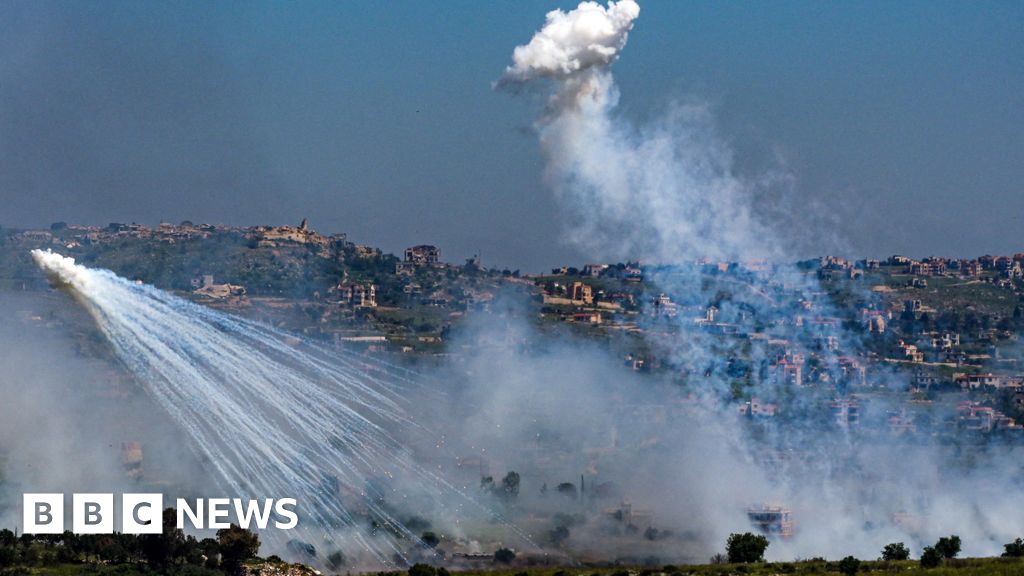

Tensions Rise in Lebanon as Divisions Over Israel-Hezbollah Ceasefire Talks Deepen
Beirut, Lebanon – The fragile ceasefire between Israel and Hezbollah hangs in the balance as Lebanon’s political leaders clash over how—or even whether—to negotiate a lasting peace. President Michel Aoun has called for direct talks to transform the temporary truce into a permanent agreement, while Parliament Speaker Nabih Berri, a key Hezbollah ally, warns that face-to-face negotiations could provoke dangerous consequences. The standoff threatens to reignite a conflict with far-reaching implications for regional stability and global security.
A Nation Divided Over Diplomacy
Lebanon remains deeply fractured along political and sectarian lines, complicating efforts to secure a durable end to hostilities with Israel. President Aoun, a Maronite Christian and political independent, has cautiously endorsed direct negotiations, framing them as a necessary step toward long-term stability. “The ceasefire must evolve into a permanent agreement,” he declared, signaling a rare willingness to engage with Israel despite decades of hostility.
However, his stance has drawn fierce opposition from Berri, the influential Shiite leader and longtime Hezbollah ally. Berri has dismissed the idea of direct talks, arguing that they could undermine Lebanon’s sovereignty and provoke a backlash from hardline factions. “Such negotiations carry unacceptable risks,” he warned, reflecting Hezbollah’s broader resistance to formal diplomacy with Israel.
The divide highlights Lebanon’s precarious position—caught between international pressure to de-escalate and Hezbollah’s entrenched anti-Israel ideology.
Global Stakes: Why This Matters Beyond Lebanon
The Israel-Hezbollah conflict is more than a regional dispute; it is a flashpoint with global ramifications. Since the 2006 war, sporadic clashes have threatened to spiral into full-scale conflict, drawing in Iran, the U.S., and other major powers. Hezbollah, backed by Tehran, possesses an arsenal of over 150,000 rockets, making it one of the world’s most heavily armed non-state actors. Any escalation could disrupt oil markets, trigger refugee crises, and strain diplomatic relations worldwide.
The U.S. and European Union have repeatedly urged restraint, fearing another Middle East war could destabilize an already volatile region. Meanwhile, Russia and China have used the tensions to bolster their influence, positioning themselves as mediators while criticizing Western interventions.
For Lebanon, already crippled by economic collapse and political paralysis, renewed conflict would be catastrophic. The country’s currency has lost 90% of its value since 2019, and half its population lives in poverty. A new war could plunge it into further chaos, with ripple effects across the Mediterranean and beyond.
Historical Context: A Cycle of Violence and Failed Truces
The current tensions trace back to the 1980s, when Hezbollah emerged as a resistance movement against Israel’s occupation of southern Lebanon. Decades of sporadic violence culminated in the 2006 war, which killed over 1,200 Lebanese and 160 Israelis before a UN-brokered ceasefire took hold.
Since then, the border has remained a tinderbox. Recent months have seen rocket fire, drone incursions, and assassinations, with both sides accusing the other of provocation. The latest ceasefire, mediated by Egypt and the UN, is the most tenuous in years—underscoring the urgent need for a political solution.
Yet history suggests that without a unified Lebanese position, diplomacy will fail. Past negotiations have collapsed due to Hezbollah’s refusal to disarm and Israel’s insistence on treating the group as a terrorist threat rather than a political actor.
What Comes Next?
The immediate focus is on whether Lebanon’s government can bridge its internal divides. Aoun’s push for direct talks aligns with international demands, but without Berri and Hezbollah’s support, progress is unlikely. Alternative proposals, such as indirect negotiations via the UN, may offer a compromise—but even those face skepticism from hardliners.
Meanwhile, Israel has signaled it will not tolerate indefinite threats on its northern border. Defense Minister Benny Gantz recently warned that if diplomacy stalls, military action remains “on the table.”
A Fragile Peace in a Volatile World
As Lebanon’s leaders debate the path forward, the world watches nervously. The stakes could not be higher: another war would devastate Lebanon, destabilize the Middle East, and test the limits of global diplomacy. For now, the ceasefire holds—but without a credible roadmap to peace, it may only be a pause before the next explosion.
The coming days will reveal whether diplomacy can prevail over division, or if the region is destined for another cycle of violence. One thing is certain: in a world already grappling with war in Ukraine, rising tensions in Asia, and economic turmoil, the Middle East cannot afford another conflict. The time for decisive action is now.
