


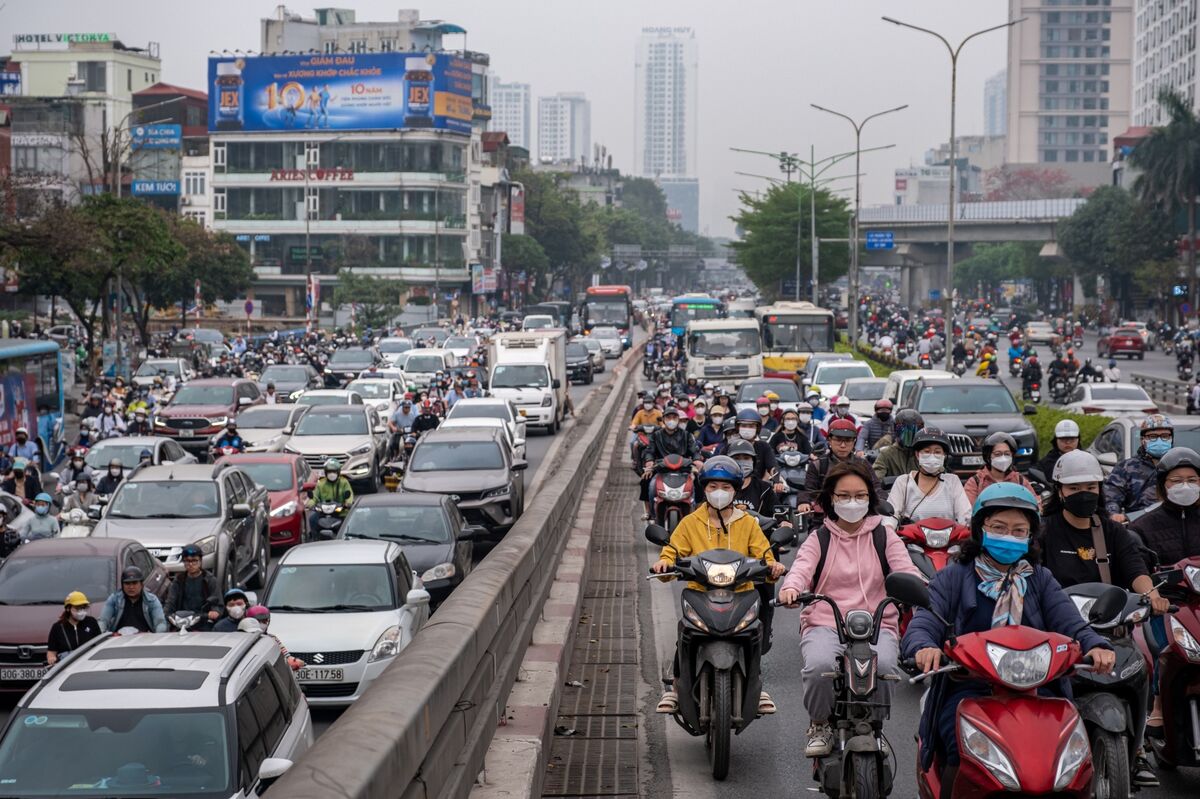

Vietnam Grapples with Rising Inflation as Global Energy Crisis Bites
By [Your Name]
HANOI, Vietnam – Vietnam’s economy is facing mounting headwinds as inflation surged more than anticipated in April, driven by escalating global energy prices and geopolitical tensions in the Middle East. The latest data highlights the growing vulnerability of the Southeast Asian nation to external shocks, even as it continues to recover from the economic fallout of the COVID-19 pandemic.
The General Statistics Office of Vietnam reported that consumer prices rose by 2.8% year-on-year in April, a significant jump compared to the 1.8% increase recorded in March. The acceleration exceeded economists’ forecasts, underscoring the ripple effects of the ongoing conflict between Iran and Israel, which has pushed global crude oil prices to multi-month highs. Transport costs, a critical component of Vietnam’s inflation basket, surged by 3.2% month-on-month, while input prices for manufacturing and construction also climbed sharply.
Vietnam, a rapidly industrializing economy heavily reliant on energy imports, is particularly exposed to fluctuations in global energy markets. Analysts warn that sustained inflationary pressures could erode the nation’s competitive edge as a low-cost manufacturing hub, while also straining household budgets in a country where income growth remains modest.
“The April inflation figures are a wake-up call,” said Nguyen Thi Hong, an economist at the Vietnam Institute of Economics. “While Vietnam has managed to keep inflation relatively low in recent years, the confluence of geopolitical tensions and rising energy costs presents a formidable challenge for policymakers.”
Global Energy Crisis Amplifies Domestic Pressures
The roots of Vietnam’s inflationary spike lie far beyond its borders. The intensification of the Iran-Israel conflict has sent shockwaves through global energy markets, with Brent crude oil prices hovering above $90 per barrel—a level not seen since October 2023. Vietnam, which imports nearly 70% of its crude oil needs, has been hit hard by the surge.
Transportation costs, closely tied to fuel prices, have soared, affecting everything from logistics companies to public transit. Meanwhile, higher energy prices have driven up input costs for industries reliant on oil and gas derivatives, including plastics, chemicals, and textiles. These sectors form the backbone of Vietnam’s export-oriented economy, which has long been a magnet for foreign investment due to its competitive labor costs and strategic location in Southeast Asia.
The energy crisis has also exacerbated inflationary pressures in food and housing. Rice prices, a staple in Vietnam, rose by 1.5% month-on-month, reflecting disruptions in global grain markets linked to climate-related challenges and geopolitical instability. Housing and construction materials, too, have become more expensive, driven by rising costs for steel, cement, and electricity.
Government Response Faces Tough Trade-offs
Vietnam’s central bank has so far maintained a cautious approach, avoiding aggressive interest rate hikes that could stifle economic growth. The State Bank of Vietnam last adjusted its benchmark rate in September 2023, cutting it by 0.25 percentage points to support post-pandemic recovery. However, the latest inflation figures have sparked debates about whether monetary tightening is now unavoidable.
“The government faces a delicate balancing act,” said Le Dang Doanh, an independent economist based in Hanoi. “On one hand, raising interest rates could help curb inflation, but it could also dampen domestic demand and slow down the recovery. On the other hand, failing to act risks letting inflation spiral out of control.”
Policymakers are also grappling with structural challenges that limit their ability to mitigate inflation. Vietnam’s underdeveloped infrastructure and dependence on imported energy leave it particularly vulnerable to external shocks. Efforts to diversify energy sources, including investments in renewable energy, are still in their early stages and unlikely to provide immediate relief.
Regional and Global Implications
Vietnam’s inflation woes are emblematic of broader struggles across Southeast Asia, where countries like Indonesia, Thailand, and the Philippines are also grappling with rising prices. The region’s heavy reliance on imported energy and commodities has left it exposed to the volatility of global markets.
For multinational corporations operating in Vietnam, the inflationary pressures could mean higher production costs and potentially tighter profit margins. Companies like Samsung, Intel, and Nike, which have invested billions in Vietnam’s manufacturing sector, may face tougher operating conditions if inflation persists.
Globally, Vietnam’s rising inflation adds to concerns about the fragility of the post-pandemic economic recovery. As one of the world’s fastest-growing economies, Vietnam plays a pivotal role in global supply chains, particularly in electronics, textiles, and footwear. Persistent inflationary pressures could disrupt output and contribute to higher prices for consumers worldwide.
Looking Ahead: A Precarious Balancing Act
As Vietnam navigates this challenging economic landscape, analysts urge policymakers to strike a balance between curbing inflation and sustaining growth. Targeted measures, such as subsidies for essential goods and investments in energy efficiency, could help alleviate some of the immediate pressures. However, long-term solutions will require structural reforms to reduce dependence on imported energy and enhance economic resilience.
For now, Vietnamese households and businesses are bracing for tougher times ahead. Nguyen Van Thanh, a motorbike taxi driver in Hanoi, encapsulates the sentiment of many. “Fuel prices keep going up, and my earnings are barely enough to cover my expenses,” he said. “I hope things will get better soon, but it’s hard to be optimistic with everything going on.”
As global uncertainties persist, Vietnam’s ability to manage inflation will serve as a litmus test for its economic stability and its role as a key player in the global economy. While the path ahead is fraught with challenges, the country’s resilience and adaptability could yet prove decisive in weathering the storm.
The coming months will be critical for Vietnam as it seeks to balance the imperatives of growth and stability in an increasingly unpredictable world.
