



AI Revolution Reshapes China’s Entertainment Industry, Sparking Global Workforce Concerns
By [Your Name] | [Date]
A Dramatic Disruption
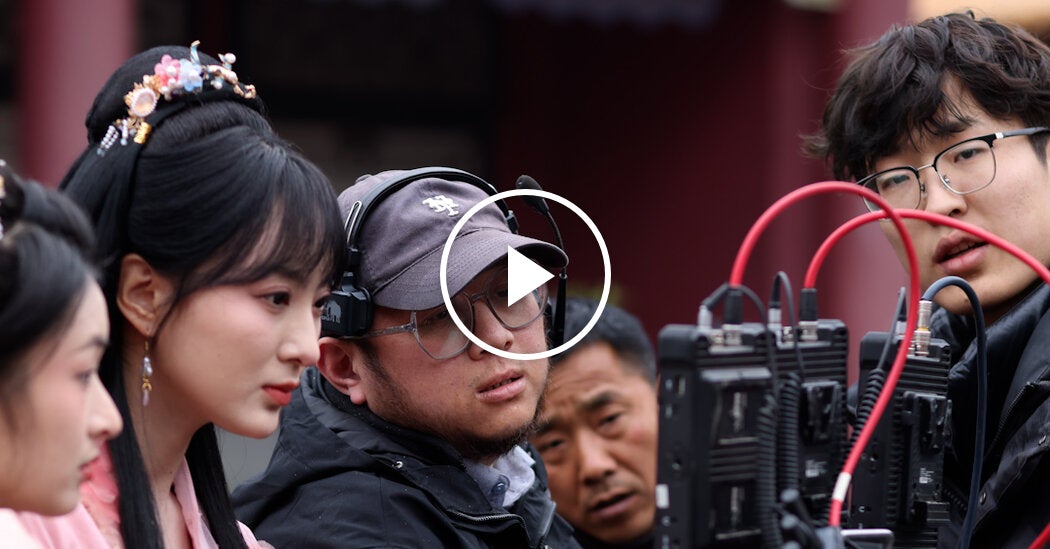
In a dimly lit studio outside Beijing, actress Xing Enran scrolls through casting calls on her phone, her calendar alarmingly empty. Just months ago, she was a rising star in China’s booming microdrama industry, playing seductresses and scheming villains in bite-sized, addictive episodes. Now, her roles have vanished—replaced by algorithms. Across town, director Wang Yushun watches as an AI-generated sci-fi battle unfolds on his screen, marveling at the cost savings but haunted by the layoffs he’s had to impose. This is the new reality of China’s $14 billion microdrama industry, where artificial intelligence is rewriting the rules of entertainment—and leaving human talent scrambling to adapt.
The Rise of Microdramas
Microdramas—short, serialized episodes designed for smartphone consumption—have exploded in popularity across China. With rapid-fire plots, exaggerated emotions, and cliffhanger endings, these shows thrive on platforms like Douyin (China’s TikTok) and WeChat, where viewers pay per episode. The format has proven wildly lucrative, creating a gold rush for producers and actors alike. But as demand for higher production values grows, AI tools like Seedance—capable of generating cinematic scenes with Hollywood-level effects—are upending the industry.
AI’s Double-Edged Sword
For directors like Wang Yushun, AI has been a game-changer. His experiments with Seedance allowed him to create complex sci-fi sequences without expensive CGI or large crews. “Production time and costs have dropped dramatically,” he explains. But efficiency comes at a price: Wang has laid off half his staff, including field crews and producers. Meanwhile, actors like Xing Enran, who once worked 20 days a month, now struggle to find roles as AI-generated characters and deepfake performances gain traction.
The shift mirrors broader global trends. In Hollywood, AI-driven de-aging and voice replication have sparked strikes and fierce debates over labor rights. China’s microdrama industry, however, operates with fewer regulations, accelerating AI adoption—and its consequences.
Why This Matters Globally
China’s entertainment sector is a testing ground for AI’s disruptive potential. If AI can replace actors, writers, and technicians in microdramas, similar disruptions could soon hit global media. The implications stretch beyond entertainment:
- Economic Impact: Job losses in creative industries could exacerbate unemployment in countries already grappling with automation.
- Cultural Shifts: AI-generated content risks homogenizing storytelling, prioritizing algorithmic appeal over human creativity.
- Geopolitical Edge: China’s rapid AI integration could give its media exports a competitive advantage, flooding global markets with low-cost, AI-produced shows.
The Human Cost
For workers like Xing, the transition has been brutal. “I used to feel secure in my craft,” she says. “Now, I don’t know if I have a future in this industry.” Independent filmmakers, too, face a dilemma: embrace AI to stay competitive or resist and risk obsolescence.
What Comes Next?
Regulators in China and abroad are beginning to take notice. While Beijing has encouraged AI innovation, calls for labor protections are growing. Meanwhile, platforms are grappling with ethical questions—should AI-generated content be labeled? Who owns the rights to synthetic performances?
A Turning Point for Creativity
As the sun sets over Beijing’s production studios, the lights inside aren’t just illuminating sets—they’re shining on a pivotal moment in media history. The rise of AI in entertainment isn’t just a Chinese phenomenon; it’s a global reckoning. The question isn’t whether AI will transform storytelling, but whether humanity will have a role in the stories left to tell.
For now, Xing Enran keeps refreshing her phone, hoping for a call. But with every passing day, the algorithms grow smarter—and the industry she once knew slips further away.
