



Tensions Flare as Thousands March Through Jerusalem’s Old City Amid Global Dispute Over Sovereignty
Jerusalem – The narrow, ancient streets of Jerusalem’s Old City echoed with the footsteps of tens of thousands of Israeli nationalists on Wednesday, marking an annual march that has become a flashpoint in the decades-long Israeli-Palestinian conflict. The event, which commemorates Israel’s capture of East Jerusalem in the 1967 Arab-Israeli war, unfolded under heavy security as Palestinian businesses shuttered and residents braced for confrontations. The march, steeped in both religious significance and political controversy, underscores the unresolved status of Jerusalem—a city claimed by two peoples and revered by three major religions.
A Contentious Commemoration
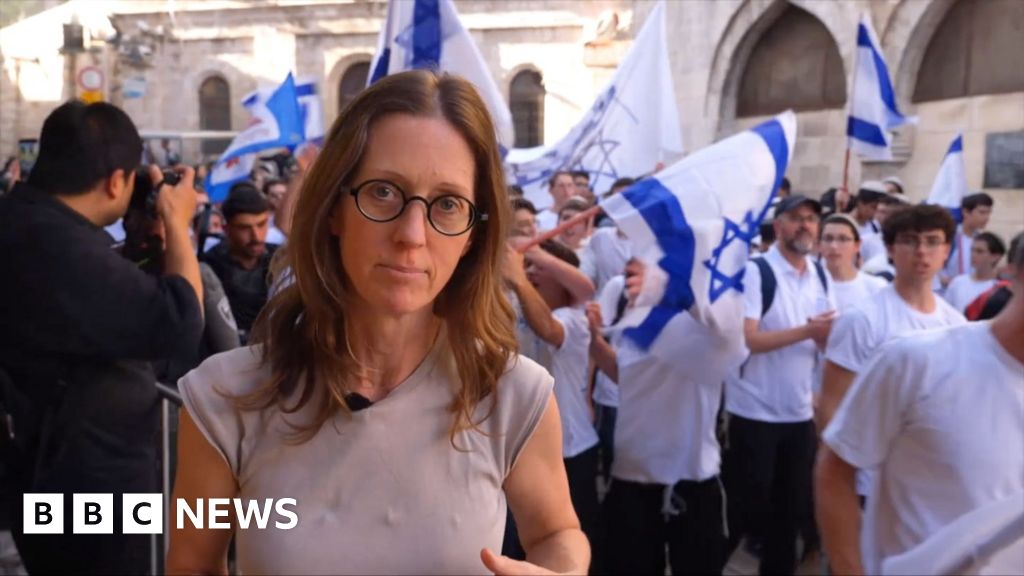
The so-called “Flag March” saw waves of Israeli celebrants, many draped in national colors, winding through the Muslim Quarter toward the Western Wall, Judaism’s holiest prayer site. The procession, which has grown in size and fervor in recent years, is viewed by Palestinians as a provocative assertion of Israeli control over East Jerusalem—a territory occupied by Israel but considered illegally annexed under international law.
The UK, along with much of the international community, does not recognize Israel’s sovereignty over East Jerusalem, maintaining that its final status must be negotiated in a future peace deal. Yet for many Israelis, the march is a celebration of what they see as the reunification of their historic capital.
History of Violence and Provocation
The event has frequently been marred by violence. Past marches have featured racist chants, assaults on Palestinian residents, and vandalism of property, drawing condemnation from human rights groups. This year, reports emerged of isolated scuffles and verbal harassment, though no major clashes were immediately reported. Palestinian shopkeepers, many of whom closed their stores in protest, described the atmosphere as tense and intimidating.
“The march is not just about flags—it’s a message that we don’t belong here,” said one Palestinian vendor, who asked not to be named for fear of reprisals. Israeli police, deployed in large numbers, insisted their priority was maintaining order, but critics argue their presence often emboldens hardline participants.
Global Implications of Jerusalem’s Status
The march comes at a delicate moment for regional diplomacy. The Israeli-Palestinian conflict has faded from the forefront of global attention in recent years, overshadowed by wars in Ukraine and Gaza, as well as shifting alliances in the Middle East. Yet Jerusalem remains a potent symbol—and a potential trigger for wider unrest.
For the Arab world, the status of East Jerusalem is non-negotiable; its annexation by Israel has stalled normalization efforts with some Gulf states. Meanwhile, the U.S. and European allies walk a fine line, balancing support for Israel’s security with calls to preserve the possibility of a two-state solution. The march, with its overt nationalist overtones, risks further eroding already fragile trust between the sides.
Eyewitness Perspective: A Divided City
BBC Middle East correspondent Lucy Williamson, reporting from the scene, noted the stark contrast between the jubilant marchers and the subdued Palestinian onlookers. “The Old City today is a microcosm of the broader conflict—two narratives, two peoples, and no easy path to coexistence,” she observed.
The march’s route through the Muslim Quarter, home to Palestinian families for generations, is particularly inflammatory. For Palestinians, it underscores what they see as an ongoing effort to marginalize their presence in Jerusalem. For Israeli participants, it’s a reclamation of what they believe is their rightful heritage.
Why This Matters Beyond the Region
The Jerusalem march is more than a local event—it’s a barometer of the Israeli-Palestinian conflict’s trajectory. With peace talks long dormant and violence simmering in the West Bank, symbolic acts like this reinforce the perception that a negotiated solution is slipping further away.
Globally, the dispute over Jerusalem complicates efforts to stabilize the Middle East. It fuels anti-Israel sentiment in the Muslim world, provides propaganda fodder for extremist groups, and tests the credibility of international institutions like the UN, which have repeatedly called for an end to Israel’s occupation.
For Western governments, the challenge is navigating domestic political pressures while avoiding actions that could inflame tensions. The Biden administration, for instance, has cautiously criticized settlement expansion but remains a staunch ally of Israel—a balancing act that grows harder with each provocative act.
A City of Shadows and Symbols
As the sun set over Jerusalem’s ancient stones, the marchers dispersed, leaving behind a city still deeply divided. The flags may have been folded away, but the grievances they represent remain unresolved.
In a world grappling with multiple crises, the Jerusalem march is a reminder of a conflict that refuses to be buried—one where history, religion, and politics collide with explosive consequences. Until both sides find a way to share this contested land, the cycle of provocation and retaliation is likely to continue, with repercussions far beyond the Old City’s walls.
Reporting contributed by Lucy Williamson in Jerusalem. Additional background from diplomatic and security sources.
