


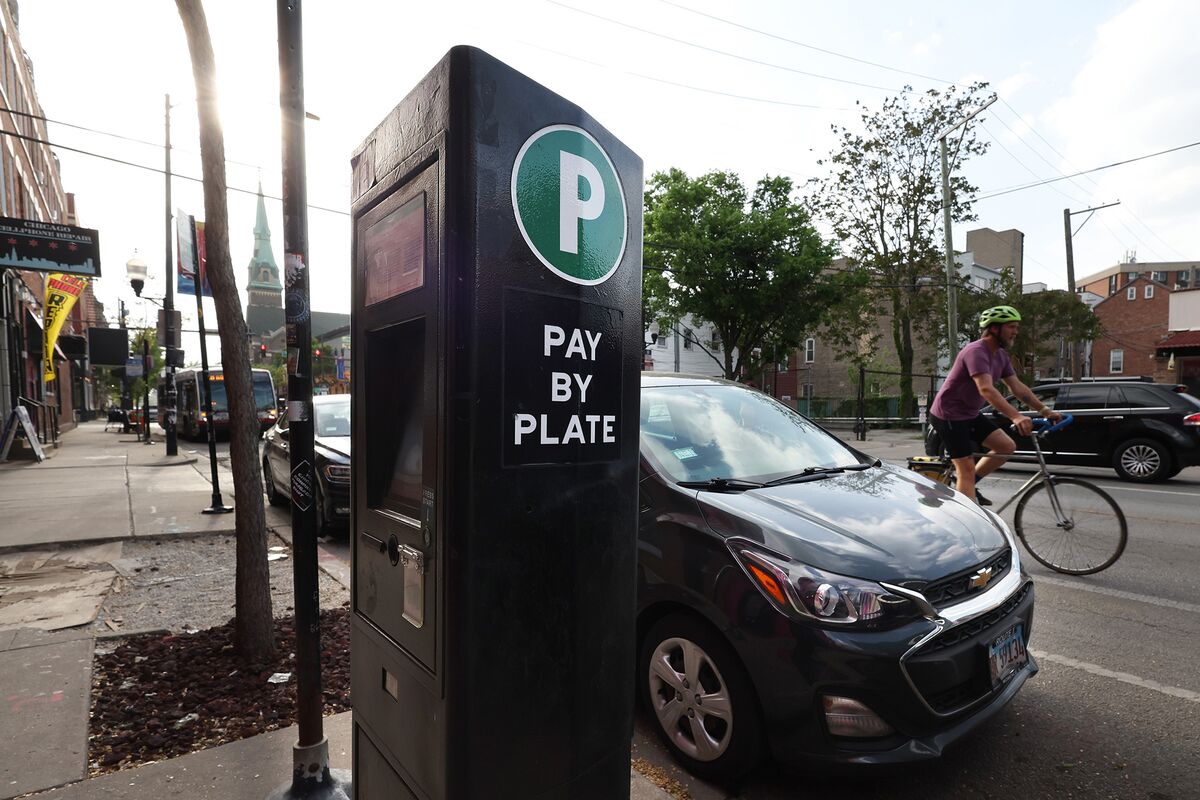

Morgan Stanley-Led Consortium Strikes $1.1 Billion Deal to Transfer Chicago Parking Meter Lease to Stonepeak
Chicago, Illinois — In a landmark financial transaction, a Morgan Stanley-led investment group has finalized a deal to sell its lease of Chicago’s parking meters to New York-based infrastructure investment firm Stonepeak. The agreement, announced by Mayor Brandon Johnson’s office on Monday, marks a significant shift in the ownership of one of the city’s most contentious and scrutinized public-private partnerships. Valued at approximately $1.1 billion, the sale underscores the enduring complexity of Chicago’s parking meter system, which has been a lightning rod for criticism since its inception in 2008.
The deal is poised to reshape the financial landscape of Chicago’s parking infrastructure, which has long been a symbol of privatization and its associated challenges. For Mayor Johnson, who assumed office in May 2023, the transaction presents both an opportunity and a test of his administration’s ability to navigate the legacy of a deal that has been widely criticized for favoring private investors over public interests.
A Controversial Legacy: The 2008 Parking Meter Lease
The roots of this transaction trace back to 2008, when Chicago, under then-Mayor Richard M. Daley, leased its parking meter system for 75 years to a consortium led by Morgan Stanley. The $1.15 billion deal was touted as a creative solution to address the city’s fiscal woes, providing an immediate infusion of cash to shore up its budget. However, the agreement quickly became a textbook example of the pitfalls of privatization.
The contract granted the consortium unprecedented control over parking rates and operations, leading to soaring costs for drivers and widespread public outcry. Critics argued that the deal shortchanged taxpayers, with the city relinquishing long-term revenue streams for short-term gains. Over the years, the parking meter lease has been a recurring source of frustration for Chicagoans, with many accusing the consortium of prioritizing profits over public service.
Stonepeak’s Entry: A New Chapter in Parking Meter Ownership
Stonepeak, a leading infrastructure and real assets investment firm, now steps into the spotlight as the new leaseholder. Known for its strategic investments in transportation, energy, and utilities, Stonepeak has positioned itself as a major player in the global infrastructure market. The firm’s acquisition of the Chicago parking meter lease signals its confidence in the asset’s long-term value, despite its controversial history.
For Chicago, the transfer of ownership raises questions about the future of parking meter operations. While Stonepeak has committed to maintaining the existing contract terms, Mayor Johnson’s administration has emphasized the importance of ensuring fair treatment for residents. “This transition presents an opportunity to revisit the relationship between the city and private operators,” Johnson said in a statement. “Our priority is to protect the interests of Chicagoans while fostering transparency and accountability.”
Financial Implications: A Complex Transaction
The $1.1 billion sale reflects the enduring financial appeal of urban parking assets, which generate steady revenue streams in densely populated cities. For Morgan Stanley and its partners, the deal represents a profitable exit from an investment that has sparked years of public controversy. The consortium’s original $1.15 billion lease agreement included annual payments to the city, but the escalating costs of parking meters left many residents feeling shortchanged.
Stonepeak’s acquisition underscores the growing interest in infrastructure investments, particularly in urban centers where demand for parking remains high. According to industry analysts, the deal highlights the resilience of such assets in the face of broader economic uncertainties. “Infrastructure investments like parking meters offer predictable returns, making them attractive to investors,” said David Smith, a financial analyst at Deloitte. “However, they also require careful management to balance profitability with public welfare.”
Political and Public Reaction
The announcement of the sale has elicited mixed reactions from Chicago residents and policymakers. While some see it as an opportunity to reset the city’s relationship with private operators, others remain skeptical of any deal involving the parking meter lease. Alderman Carlos Ramirez-Rosa, a vocal critic of privatization, expressed cautious optimism. “This transition could be a chance to address some of the flaws in the original agreement,” Ramirez-Rosa said. “But we must remain vigilant to ensure that the new operator prioritizes the needs of communities.”
Public advocacy groups, meanwhile, have called for greater transparency in the deal’s terms. The Chicago Urban League, a nonprofit organization focused on economic equity, urged Mayor Johnson’s administration to involve residents in discussions about the future of parking meter operations. “The people of Chicago deserve a say in how this critical public asset is managed,” said Karen Freeman-Wilson, the organization’s CEO.
Broader Implications: Lessons for Urban Governance
The sale of Chicago’s parking meter lease raises broader questions about the role of privatization in urban governance. As cities grapple with budget constraints and infrastructure challenges, public-private partnerships have become increasingly common. However, the Chicago case serves as a cautionary tale, highlighting the potential risks of ceding control over public assets to private entities.
“Privatization can provide immediate financial relief, but it often comes at a long-term cost,” said Dr. Sarah Warner, a professor of urban studies at the University of Illinois. “Cities must strike a delicate balance between leveraging private capital and safeguarding public interests.”
For Mayor Johnson, the transaction represents a pivotal moment in his tenure. As his administration works to address the legacy of the 2008 deal, the focus will be on ensuring that the new arrangement benefits all Chicagoans. The mayor has pledged to review the terms of the sale and explore opportunities to enhance accountability in parking meter operations.
Looking Ahead: A New Era for Chicago’s Parking Meters
As Stonepeak takes the reins, the future of Chicago’s parking meter system remains uncertain. While the firm has signaled its commitment to upholding the existing contract, the city’s evolving priorities could pave the way for changes in how parking meters are managed. For now, the focus is on transitioning ownership smoothly and minimizing disruptions for residents.
In the broader context, the sale serves as a reminder of the complexities inherent in urban governance. As cities continue to explore innovative solutions to their challenges, the balance between private interests and public welfare will remain a critical issue.
The deal, while marking the end of one chapter, opens a new one—one that will be closely watched by policymakers, investors, and residents alike. As Mayor Johnson aptly noted, “Chicago’s journey with its parking meters is far from over. Together, we must ensure that the road ahead leads to a more equitable and sustainable future.”
For now, the city and its residents await the next turn in this long-running saga, hopeful yet cautious about what lies ahead.
