


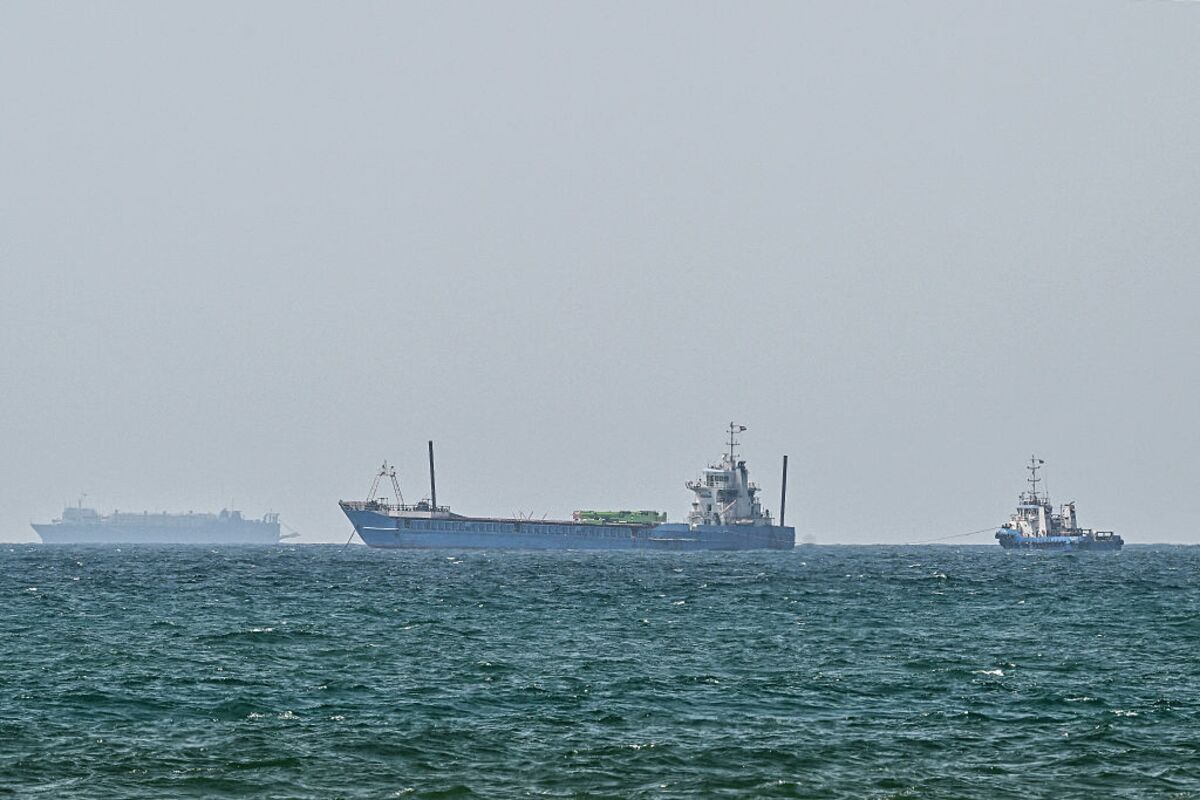

U.S. Military Diverts Over 100 Commercial Ships in Six-Week Blockade of Iranian Ports
In a bold maritime maneuver, U.S. forces have intercepted and redirected more than 100 commercial vessels over the past six weeks as part of a strategic blockade targeting Iran’s ports. The operation, confirmed by U.S. Central Command (CENTCOM), underscores Washington’s escalating efforts to deter Tehran’s alleged illicit activities, including the smuggling of oil and other sanctioned goods. The move comes amid heightened tensions in the Persian Gulf, a region long fraught with geopolitical friction and critical to global energy supplies.
The blockade, which began in mid-August, represents one of the most assertive U.S. military actions in the region in recent years. By effectively disrupting maritime traffic to and from Iranian ports, the U.S. aims to curb Iran’s ability to circumvent international sanctions, particularly those related to its oil exports. According to CENTCOM, the redirected vessels were suspected of carrying sanctioned cargo or violating U.S. sanctions regimes, though specific details about the intercepted shipments remain undisclosed.
Context: A Decades-Long Confrontation
The U.S.-Iran relationship has been strained for decades, marked by mutual distrust, economic sanctions, and occasional military brinkmanship. Since the 1979 Iranian Revolution, which saw the overthrow of the U.S.-backed Shah and the establishment of an Islamic Republic, Washington and Tehran have been locked in a protracted battle for influence in the Middle East. The U.S. has frequently accused Iran of destabilizing the region through its support for proxy groups, its ballistic missile program, and its pursuit of nuclear capabilities.
Sanctions have been a cornerstone of U.S. policy toward Iran, particularly since the Trump administration unilaterally withdrew from the 2015 nuclear deal, formally known as the Joint Comprehensive Plan of Action (JCPOA), in 2018. The move reimposed crippling economic sanctions on Tehran and sought to reduce its oil exports to zero. While Iran has consistently denied violating international laws or sanctions, U.S. officials have repeatedly alleged that Tehran employs clandestine methods to bypass restrictions, including the use of obscure shipping routes and unflagged vessels.
The Blockade: A Tactical Escalation
The recent maritime blockade marks a significant escalation in Washington’s enforcement of sanctions. Over the past six weeks, U.S. Navy ships operating in the Persian Gulf and the Gulf of Oman have intercepted commercial vessels suspected of transporting sanctioned goods. CENTCOM stated that these operations were conducted in accordance with international law and in close coordination with regional partners.
While the precise locations of the interceptions have not been disclosed, analysts believe that the U.S. focused its efforts on key Iranian ports such as Bandar Abbas, a major hub for oil exports, and Chabahar, which Iran has developed as a gateway to bypass U.S. sanctions. The operation involved a combination of naval patrols, aerial surveillance, and intelligence-gathering to identify suspect vessels. Once intercepted, the ships were escorted to international waters or instructed to change course, effectively preventing them from reaching their intended destinations.
Global Implications: Energy Markets and Maritime Security
The Persian Gulf is a vital artery of global trade, with approximately one-third of the world’s seaborne oil passing through its waters. Any disruption in the region has far-reaching implications for energy markets and global economic stability. The U.S. blockade has raised concerns among shipping companies and energy traders, who fear that the move could escalate tensions and lead to broader instability.
Moreover, the operation highlights the growing militarization of the region, where the U.S. and Iran have engaged in a series of confrontations in recent years. In 2019, the U.S. accused Iran of attacking commercial tankers in the Gulf of Oman, while Tehran has retaliated by seizing foreign vessels in the Strait of Hormuz. The Strait, a narrow waterway that connects the Persian Gulf to the open ocean, is a critical choke point for global oil shipments, and any disruption there could send shockwaves through the global economy.
Iran’s Response: Defiance and Countermeasures
Iran has condemned the U.S. blockade as illegal and provocative, vowing to take countermeasures to protect its economic interests. Iranian officials have accused Washington of violating international maritime laws and attempting to impose a “naval siege” on the country. Tehran has also warned that it will not hesitate to defend its sovereignty and ensure the uninterrupted flow of its exports.
In response to the blockade, Iran has reportedly intensified its efforts to evade sanctions by utilizing alternative shipping routes and employing more sophisticated smuggling tactics. Additionally, Iran’s Revolutionary Guard Corps (IRGC), which oversees the country’s maritime security, has increased its presence in the Persian Gulf and the Gulf of Oman. Analysts warn that these developments could lead to further confrontations between Iranian and U.S. forces in the region.
International Reactions: Mixed Responses
The U.S. blockade has drawn mixed reactions from the international community. While Washington’s allies, including Israel and Saudi Arabia, have expressed support for the operation, other nations have criticized the move as heavy-handed and potentially destabilizing. European countries, which have sought to salvage the JCPOA and maintain diplomatic engagement with Iran, have called for restraint and dialogue to de-escalate tensions.
Meanwhile, China and Russia, both of which have economic ties with Iran, have condemned the blockade as an example of U.S. overreach and a violation of Iran’s sovereignty. Beijing, in particular, relies heavily on Iranian oil imports and has sought to strengthen its partnership with Tehran in defiance of U.S. sanctions.
Looking Ahead: A Precarious Balance
As the U.S. blockade enters its seventh week, the situation in the Persian Gulf remains fraught with uncertainty. While Washington has hailed the operation as a success in enforcing sanctions and curbing Iran’s illicit activities, critics warn that such measures could further inflame tensions and jeopardize regional stability.
The coming weeks will be critical in determining whether the blockade achieves its intended objectives or precipitates a broader conflict. With both the U.S. and Iran standing firm in their positions, the risk of miscalculation and escalation looms large. As the world watches closely, the delicate balance of power in the Persian Gulf hangs in the balance, reminding us of the high stakes involved in this enduring geopolitical standoff.
In a region where history has shown that brinkmanship can quickly spiral into crisis, the hope remains that diplomacy, rather than military action, will ultimately prevail.
