


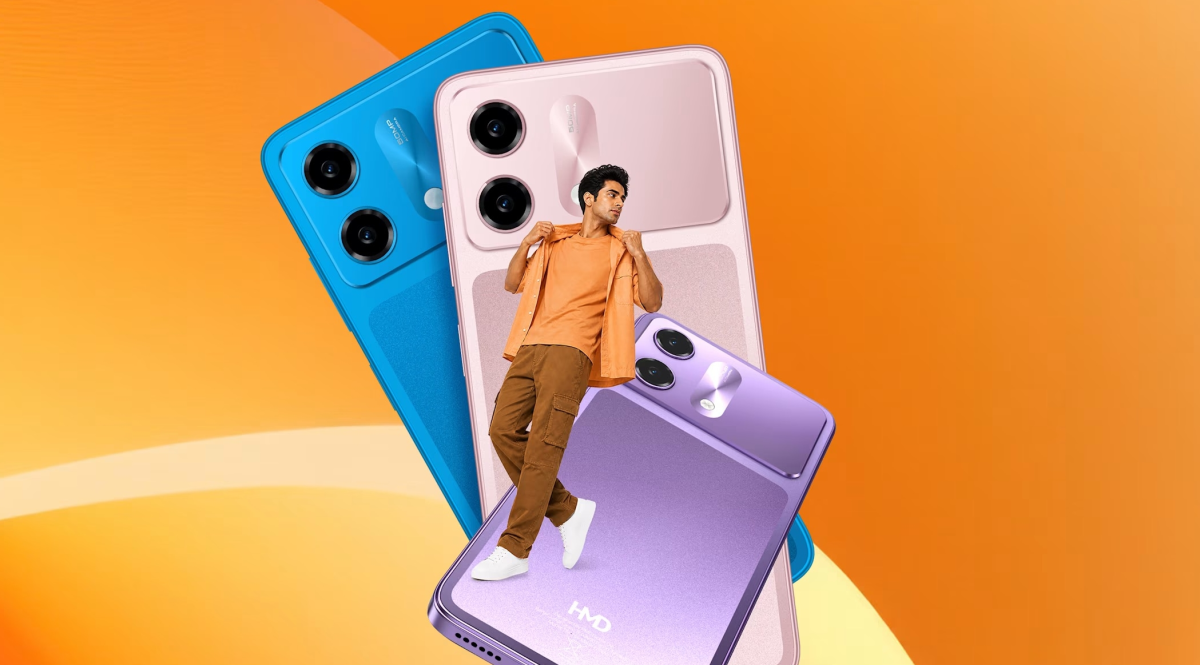

HMD Partners with Sarvam AI to Launch Vibe 2 5G, India’s First Smartphone with Preloaded Indic-Language Chatbot
Byline: Tech Correspondent | Date: [Insert Date]
In a bold move to tap into India’s rapidly growing AI and smartphone markets, Finnish mobile manufacturer HMD Global has unveiled its latest device, the Vibe 2 5G, featuring an exclusive integration with Sarvam AI’s Indus chatbot. This partnership, announced earlier this year at the India AI Summit in New Delhi, marks a significant step in bridging the gap between affordable technology and localized artificial intelligence solutions. The Vibe 2 5G, priced at ₹10,999 ($114), is a mid-range Android smartphone designed to cater to India’s budget-conscious consumers while introducing them to cutting-edge AI capabilities tailored to the country’s linguistic diversity.
At the heart of this collaboration is Sarvam AI’s Indus app, a chatbot powered by a locally trained 105-billion-parameter AI model. Unlike many global AI tools that prioritize English, Indus supports 22 Indic languages and boasts a unique feature: mid-sentence code-switching. This allows users to seamlessly switch between languages, such as Hindi and English, within the same conversation, enhancing contextual understanding and user experience. While the app currently requires an internet connection and lacks device-specific shortcuts for invocation, its preloading on the Vibe 2 5G ensures immediate accessibility for users.
The partnership between HMD and Sarvam AI is more than just a technological experiment—it’s a strategic play to gauge the appetite for India-centric AI solutions. “Our goal is to make the Indus app accessible to consumers right out of the box,” said Ravi Kunwar, HMD’s CEO and Vice President for India and APAC, in an interview with TechCrunch. “Once users engage with the app, we’ll focus on driving deeper integration and stickiness. This is just the beginning.”
India’s AI Landscape: A Fertile Ground for Innovation
India’s AI ecosystem has been gaining momentum, with startups like Sarvam AI leading the charge in developing solutions tailored to the country’s unique needs. While global AI platforms like ChatGPT have seen widespread adoption, their reliance on English limits their reach in a linguistically diverse nation where over 95% of the population communicates primarily in local languages. This gap presents a lucrative opportunity for companies like Sarvam AI, which are designing AI tools specifically for Indian users.
Sarvam AI has already made waves with its focus on voice-based enterprise solutions, positioning itself as one of India’s most promising AI startups. Reports suggest the company is on track to raise $300 million in funding at a $1.5 billion valuation, underscoring investor confidence in its mission to democratize AI access in India.
For HMD, this partnership represents a strategic pivot toward innovation in a highly competitive market. While the company holds a modest 4% share of India’s feature phone market, its presence in the smartphone segment has been negligible, with the brand failing to crack the top 15 rankings in 2025. By integrating Sarvam AI’s Indus chatbot into its devices, HMD aims to differentiate itself and capture the attention of consumers seeking affordable yet innovative technology.
The Vibe 2 5G: A Budget-Friendly Powerhouse
The Vibe 2 5G is designed to appeal to India’s mass market, offering a balance of performance and affordability. Key specifications include a robust 6,000mAh battery, ensuring extended usage for users with limited access to charging facilities, and a mid-range price point that aligns with the purchasing power of Indian consumers. HMD has also announced plans to extend the Indus chatbot integration to other devices in its Vibe series, signaling a broader commitment to embedding AI capabilities across its product lineup.
Perhaps the most significant aspect of this partnership lies in its potential to extend beyond smartphones. HMD is reportedly developing a feature phone with Sarvam AI integration, a move that could prove transformative in a market where feature phones still account for a substantial share of device sales. With over 200 million feature phone users in India, such integration could democratize AI access for millions of Indians who are currently excluded from the digital revolution.
Early Metrics and Future Prospects
While the Indus app’s early adoption metrics are modest—ranking just over 293,000 downloads in India since its launch three months ago—they are indicative of a nascent market still warming up to localized AI solutions. In comparison, ChatGPT garnered 43.9 million downloads in India, highlighting the vast gap between global and regional AI tools.
However, early numbers only tell part of the story. The strategic bundling of AI tools with affordable hardware, particularly feature phones, offers a direct distribution channel in a market as diverse as India. This approach could serve as a blueprint for AI adoption in other emerging markets, where linguistic diversity and affordability are key considerations.
For investors and industry observers, the HMD-Sarvam AI partnership serves as a litmus test for the viability of region-specific AI solutions. As Kunwar noted, “This collaboration is about accessibility first. Once users experience the value of Indus, we can build on that foundation.”
Conclusion
The launch of the Vibe 2 5G with Sarvam AI’s Indus chatbot marks a defining moment in India’s AI and technology landscape. By combining affordable hardware with localized AI, HMD and Sarvam AI are pioneering a new approach to digital inclusion, one that acknowledges the unique needs of India’s diverse population. Whether this partnership will catalyze widespread adoption remains to be seen, but it undoubtedly sets a precedent for innovation in emerging markets.
As the world watches how AI adoption unfolds in regions like India, the HMD-Sarvam AI collaboration offers a compelling case study in bridging technology gaps—proving that innovation is not just about sophistication, but also about accessibility and relevance.
