


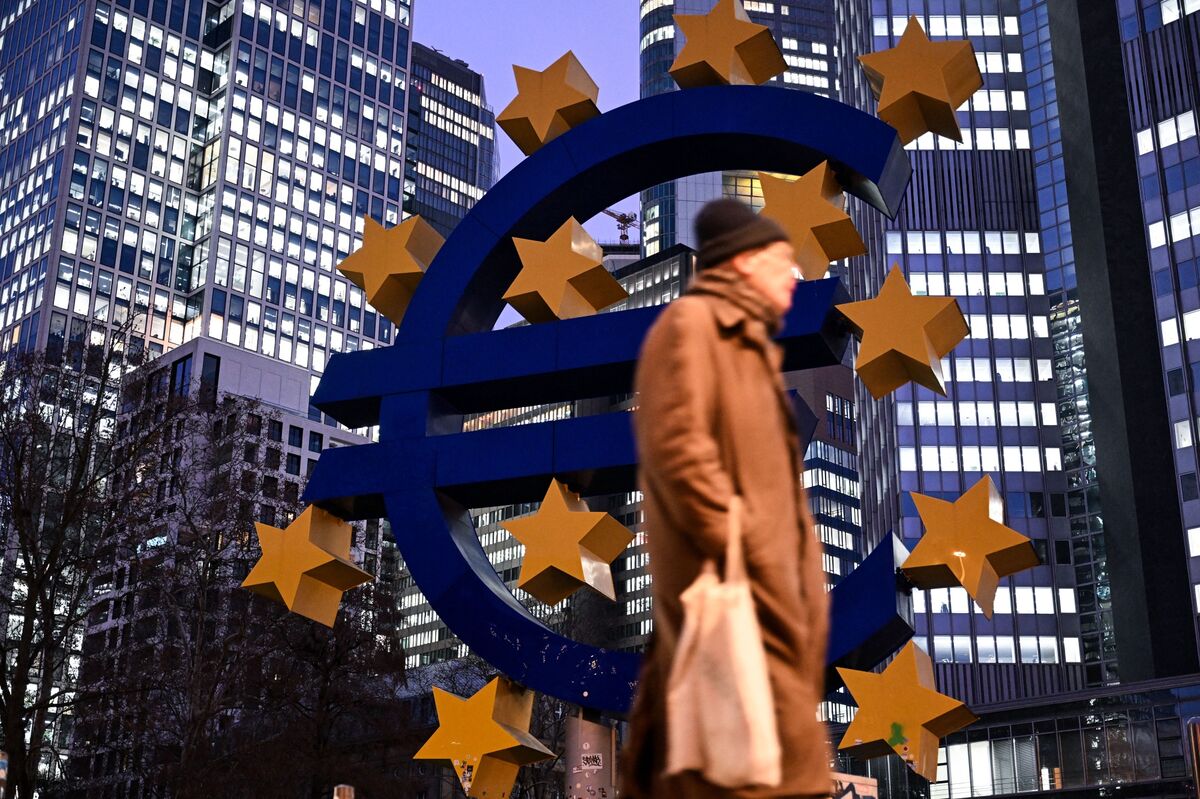

European Central Bank Faces Tough Decision as Calls for Rate Hike Grow Amid Inflation Concerns
The European Central Bank (ECB) is under mounting pressure to raise interest rates next month as policymakers grapple with the dual challenges of persistent inflation and maintaining institutional credibility. Governing Council member Yannis Stournaras has sounded the alarm, arguing that safeguarding the ECB’s reputation may necessitate a decisive move, even as economic uncertainties loom large.
In a high-stakes environment where global central banks are cautiously recalibrating monetary policies, the ECB’s next steps are being closely scrutinized by markets, governments, and economists alike. With inflation in the Eurozone stubbornly above target and economic growth showing signs of fragility, the decision to hike rates is far from straightforward. Yet, as Stournaras emphasized, the central bank’s credibility hinges on its ability to deliver on its mandate to ensure price stability.
The Inflation Conundrum
Inflation has been a persistent thorn in the side of the Eurozone economy, defying expectations of a swift decline. Despite a series of aggressive rate hikes over the past year, consumer prices remain elevated, driven by factors such as rising energy costs, wage pressures, and supply chain disruptions. The latest data shows Eurozone inflation hovering around 5.3%, well above the ECB’s 2% target.
While headline inflation has moderated somewhat compared to the double-digit peaks of 2022, core inflation—which excludes volatile food and energy prices—has proven more resilient. Policymakers are particularly concerned about the potential for inflation expectations to become entrenched, which could trigger a wage-price spiral and undermine economic stability.
Yannis Stournaras, who also serves as the governor of the Bank of Greece, has been a vocal advocate for addressing these risks head-on. “The ECB’s credibility is on the line,” he warned in a recent interview. “We cannot afford to be seen as complacent in the face of sustained inflationary pressures.”
The Credibility Imperative
Central banks worldwide operate on the foundation of public trust. For the ECB, maintaining credibility is especially critical given the unique challenges of managing monetary policy across 20 diverse economies. Any perception that the central bank is falling short of its mandate could erode confidence, destabilize financial markets, and complicate future policy decisions.
Stournaras’s argument underscores a broader consensus among ECB officials that decisive action may be necessary to reinforce trust in the institution. The central bank has already raised rates by a cumulative 450 basis points since July 2022, its most aggressive tightening cycle in decades. However, some critics argue that the ECB has been slower to act than its counterparts, such as the U.S. Federal Reserve and the Bank of England, which began raising rates earlier and more aggressively.
The debate over the pace and scale of rate hikes has exposed divisions within the ECB’s Governing Council. While hawkish members push for continued tightening, dovish voices caution against overtightening, which could stifle economic growth and exacerbate unemployment.
Economic Risks and Trade-offs
The decision to raise rates is fraught with risks. Higher borrowing costs could weigh on already sluggish economic activity across the Eurozone, particularly in countries with high levels of debt or weaker growth prospects. Germany, Europe’s largest economy, narrowly avoided a recession earlier this year but remains vulnerable to external shocks and domestic weaknesses.
Smaller economies on the Eurozone’s periphery, such as Greece and Italy, face even steeper challenges. These countries have only recently emerged from years of financial crises and austerity measures, and higher interest rates could strain their public finances and discourage much-needed investment.
At the same time, policymakers must consider the broader global context. Central banks in the United States and the United Kingdom have signaled a potential pause in their tightening cycles, reflecting concerns about slowing growth and financial stability. The ECB’s decision to move in the opposite direction could widen policy divergences, leading to currency volatility and capital flows that complicate the outlook for Europe’s economy.
A Delicate Balancing Act
The ECB’s dilemma highlights the inherent tension between price stability and economic growth—a challenge that central banks have faced repeatedly since the global financial crisis. While raising rates may help rein in inflation, it also risks undermining the fragile recovery and exacerbating inequality.
For Yannis Stournaras, the calculus is clear: “The cost of inaction outweighs the risks of tightening. We must remain vigilant and proactive to ensure that inflation does not become entrenched.”
His stance reflects a growing recognition that the ECB’s credibility is inextricably linked to its ability to deliver on its promises. Failure to act decisively could undermine public confidence and make future policy adjustments more difficult.
What’s Next for the ECB?
As the ECB prepares for its next meeting in September, analysts are closely watching for signals of the central bank’s intentions. Markets are currently pricing in a 25-basis-point hike, though some observers believe a more aggressive move could be on the table.
The central bank’s updated economic projections, which will be released alongside the rate decision, will play a crucial role in shaping expectations. Any upward revisions to inflation forecasts could strengthen the case for tightening, while downgrades to growth estimates might tilt the balance toward caution.
Beyond September, the path forward remains uncertain. ECB President Christine Lagarde has emphasized that future decisions will be data-dependent, reflecting the complexity of the economic environment.
A Global Perspective
The ECB’s predicament is emblematic of the broader challenges facing central banks in a post-pandemic world. From the Federal Reserve to the Bank of Japan, policymakers are navigating uncharted waters as they seek to balance inflation control with growth promotion.
For Europe, the stakes are particularly high. The Eurozone’s unique institutional framework, characterized by a single monetary policy but divergent fiscal policies, complicates the task of achieving economic stability.
Conclusion
The European Central Bank stands at a crossroads, caught between the imperatives of price stability and economic growth. As Governing Council member Yannis Stournaras has argued, preserving the ECB’s credibility may require a bold move—one that acknowledges the risks of inaction without losing sight of the broader economic picture.
Whatever decision emerges in September, its repercussions will be felt far beyond the Eurozone’s borders. In a world of interconnected economies, the ECB’s actions serve as a reminder of the delicate balance central banks must strike in an era of uncertainty. As the institution weighs its options, one thing is clear: the path ahead is fraught with challenges, but the pursuit of stability remains paramount.
