


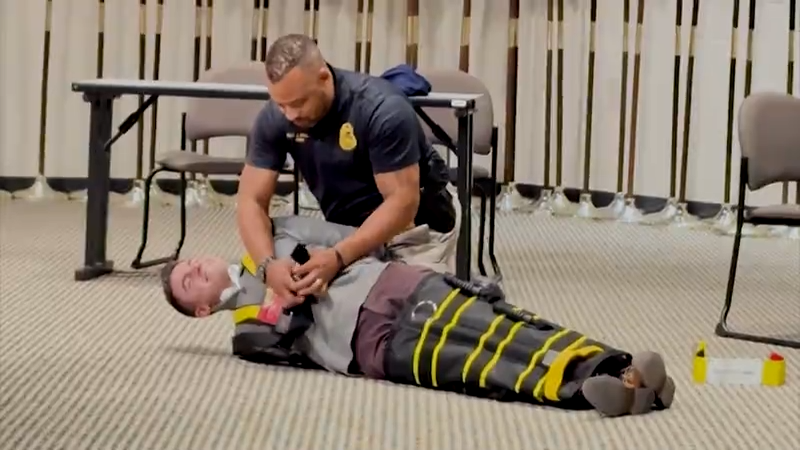

Columbus Division of Police Expands Use of Controversial Restraint Tool
COLUMBUS, Ohio – In a move aimed at enhancing officer safety and management of unruly individuals, the Columbus Division of Police has announced an expansion of the use of the Wrap Safety Restraint. Following a year-long pilot program involving training and real-life applications, the division believes this tool can provide a more effective means of restraining individuals who resist cooperation.
The Wrap Safety Restraint is designed to encase the body of a person in a series of secure straps, limiting their movement without causing significant physical discomfort. Proponents of the device argue it presents a safer alternative to traditional methods, such as handcuffs or physical force, mitigating the risk of injury to both officers and subjects.
Police Chief Elaine Bryant emphasized the importance of adaptive strategies in law enforcement. “The safety of our officers, as well as the individuals we encounter, is paramount,” she said. “The Wrap Safety Restraint allows us to manage difficult situations more effectively and humanely.”
Contextualizing Use of Restraints
The Wrap Safety Restraint has sparked discussions concerning its ethical implications and the balance between maintaining order and ensuring humane treatment. Critics argue that any restraint tool carries inherent risks, potentially leading to abuse or mishandling by law enforcement personnel. Previous instances of excessive force by police have heightened public scrutiny on interventions used during arrests or detainments.
The move to adopt this restraint system aligns with a larger trend among U.S. law enforcement agencies seeking alternatives to physical restraints. In recent years, numerous departments have faced increased demand for accountability and transparency in policing practices. The expansion of the Wrap Safety Restraint could provide a partial answer to these pressing demands, but it also highlights the ongoing debate surrounding the appropriate use of restraint systems.
Stakeholder Perspectives
Local community leaders have expressed mixed reactions to the news. While some advocate for the need for enhanced tools that prioritize safety, others are concerned that anything resembling a weaponized restraint could further jeopardize trust between law enforcement and communities, particularly in neighborhoods disproportionately affected by policing practices.
Barbara White, a community activist, stated, “While we want to support our officers, it’s crucial that any new technology doesn’t exacerbate existing tensions. It’s imperative that training and oversight accompany these tools.” This sentiment underscores the necessity of monitoring how the Wrap Safety Restraint will be utilized, as well as the broader changing dynamics in community-police interactions.
Importance of Training and Oversight
A significant part of the implementation will involve comprehensive training programs for officers. These training initiatives will focus on appropriate application of the restraint and the associated ethical considerations. The Columbus Division of Police is committed to ensuring that officers fully understand the proper use and limitations of the device.
Police Chief Bryant assured the public that there would be strict guidelines governing the use of the Wrap Safety Restraint. “We want to build a relationship of trust with our community while providing our officers with the tools they need to do their job,” she stated. Nevertheless, with the implementation of any new policy, the potential for misuse remains a concern.
Future Implications
As the Columbus Division of Police integrates the Wrap Safety Restraint into their operations, the broader implications for police conduct and community relations will be closely monitored. This decision could set a precedent for other law enforcement agencies across the United States, as they evaluate their own practices for managing non-compliant individuals.
The effectiveness of this transition will largely depend on community response and the ongoing conversation about police reform. Local leaders, police officials, and ordinary citizens will need to engage in continuous dialogue to gauge the effectiveness and overall acceptance of the restraint tool in managing public safety while fostering trust.
In an era where public discourse around policing is at the forefront, the Columbus Division of Police’s decision to expand use of the Wrap Safety Restraint may be indicative of a shift in how law enforcement departments are approaching challenging situations. Ultimately, the success of the tool will be determined not only by its immediate effectiveness but also by the long-term relationship it helps cultivate between police and the communities they serve.
