



20,000 Teddy Bears on the National Mall: A Stark Reminder of Ukraine’s Deported Children
A Haunting Display in Washington
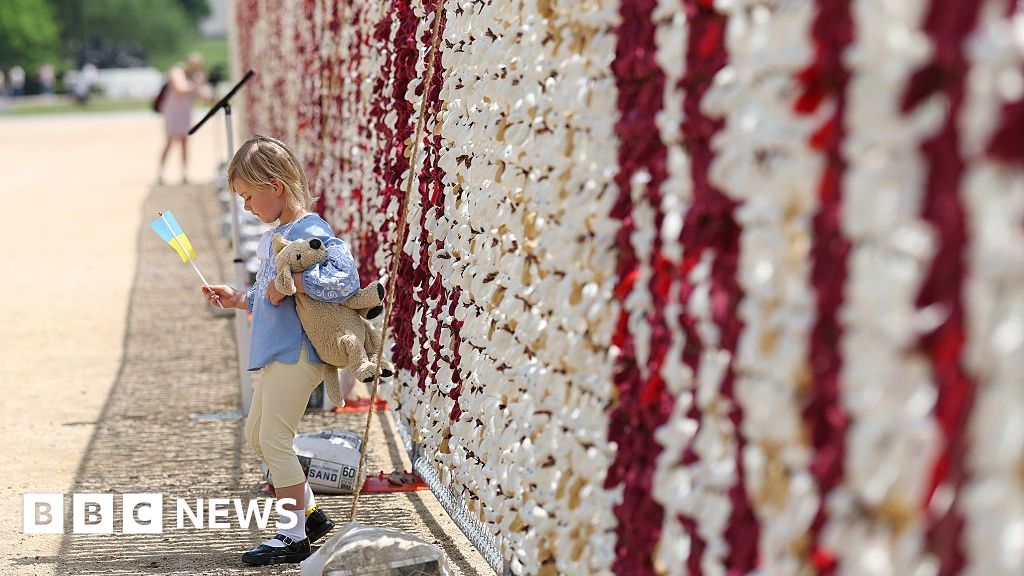
Under the shadow of the Washington Monument, a sea of 20,000 teddy bears now stretches across the National Mall—each one representing a Ukrainian child allegedly forcibly taken by Russia since the invasion began. The striking installation, organized by Razom for Ukraine and the American Coalition for Ukraine, is a visceral call to action, demanding global attention to what the United Nations has labeled a potential crime against humanity.
The display comes as Ukraine reports that at least 20,000 children have been deported to Russia or Belarus, with only a fraction successfully returned. While Moscow denies these accusations—claiming the children were “rescued” from war zones—Kyiv and international watchdogs insist this is a systematic campaign of forced displacement, a violation of international law.
The Global Implications of Child Deportations
The forced transfer of children across borders is not just a Ukrainian crisis—it is a test of international law and the world’s commitment to protecting civilians in wartime. The Geneva Conventions explicitly prohibit the deportation of civilians, especially minors, from occupied territories. Yet, evidence suggests that Russia has engaged in mass abductions, placing children in re-education camps, foster care, or military indoctrination programs.
This issue has gained traction at the International Criminal Court (ICC), which issued an arrest warrant for Russian President Vladimir Putin in March 2023 over alleged war crimes, including the unlawful deportation of children. The Kremlin dismisses the charges as politically motivated, but legal experts warn that failure to hold perpetrators accountable could set a dangerous precedent for future conflicts.
Ukraine’s Fight to Bring Children Home
Since 2023, Ukraine’s Bring Kids Back UA initiative has worked tirelessly to locate and repatriate missing children. President Volodymyr Zelensky announced this week that over 2,100 children have been returned to their families—a small victory in a much larger struggle. However, many remain unaccounted for, their whereabouts obscured by Russia’s refusal to cooperate with international investigators.
The process of reunification is fraught with challenges. Some children have been adopted by Russian families, while others are held in state-run facilities. Psychological trauma, altered identities, and bureaucratic hurdles complicate efforts to bring them home. Advocacy groups argue that without sustained global pressure, thousands may never see their families again.
Why This Matters Beyond Ukraine
The deportation of children is not just a wartime atrocity—it is a threat to global security norms. If such actions go unpunished, authoritarian regimes may see them as a viable tactic in future conflicts, eroding decades of humanitarian protections.
The teddy bear installation in Washington is more than a memorial—it is a demand for accountability. Lawmakers in the U.S. and Europe are now under increasing pressure to impose stricter sanctions, fund recovery programs, and support ICC investigations. Meanwhile, human rights organizations warn that without decisive action, the world risks normalizing the weaponization of children in war.
A Call to Action—Before It’s Too Late
As the sun sets over the National Mall, the silent army of teddy bears stands as a chilling testament to what happens when the world looks away. The deportation of Ukraine’s children is not just a tragedy for one nation—it is a global moral failure.
The international community must decide: Will it allow such violations to become another grim footnote in history, or will it stand firm in defending the most vulnerable? The answer will shape not only Ukraine’s future but the very principles of justice in wartime. For the sake of 20,000 missing children, the world cannot afford to stay silent.
