


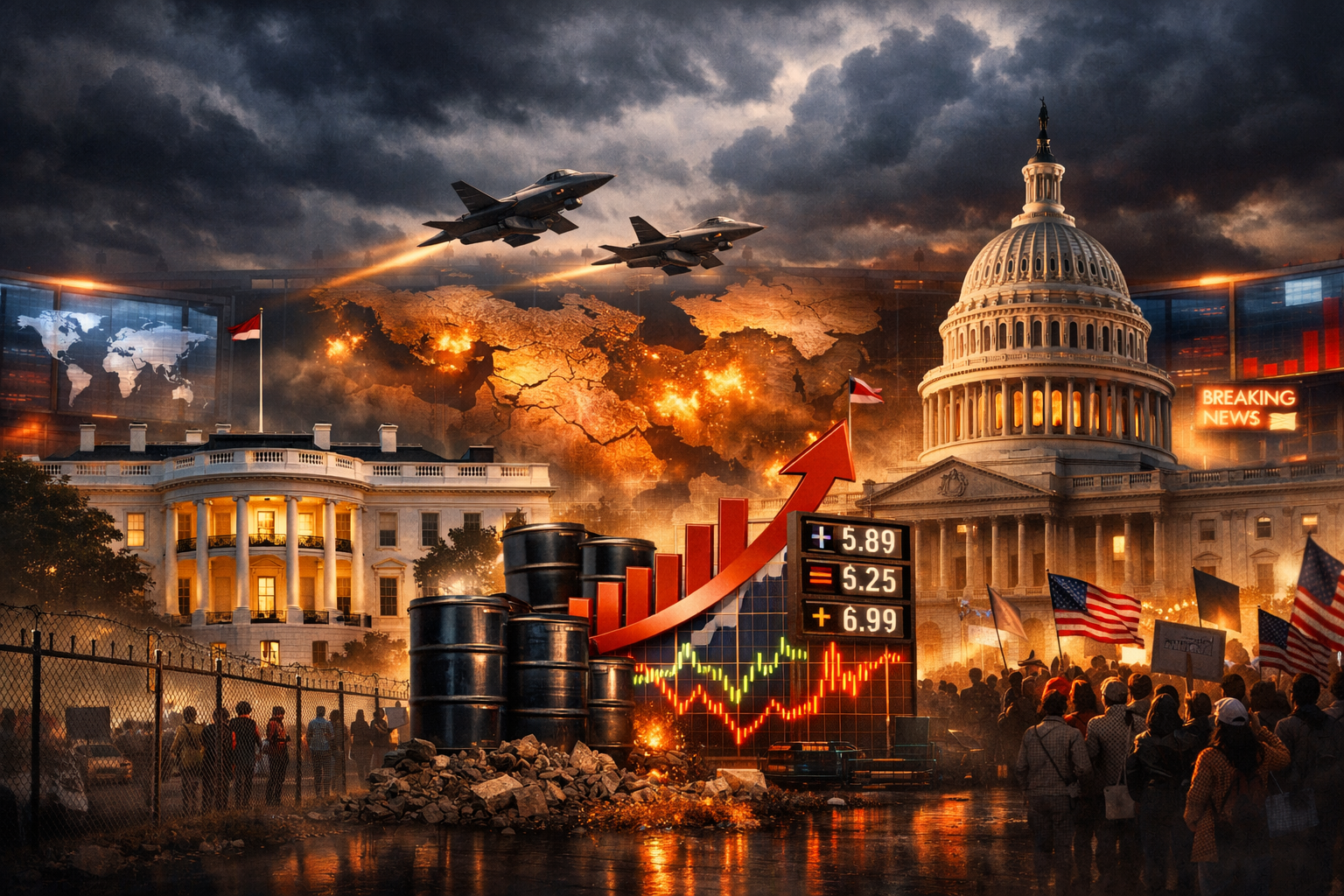

The past 24 hours in the United States have been dominated by an intense convergence of geopolitical conflict, economic anxiety, and domestic policy shifts. From escalating military operations involving Iran and Israel to rising gas prices and contentious immigration policies, the American news cycle continues to reflect a nation navigating a volatile moment both at home and abroad.
Across Washington, financial markets, and international military theaters, developments in the last day have reinforced the sense that the United States is operating in a highly unstable global environment. Political leaders, economic analysts, and national security experts are all watching closely as the consequences of these developments ripple through American society.
Below is a comprehensive analysis of the most important developments shaping the national conversation.
War Escalates Between the United States, Israel, and Iran
The most significant development in the past 24 hours remains the intensifying conflict involving the United States, Israel, and Iran.
Military operations reportedly expanded overnight as American and Israeli forces conducted additional strikes targeting Iranian military installations and strategic infrastructure. These attacks follow several days of escalating tensions after earlier strikes on facilities believed to be linked to Iran’s military operations and weapons development.
Iran responded with drone and missile launches targeting locations associated with U.S. and allied forces across the region. Analysts say the situation remains extremely volatile, with both sides signaling readiness for further escalation.
The conflict has already triggered widespread international concern. Several global leaders have called for de-escalation, warning that a prolonged war could destabilize the broader Middle East and threaten global economic stability.
American defense officials say U.S. forces remain on high alert throughout the region, emphasizing readiness to protect military personnel and allied interests.
U.S. Military Aircraft Crash Kills Four Servicemen
Tragedy struck the U.S. military community when a U.S. Air Force aircraft crashed in western Iraq, killing four American servicemen.
Military officials say the aircraft was conducting operations linked to ongoing regional security missions when it went down. Early investigations indicate the crash may have been caused by mechanical failure rather than hostile fire, though a full investigation is underway.
The loss of American personnel comes at a moment of heightened tension in the Middle East and serves as a stark reminder of the risks faced by U.S. troops operating in conflict zones.
Officials at the United States Department of Defense expressed condolences to the families of the fallen service members while reaffirming the military’s commitment to completing its mission in the region.
Oil Prices Surge Above $100, Fueling Gas Price Anxiety
One of the most immediate domestic consequences of the escalating conflict has been a sharp rise in global oil prices.
Energy markets reacted quickly to the prospect of supply disruptions linked to the conflict. Oil prices surged past $100 per barrel as investors worried about potential threats to shipping routes in the Persian Gulf.
These developments have already begun pushing gasoline prices higher across the United States, raising concerns among American consumers and businesses alike.
The rising energy costs could ripple across the broader economy, affecting transportation costs, airline operations, and consumer prices.
Donald Trump addressed the issue during remarks to reporters, arguing that while higher oil prices may burden consumers, they could also benefit the United States as one of the world’s largest oil producers.
Economic analysts, however, warn that prolonged instability in global energy markets could worsen inflationary pressures and strain household budgets.
Global Shipping Routes Under Threat
Another emerging concern linked to the conflict involves international shipping lanes in the Persian Gulf.
Security analysts warn that attacks on commercial vessels and threats to the strategically vital Strait of Hormuz could disrupt a major portion of the world’s oil supply.
If shipping disruptions intensify, the consequences could extend far beyond energy markets. International trade, supply chains, and global shipping costs could all face major disruptions.
For the United States, which relies on stable global trade networks, such disruptions could further complicate economic conditions already strained by inflation and geopolitical instability.
Immigration Policy Shift: New Judges Appointed
While international developments dominated headlines, significant domestic policy actions also emerged in Washington.
The administration announced the appointment of 42 new immigration judges to the federal immigration court system. The move is intended to address the massive backlog of immigration cases that has grown to more than three million nationwide.
Many of the newly appointed judges reportedly come from enforcement or prosecutorial backgrounds, a decision that has sparked debate among immigration advocates and policymakers.
Supporters argue the move will accelerate case processing and strengthen enforcement of immigration laws. Critics, however, worry the appointments could tilt the system toward more aggressive deportation policies.
Immigration remains one of the most politically divisive issues in the United States, and the administration’s actions are expected to further intensify the debate.
Americans Blame Tariffs for Rising Consumer Prices
Another development shaping economic discussions is growing public dissatisfaction with trade policy.
A new national poll indicates that approximately seven in ten Americans believe tariffs imposed in recent years have contributed to rising consumer prices.
Tariffs have been a major component of the administration’s economic strategy, aimed at protecting domestic industries and pressuring foreign competitors.
However, economists note that tariffs can also increase the cost of imported goods, which may ultimately be passed on to consumers.
The debate over tariffs highlights broader tensions between protectionist economic policies and the realities of global supply chains.
Airfare and Travel Costs Begin to Climb
Another ripple effect of rising oil prices is beginning to affect the airline industry.
Airlines rely heavily on jet fuel, and increases in energy prices often translate quickly into higher ticket costs.
Travel industry analysts warn that if fuel prices remain elevated, airlines may be forced to raise fares significantly in the coming months.
For American travelers already facing higher living costs, these increases could make both domestic and international travel more expensive.
Washington’s Political Atmosphere Remains Highly Polarized
Meanwhile, political tensions in Washington remain intense.
Lawmakers continue to clash over economic policy, immigration, and national security strategy. Congressional debates have become increasingly heated as political leaders position themselves around the unfolding international crisis and its domestic implications.
Political analysts note that the current climate in Washington resembles a prolonged campaign environment, with partisan messaging dominating policy discussions.
Both parties appear eager to frame the latest developments in ways that support their broader political narratives.
The Bigger Picture
Taken together, the developments of the past 24 hours paint a picture of a nation confronting complex challenges on multiple fronts.
The United States is simultaneously navigating:
• a rapidly escalating international conflict
• rising economic uncertainty
• domestic policy disputes
• global energy market disruptions
These overlapping pressures are shaping public debate and policy decisions at every level of government.
For ordinary Americans, the consequences are already becoming visible through rising gas prices, economic anxiety, and growing geopolitical concerns.
For policymakers, the challenge lies in balancing national security priorities with economic stability and domestic political pressures.
