


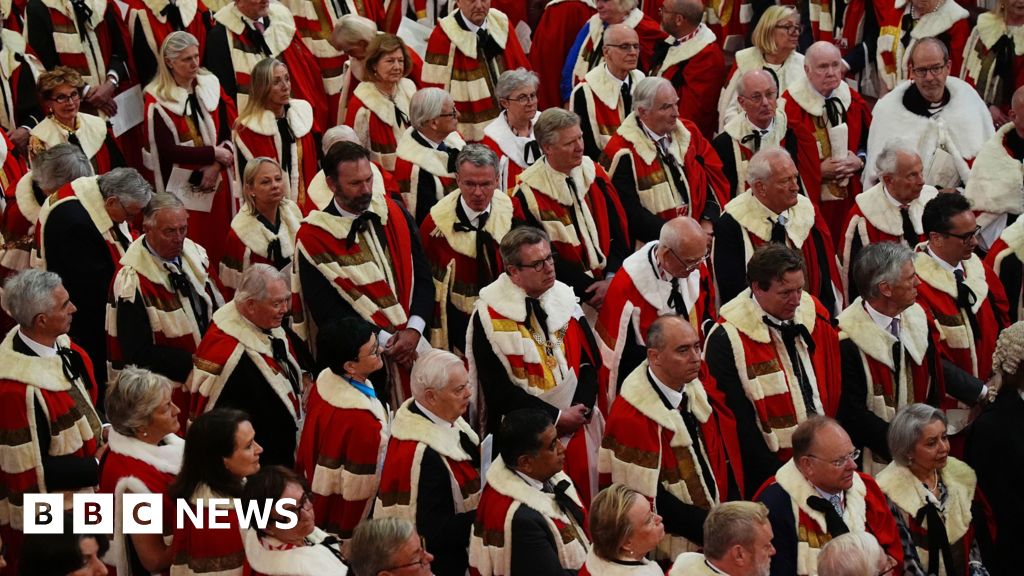

UK Conservatives Grapple with Hereditary Peerages in Historic Compromise Deal
The United Kingdom’s Conservative Party, also known as the Tories, is facing a pivotal decision as it evaluates which hereditary peers will retain their seats in the House of Lords following a compromise deal that offers 15 reserved spots for hereditary members. The agreement, part of ongoing efforts to modernize the UK’s political system, has reignited debates about tradition, representation, and the future of the House of Lords.
The House of Lords, the upper chamber of the UK Parliament, has long been a unique institution, blending appointed life peers, bishops, and hereditary peers—those who inherit their titles and positions. Critics argue that the presence of hereditary peers undermines democratic principles, while supporters contend that they bring historical continuity and expertise to the legislative process. The latest compromise, reached after months of negotiations, aims to strike a balance by reducing but not eliminating their presence.
Under the deal, the number of hereditary peers in the House of Lords will be capped at 15, down from the current 92. The Tories, as the governing party, are tasked with determining which hereditary peers will fill these coveted spots. This decision-making process has sparked internal debate within the party, with some pushing for merit-based selection while others advocate for preserving long-standing aristocratic lineages.
The compromise has drawn mixed reactions from across the political spectrum. Reformists argue that the deal does not go far enough in democratizing the House of Lords. “Fifteen hereditary peers is still fifteen too many,” said a spokesperson for a prominent advocacy group pushing for a fully elected upper chamber. “This is a missed opportunity to align our political institutions with modern democratic values.”
Conversely, traditionalists have welcomed the agreement, framing it as a victory for preserving the UK’s constitutional heritage. “The House of Lords has always been a repository of wisdom and experience,” said a member of the Lords who supports the compromise. “Hereditary peers bring a unique perspective that complements the work of appointed members.”
The issue of hereditary peers has been a contentious topic in UK politics for decades. In 1999, former Prime Minister Tony Blair’s Labour government removed the automatic right of hereditary peers to sit in the House of Lords, reducing their number from over 700 to just 92. Since then, vacancies among hereditary peers have been filled through by-elections involving eligible aristocrats. The current compromise marks the first significant reduction in their numbers since 1999 and is seen as a step toward further reform.
The Conservative Party’s internal deliberations have highlighted tensions between its modernizing and traditionalist wings. While Prime Minister Rishi Sunak has emphasized the need for pragmatic reforms, many within the party’s base remain deeply attached to the historical and ceremonial aspects of the UK’s political system. The selection process for the 15 hereditary peers is expected to involve a mix of seniority, expertise, and political loyalty, though the exact criteria remain under discussion.
The compromise also raises broader questions about the future of the House of Lords. Calls for a fully elected upper chamber have grown louder in recent years, with critics arguing that the current system lacks legitimacy and accountability. Proponents of reform point to other countries with bicameral systems, such as the United States and Australia, where both houses of parliament are elected, as models for the UK to follow.
However, any move toward a fully elected House of Lords would require substantial constitutional changes and face significant political hurdles. The current compromise, while incremental, reflects the challenges of navigating the UK’s deeply entrenched traditions while addressing demands for modernization.
As the Conservative Party finalizes its selection of hereditary peers, the decision is likely to have far-reaching implications. It will not only shape the composition of the House of Lords in the near term but also set a precedent for future reforms. The outcome will be closely watched by political analysts, reform advocates, and the public, as it offers insights into the direction of UK governance in an era of increasing demands for transparency and inclusivity.
Looking ahead, the compromise may serve as a stepping stone toward more comprehensive changes to the House of Lords. Whether it leads to further reductions in hereditary peers or reignites calls for a fully elected chamber remains to be seen. What is clear is that the debate over the UK’s upper house is far from over, and the decisions made today will resonate for generations to come.
