


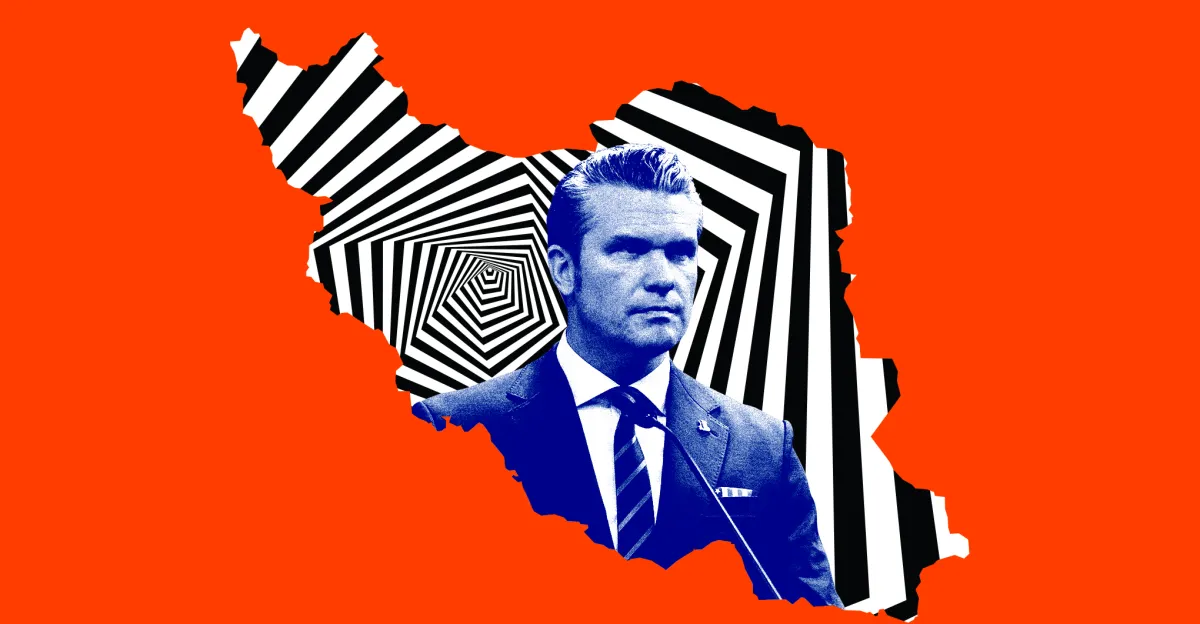

Pentagon Press Briefing Highlights Tensions as U.S.-Iran Conflict Enters Day 13
Washington, D.C. — On the 13th day of America’s escalating military conflict with Iran, a Pentagon press briefing turned into a spectacle of tension, frustration, and theatrical politicking. Defense Secretary Pete Hegseth, known for his combative approach with the media, leveraged the platform to scold veteran journalists while favoring outlets aligned with the Trump administration. The briefing, held on Friday the 13th—an ironic coincidence—offered little clarity on the war’s progress but underscored the deepening rift between the Pentagon and the Fourth Estate.
The war, which began abruptly two weeks ago, has already seen significant escalation. Iranian forces have launched missiles at Bahrain, deployed attack drones into Lebanon, and threatened strikes on American cities. The Strait of Hormuz, a critical global shipping lane for oil, has become a flashpoint, with Iran reportedly placing mines and attacking ships. Oil prices have surged to $100 a barrel, a 40% increase since the conflict began, stoking economic anxiety among Americans.
Against this backdrop, the Pentagon press room served as a microcosm of the broader tensions roiling Washington. Hegseth, a former Fox News personality and staunch Trump ally, took the podium with a confrontational tone. “We will keep pushing. Keep advancing. No quarter, no mercy for our enemies,” he declared, before turning his ire toward the press. “Yet some of this crew in the press just can’t stop.”
The “crew” Hegseth referred to were veteran defense reporters from NBC, ABC, The Wall Street Journal, The New York Times, and Fox News—many of whom had covered conflicts in the Middle East for decades and were known for their rigorous questioning. This was their first return to the Pentagon briefing room since October, when the entire Pentagon press corps resigned in protest after Hegseth imposed restrictions on reporting classified information without his approval.
In their place sat reporters from what Hegseth dubbed the “patriotic press”: outlets like One America News, ZeroHedge, The Gateway Pundit, Real America’s Voice, The Daily Wire, and Lindell TV. Many of these reporters appeared strikingly young and deferential, a stark contrast to the seasoned journalists relegated to the back rows. The seating arrangement itself seemed symbolic—a visual representation of the administration’s preference for media outlets that echo its narrative.
Hegseth’s criticisms of the mainstream media were relentless. He accused networks of sensationalism and misrepresentation, particularly in their coverage of Iran’s actions in the Strait of Hormuz. “For decades, Iran has threatened shipping in the strait before. This is always what they do. Hold the strait hostage. CNN doesn’t think we thought of that,” he said, dismissing reports that the Trump administration had underestimated the war’s impact on global oil markets.
The briefing also highlighted the administration’s reliance on psychological tactics to control the narrative. Reporters were barred from bringing outside beverages into the Pentagon, leaving many caffeine-deprived and irritable. Journalists were required to have escorts when moving through the building, further restricting their access to information. These measures, combined with Hegseth’s combative tone, created an atmosphere of tension and frustration.
The questions from the press underscored the divide in the room. Representatives from the “patriotic press” delivered softballs, allowing Hegseth to pivot to attacks on the mainstream media. “ABC News has updated its story from yesterday, clarifying that the FBI report on Iran possibly striking California was unverified. I just want to ask you, what impact did that original reporting have on the public?” one reporter from The Daily Wire asked, prompting Hegseth to lambast ABC News for its “reckless” reporting.
In contrast, questions from veteran journalists were met with deflection and hostility. Michael Gordon of The Wall Street Journal asked about Iran’s stockpile of highly enriched uranium, a critical issue given the war’s potential to destabilize global security. Hegseth’s response was vague: “We have a range of options, up to and including Iran deciding that they will give those up, which of course we would welcome.”
The briefing concluded with Hegseth dodging a politically charged question about Tucker Carlson, a prominent Fox News commentator and Trump ally who has criticized the war. “Polls show over 80 percent of Republicans support the president’s military action in Iran, but there’s some consternation in parts of the party, particularly from your fellow Fox News alum Tucker Carlson,” a reporter noted. Hegseth sidestepped the question, emphasizing the administration’s commitment to its mission.
As reporters filed out of the briefing room, the atmosphere was one of exasperation. Veteran journalists, accustomed to holding the Pentagon accountable, left frustrated by Hegseth’s evasions and the administration’s apparent disregard for transparency. Even reporters from the “patriotic press” seemed uneasy, their questions hinting at underlying doubts about the war’s trajectory.
The briefing, like the war itself, raised more questions than it answered. With oil prices soaring, Iranian threats escalating, and domestic support wavering, the administration faces mounting pressure to justify its strategy. Yet, as the Pentagon press conference made clear, transparency and accountability remain in short supply. For now, the war with Iran continues, its future as uncertain as the answers provided in the briefing room.
