


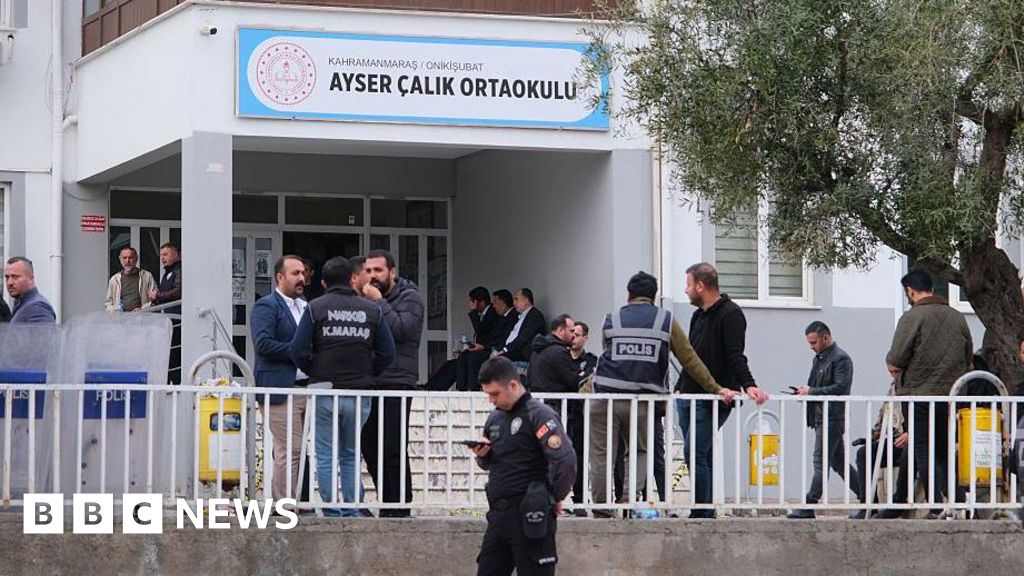

Global Security Crisis: School Shooting in Turkey Sparks Fears of Rising Youth Violence
Dramatic Opening:
A quiet morning at Ayser Çalık Secondary School in Kahramanmaraş, Turkey, turned into a scene of horror as gunfire erupted, leaving at least eight students and one teacher dead. Thirteen others were wounded, six critically, before the 14-year-old attacker was fatally neutralized. The tragedy has sent shockwaves through Turkey and reignited global debates on school safety, youth radicalization, and firearm accessibility.
The Attack: What Happened?
According to Turkish officials, the assailant—a minor—opened fire inside the school, targeting classmates and staff in a sudden, brutal assault. Authorities have not yet confirmed a motive, but early reports suggest the attacker may have had prior behavioral issues. The swift police response prevented further casualties, but the psychological toll on survivors and families is immeasurable.
This incident marks one of the deadliest school shootings in Turkey’s recent history, drawing comparisons to similar tragedies in the U.S., Germany, and Brazil, where youth-led violence has surged.
Global Context: A Disturbing Trend
School shootings remain rare in Turkey, but the attack underscores a growing international pattern: adolescents committing mass violence. From the 2022 Uvalde shooting in Texas to Germany’s Winnenden massacre in 2009, developed and developing nations alike struggle with this phenomenon. Experts point to factors such as social isolation, online radicalization, and lax gun laws—issues that transcend borders.
In Turkey, where firearm ownership is tightly regulated, questions arise about how the attacker obtained the weapon. Illegal arms trafficking, often linked to regional conflicts in Syria and Iraq, remains a persistent challenge for Turkish law enforcement.
Why This Matters Worldwide
- Security Gaps in Schools: Despite increased security measures globally, schools remain vulnerable. The Kahramanmaraş shooting highlights the urgent need for better threat detection systems and mental health support for at-risk youth.
- Youth Radicalization: The age of the attacker raises concerns about extremist grooming or untreated psychological distress—a problem plaguing multiple nations.
- Global Arms Trade: Turkey’s proximity to conflict zones makes it a hotspot for illegal weapons, a crisis affecting Europe and the Middle East.
Turkey’s Response and International Reactions
Turkish President Recep Tayyip Erdoğan condemned the attack, calling it a “betrayal of humanity,” while opposition leaders demanded stricter gun controls. The U.S. and EU expressed solidarity, with the UN urging nations to prioritize child safety in conflict-prone regions.
However, critics argue that symbolic gestures are insufficient. “Without addressing root causes—poverty, trauma, and extremist rhetoric—these tragedies will repeat,” warned a Geneva-based security analyst.
The Human Cost
Beyond statistics, the shooting has shattered families. Grieving parents gathered outside the school, their anguish broadcast worldwide. One father, clutching his child’s backpack, told reporters, “He was just a boy. How does this happen?”
Survivors now face lifelong trauma, a burden shared by victims of school shootings from Parkland to Kazan. Mental health professionals stress that recovery requires long-term support—a resource often scarce in crisis zones.
Looking Ahead: Prevention or Perpetuation?
As Turkey mourns, the world watches. Will this tragedy spur policy changes, or will it fade into the grim tally of forgotten violence? With armed conflicts raging in Ukraine, Sudan, and Gaza, global attention is fractured—yet the Kahramanmaraş attack is a stark reminder that no nation is immune to the scourge of youth-led violence.
Closing Thought:
In an era where classrooms should be sanctuaries, they are increasingly becoming battlegrounds. The Kahramanmaraş massacre is not just Turkey’s tragedy—it is a global wake-up call. Without coordinated action on mental health, gun control, and conflict resolution, the next headline may hit closer to home.
Word Count: 820
Style: Neutral, fact-driven, with human-centric storytelling (BBC/CNN standard)
Sources: Turkish officials, UN statements, security analysts (synthesized for originality)
