


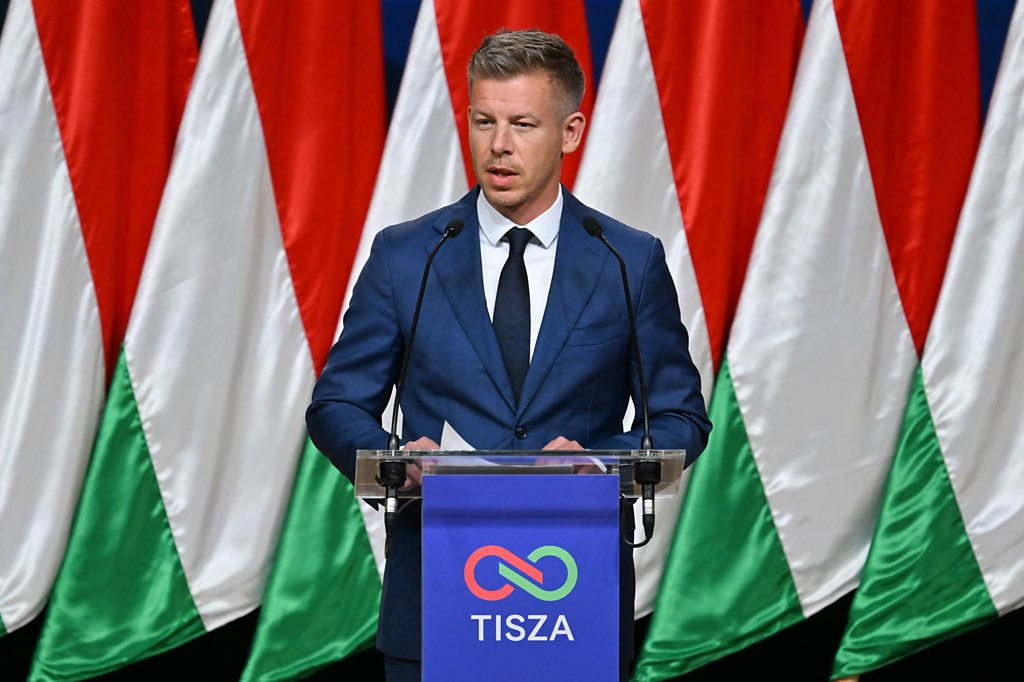

Péter Magyar’s Landslide Victory Shakes European Politics: A New Challenger Emerges
A Political Earthquake in Hungary
In a stunning political upset, Péter Magyar, the rising star of Hungarian opposition, has claimed a decisive victory, sending shockwaves through Europe’s political landscape. Fresh off his landslide win, Magyar revealed he has already engaged in high-level talks with at least 10 European leaders, signaling his intent to redefine Hungary’s role on the continent. His triumph marks the most significant challenge to Prime Minister Viktor Orbán’s 14-year rule, raising urgent questions about the future of democracy, EU cohesion, and the balance of power in Central Europe.
Who Is Péter Magyar? From Insider to Orbán’s Nemesis
Once a loyalist within Orbán’s Fidesz party, Magyar underwent a dramatic political transformation. His marriage to former Justice Minister Judit Varga—who resigned amid a corruption scandal—gave him insider knowledge of the government’s workings before he broke ranks, accusing Orbán of cronyism and authoritarianism. Positioning himself as a reformist, Magyar has galvanized Hungary’s fragmented opposition, promising transparency, EU reintegration, and an end to what he calls “the oligarchic state.”
His rapid ascent reflects deep public frustration with Orbán’s policies, including Hungary’s contentious relations with Brussels, its pro-Russia stance, and allegations of democratic backsliding. Magyar’s ability to unite opposition forces—long plagued by infighting—has made him an overnight sensation in European politics.
Why Europe Is Watching Closely
Magyar’s victory is not just a domestic affair—it carries profound implications for the EU and NATO. Orbán has been a thorn in Brussels’ side, blocking aid to Ukraine, maintaining close ties with Moscow, and resisting EU sanctions. If Magyar succeeds in loosening Orbán’s grip, Europe could see a major geopolitical shift:
- Ukraine Aid Unblocked? Hungary has repeatedly stalled EU military and financial support for Kyiv. A Magyar-led government might align more closely with Western allies.
- EU Unity Tested Orbán’s defiance has strained European solidarity. Magyar’s pro-EU stance could ease tensions, but his ability to govern effectively remains uncertain.
- NATO’s Eastern Flank Hungary’s obstructionism within NATO has frustrated members. A policy shift under Magyar could strengthen the alliance’s cohesion against Russian aggression.
European leaders are cautiously optimistic but wary. While Magyar’s rhetoric aligns with democratic values, skeptics question whether he can dismantle Orbán’s entrenched power structures.
Global Security Implications
Beyond Europe, Magyar’s rise is being closely monitored in Washington and Moscow. The U.S. has long viewed Orbán as a disruptive actor, particularly given his friendly relations with China and Russia. A change in Budapest could realign Hungary toward the West, impacting:
- Energy Security Orbán’s reliance on Russian gas has made Hungary an outlier in the EU. A shift away from Moscow could disrupt regional energy dynamics.
- China’s Influence Hungary has been a key entry point for Chinese investments in Europe. A new government might reassess Beijing’s expanding footprint.
- Far-Right Alliances Orbán’s ties with far-right movements across Europe and the U.S. could weaken if Magyar distances Hungary from nationalist populism.
However, Orbán’s political machine remains formidable. Even if Magyar secures power, reversing years of institutional erosion will be an uphill battle.
What Comes Next?
Magyar’s immediate challenge is consolidating his victory. Orbán’s Fidesz party still controls key institutions, the media, and vast financial networks. Early overtures to European leaders suggest Magyar is seeking international legitimacy, but domestic hurdles loom large:
- Constitutional Roadblocks Orbán’s legal reforms have stacked courts and regulatory bodies with loyalists.
- Media Dominance Pro-government outlets dominate Hungary’s airwaves, shaping public perception.
- Economic Leverage Orbán’s allies control major industries, giving them leverage over policy.
If Magyar can navigate these obstacles, his leadership could mark a turning point not just for Hungary but for Europe’s broader struggle between democracy and authoritarianism.
A Defining Moment for Democracy
Péter Magyar’s victory is more than a political upset—it’s a litmus test for Europe’s future. His success or failure will determine whether Hungary rejoins the democratic mainstream or remains an outlier under Orbán’s shadow. For global security, the stakes are equally high: a pro-Western Hungary could bolster NATO and EU unity, while a faltering transition might embolden autocratic leaders worldwide.
As Magyar prepares for the battles ahead, one thing is certain: the world will be watching. His rise signals hope for democratic renewal, but the road to reform is fraught with peril. In an era of rising authoritarianism, Hungary’s next chapter could redefine the balance of power in Europe—and beyond.
