


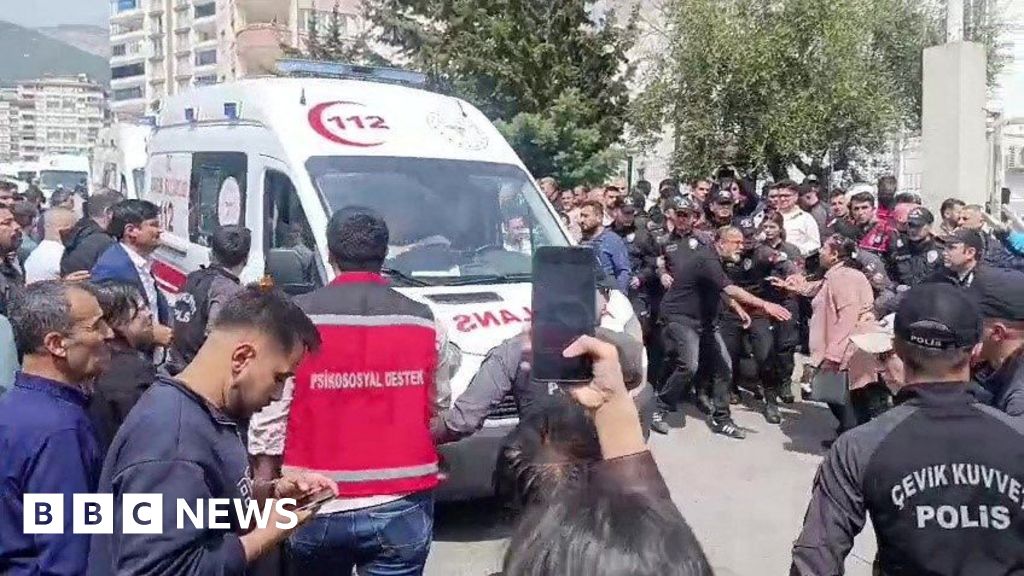

Tragedy Strikes as School Attack Claims Lives in Türkiye
In a chilling reminder of the fragility of peace in our modern world, a devastating attack on a school in Türkiye has left nine innocent lives lost, including eight young students and one dedicated teacher. The incident, which unfolded in a small town near the Syrian border, has sent shockwaves across the nation and drawn global attention to the ongoing instability in the region. As families mourn their loved ones and communities grapple with the aftermath, questions about security, extremism, and regional conflicts loom large.
The Attack: A Brutal Assault on Education
The attack occurred early Tuesday morning at a primary school in the southeastern town of Gaziantep, a region that has long been a flashpoint for violence due to its proximity to Syria. According to Türkiye’s Interior Minister, Mustafa Cifci, unidentified assailants stormed the school grounds, opening fire indiscriminately before fleeing the scene. Emergency services rushed to the site, but the victims—eight students aged between 10 and 12, and their teacher—succumbed to their injuries before they could be saved.
Local authorities have launched a full-scale investigation, with initial reports suggesting that the attackers may have ties to a militant group operating in the region. However, no group has yet claimed responsibility for the attack. Türkiye has been battling various extremist factions for years, particularly in its southeastern provinces, where porous borders with Syria and Iraq have made it a hotspot for cross-border militancy.
Global Context: A Region in Turmoil
This tragic incident is not an isolated event but part of a broader pattern of violence plaguing the Middle East and its neighboring regions. Türkiye, a NATO member and key ally in the West’s fight against terrorism, has been on the frontlines of the Syrian civil war, hosting millions of refugees and conducting military operations against groups like ISIS and the Kurdistan Workers’ Party (PKK). The country’s southeastern region, where Gaziantep is located, has seen frequent clashes between Turkish forces and militants, often resulting in civilian casualties.
The attack on the school underscores the broader global challenge of protecting civilians in conflict zones, particularly children who are often the most vulnerable. According to UNICEF, thousands of schools worldwide have been targeted in recent years, disrupting education for millions of children and perpetuating cycles of poverty and violence. The Gaziantep attack is a grim addition to this troubling trend, highlighting the urgent need for international cooperation to safeguard schools and uphold the right to education.
Why It Matters: A Wake-Up Call for Global Security
This tragedy resonates far beyond Türkiye’s borders, serving as a stark reminder of the interconnected nature of global security. Attacks on educational institutions are not just local incidents but part of a wider strategy employed by extremist groups to destabilize societies and spread fear. By targeting schools, militants aim to undermine the future by robbing children of their right to learn and grow in safety.
The global community has a vested interest in addressing such violence. Education is a cornerstone of stability and progress, and attacks on schools threaten not only individual lives but also the broader aspirations of peace and development. The United Nations has repeatedly emphasized the importance of protecting schools in conflict zones, advocating for measures such as the Safe Schools Declaration, which Türkiye has endorsed.
Moreover, this incident raises critical questions about the effectiveness of current counterterrorism strategies. While Türkiye has made significant strides in combating extremist groups, the persistence of such attacks suggests that more needs to be done to address the root causes of violence, including poverty, political instability, and ideological extremism.
Human Impact: A Community in Mourning
Behind the headlines and geopolitical implications lies a deeply human story of loss and grief. The victims of the Gaziantep attack were not just statistics but cherished members of their community, each with dreams and aspirations cut tragically short. The teacher, whose name has not yet been released, was described by colleagues as a passionate educator dedicated to nurturing young minds. The students, whose lives were abruptly ended, were bright and hopeful, their potential forever unrealized.
A local resident, speaking on condition of anonymity, described the scene as “heartbreaking” and “unimaginable.” “We never thought something like this could happen here,” they said. “Our children should be safe in school, not targets for violence.”
Looking Ahead: Calls for Action and Unity
As Türkiye mourns this senseless loss, the international community must reflect on its role in preventing such tragedies. Strengthening global security frameworks, investing in conflict prevention, and supporting education initiatives in vulnerable regions are critical steps toward building a safer world.
The attack in Gaziantep is a grim reminder of the enduring challenges we face in an increasingly volatile world. Yet, it is also a call to action—a call to protect the innocent, uphold the sanctity of education, and work tirelessly toward a future where such violence is a relic of the past.
In the words of UN Secretary-General António Guterres, “Attacks on schools are attacks on humanity itself.” As we honor the lives lost in Gaziantep, let us recommit ourselves to the fight for peace, justice, and a world where every child can learn without fear.
