


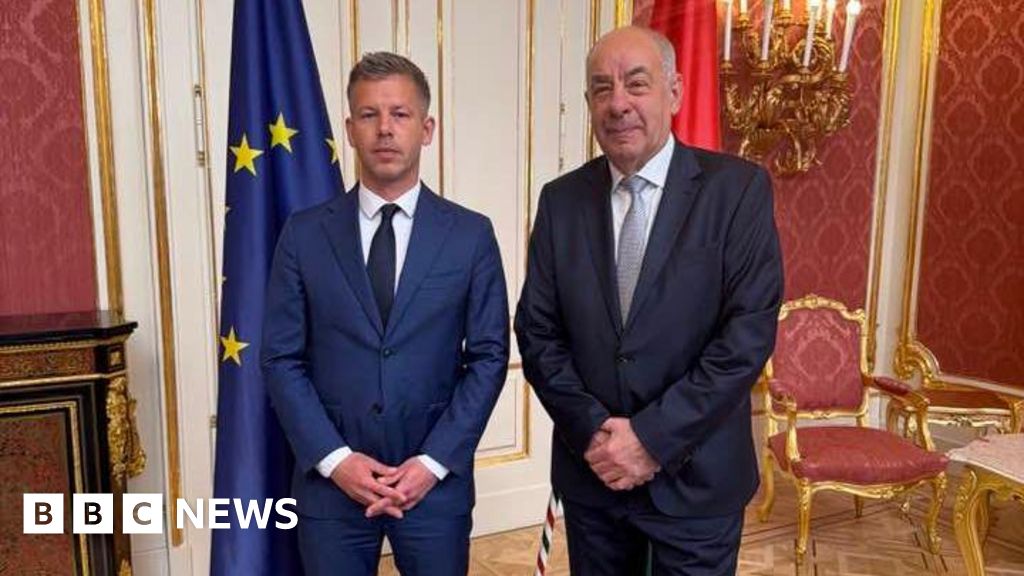

Hungary’s Political Earthquake: Péter Magyar Demands Early Parliament Session as Orbán Era Ends
Budapest, Hungary – May 1, 2024
The political landscape of Hungary has been irrevocably shattered. After 16 years of ironclad rule, Viktor Orbán—Europe’s longest-serving leader—has been toppled by an unexpected challenger: Péter Magyar, a former insider turned reformist firebrand. In a stunning reversal, Magyar’s coalition secured a decisive victory in Hungary’s parliamentary elections, marking the end of Orbán’s nationalist stronghold. Now, with the nation at a crossroads, Magyar is demanding the new parliament convene by early May, signaling a rapid transition of power that could redefine Hungary’s future—and Europe’s balance of power.
The Fall of Orbán’s Regime
Viktor Orbán’s political dominance once seemed unshakable. Since returning to power in 2010, he transformed Hungary into an illiberal bastion, clashing with the European Union over democratic backsliding, media suppression, and anti-immigration policies. His Fidesz party rewrote election laws, gerrymandered districts, and consolidated control over courts and media, earning condemnation from Brussels and applause from far-right movements worldwide.
But discontent simmered beneath the surface. Years of corruption scandals, economic stagnation, and Orbán’s pro-Russia stance during the Ukraine war eroded his support. Enter Péter Magyar—a former Fidesz official turned whistleblower, whose explosive revelations about government graft and authoritarianism galvanized Hungary’s fractured opposition.
Magyar’s Meteoric Rise
A lawyer and former diplomat, Magyar was once part of Orbán’s inner circle. His marriage to Orbán’s former justice minister, Judit Varga, gave him rare access to Fidesz’s machinery—until he turned against it. In a series of viral speeches and leaked recordings, Magyar exposed systemic corruption, including allegations of high-level embezzlement and judicial manipulation. His message resonated with Hungarians exhausted by cronyism and international isolation.
Capitalizing on this momentum, Magyar formed a broad coalition—uniting centrists, liberals, and even disillusioned Fidesz voters. His campaign promised transparency, EU reintegration, and an end to Orbán’s “mafia state.” The gamble paid off: on election night, Fidesz lost its supermajority, and Orbán conceded defeat—a moment historians may mark as the end of an era.
Why Early Parliament Matters
Magyar’s push for an immediate parliamentary session is both symbolic and strategic. By convening before mid-May, he aims to:
- Fast-track reforms: Reverse Orbán-era laws that weakened democratic checks.
- Restore EU relations: Hungary faces frozen EU funds over rule-of-law violations; swift action could unlock billions.
- Prevent obstruction: Orbán loyalists still hold key posts; delaying could empower sabotage.
The move also sends a message to Brussels and Washington: Hungary is ready to rejoin the Western democratic fold.
Global Implications
Hungary’s shift carries far-reaching consequences:
- EU Power Dynamics: Orbán was a thorn in Brussels’ side, blocking sanctions on Russia and EU policies. His exit weakens Europe’s far-right bloc and strengthens pro-EU forces.
- NATO Unity: Orbán’s flirtation with Moscow troubled allies. Magyar’s pro-NATO stance could solidify Eastern Europe’s front against Russia.
- Populism in Retreat: After wins for Poland’s liberals and Slovakia’s pro-West turn, Orbán’s fall suggests Central Europe’s illiberal wave may be receding.
Yet risks remain. Orbán retains influence, and Magyar’s coalition is untested. If reforms stall, Hungary—and Europe—could face renewed instability.
The Human Cost of Transition
Beyond geopolitics, ordinary Hungarians are watching closely. For years, teachers, journalists, and activists faced harassment under Orbán’s regime. Many hope Magyar will restore press freedom and judicial independence—but others fear backlash from Fidesz hardliners.
“I voted for change, but I’m nervous,” said Eszter Kovács, a Budapest schoolteacher. “Orbán’s people won’t vanish overnight.”
What Comes Next?
Magyar’s immediate challenges are immense: purging corrupt officials, overhauling state media, and negotiating with EU leaders. His success—or failure—will hinge on whether he can deliver tangible improvements while keeping his fragile alliance intact.
For now, though, the world is witnessing a rare spectacle: a nation breaking free from strongman rule. As parliament prepares to convene, Hungarians dare to hope—while the West watches, wondering if this is the start of a democratic revival, or merely a pause in populism’s march.
Conclusion: A New Chapter or a False Dawn?
The fall of Viktor Orbán is more than a national story—it’s a litmus test for democracy’s resilience in an age of authoritarianism. If Péter Magyar succeeds, Hungary could emerge as a beacon of reform in Central Europe. If he fails, the void may be filled by chaos or a revanchist Orbán. For now, the world holds its breath as Hungary steps into the unknown.
