


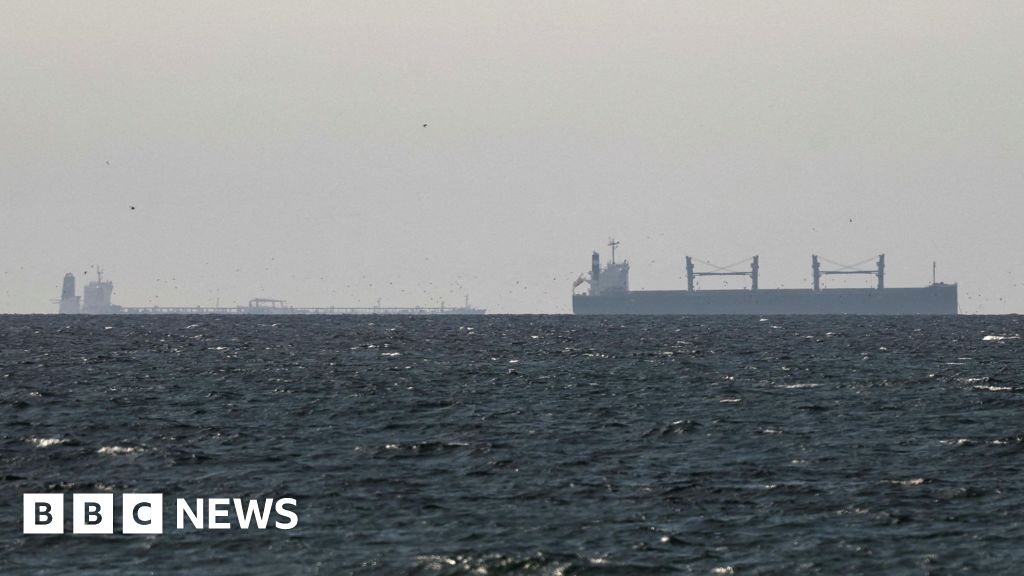

Global Tensions Escalate as US Maintains Naval Blockade Despite Tehran’s Concessions
A Fragile Truce Amid Rising Stakes
The world watches with bated breath as the United States and Iran navigate a precarious diplomatic standoff, with Washington maintaining its naval blockade in the Persian Gulf despite Tehran’s recent concessions. President Donald Trump cautiously welcomed Iran’s latest overtures but emphasized that sanctions and military pressure would persist until a comprehensive peace deal is reached. The situation underscores the volatile balance between diplomacy and deterrence, with global energy markets, regional stability, and international security hanging in the balance.
The Latest Developments
Iran’s government recently signaled a willingness to de-escalate tensions, offering to resume negotiations over its nuclear program and regional influence. However, the US has refused to lift its naval blockade—a strategic chokehold on Iranian oil exports—until verifiable commitments are made. The blockade, enforced by the US Fifth Fleet, has severely impacted Iran’s economy, cutting off vital revenue streams and exacerbating domestic unrest.
President Trump’s measured response suggests a dual strategy: rewarding perceived cooperation while keeping maximum pressure intact. “We’re seeing positive signs, but actions speak louder than words,” he stated, echoing Washington’s long-standing demand for irreversible concessions from Tehran.
Global Implications of the Standoff
The Persian Gulf remains one of the world’s most critical maritime corridors, with nearly a third of global oil shipments passing through the Strait of Hormuz. Any prolonged blockade risks spiking energy prices, disrupting supply chains, and triggering economic instability worldwide. European and Asian nations, heavily reliant on Middle Eastern oil, have urged restraint, fearing a repeat of 2019’s tanker seizures and attacks that sent shockwaves through markets.
Beyond economics, the standoff carries significant geopolitical weight. Russia and China have condemned the US blockade as unilateral coercion, while regional players like Saudi Arabia and Israel support Washington’s hardline stance. The risk of accidental conflict—whether through naval skirmishes or proxy confrontations in Syria, Iraq, or Yemen—remains dangerously high.
Historical Context: From Nuclear Deal to Brinkmanship
The current crisis traces back to 2018, when the US withdrew from the Joint Comprehensive Plan of Action (JCPOA), the landmark nuclear accord between Iran and world powers. Since then, Washington has pursued a “maximum pressure” campaign, reinstating crippling sanctions and deploying additional military assets to the region. Iran responded by incrementally breaching the JCPOA’s limits, enriching uranium closer to weapons-grade levels and ramping up ballistic missile tests.
Efforts to revive diplomacy have been sporadic, with European mediators struggling to bridge the gap between US demands and Iranian red lines. Tehran insists on immediate sanctions relief before any negotiations, while the US demands verifiable steps toward denuclearization first. The deadlock has left the international community scrambling to prevent an outright conflict.
Why This Matters Beyond the Middle East
The US-Iran standoff is not just a regional issue—it’s a litmus test for global power dynamics. A failure of diplomacy could embolden hardliners in both nations, setting a dangerous precedent for future crises involving nuclear proliferation. Additionally, the blockade’s legality under international law remains contested, raising concerns about the erosion of maritime norms.
For ordinary citizens, the stakes are equally high. Rising oil prices could inflate costs for everything from gasoline to consumer goods, while a full-blown war would trigger a humanitarian catastrophe, displacing millions and destabilizing neighboring countries already grappling with refugee crises.
What Comes Next?
With neither side willing to fully back down, the path forward remains uncertain. Behind-the-scenes negotiations via intermediaries like Oman or Qatar may offer a glimmer of hope, but the risk of miscalculation looms large. Analysts warn that without a face-saving compromise, the region could tip into open conflict—a scenario with devastating consequences for global security.
A World on Edge
As the US and Iran engage in a high-stakes game of diplomatic chess, the international community holds its breath. The blockade, the sanctions, and the rhetoric all serve as reminders of how quickly tensions can spiral out of control. Whether through breakthrough talks or tragic escalation, the coming weeks will shape not just the future of the Middle East, but the stability of the world at large. One thing is certain: in an era of great-power competition and shifting alliances, the lessons of this crisis will resonate far beyond the Persian Gulf.
