



NASA’s Artemis II Mission Demonstrates Breakthrough in Affordable Space-to-Earth Laser Communications
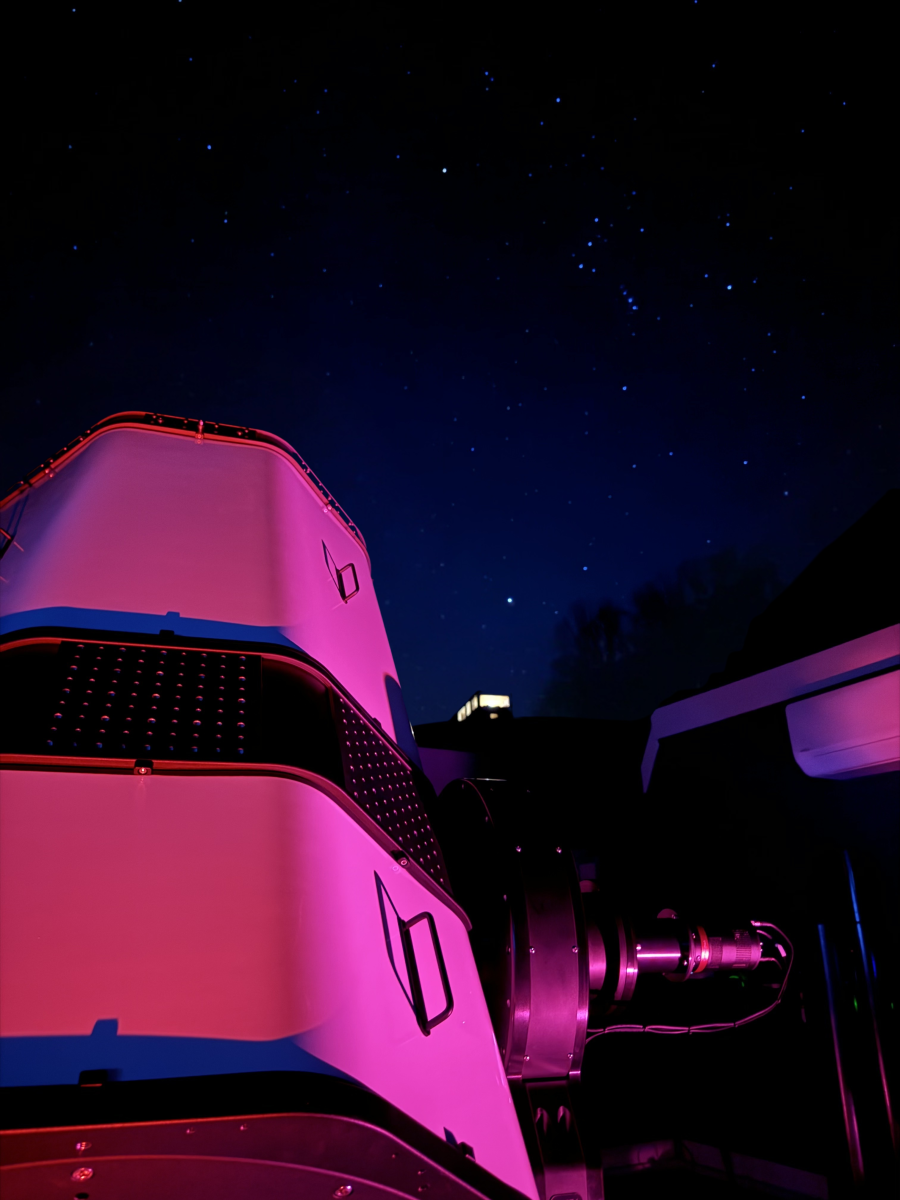
In a groundbreaking demonstration of advanced space communication technology, NASA’s Artemis II mission has successfully showcased the potential of affordable, high-speed laser data transmission between Earth and lunar orbit. Earlier this month, the mission, which sent four astronauts to orbit the moon, utilized state-of-the-art laser communication systems to beam stunning 4K video and other data back to Earth. What sets this achievement apart is not just the technological feat itself, but the participation of a low-cost laser terminal developed by private companies Observable Space and Quantum Opus, in collaboration with the Australian National University. This terminal successfully captured data from the Orion spacecraft at an impressive rate of 260 megabits per second, proving that high-throughput space-to-Earth communication can be achieved without the exorbitant costs traditionally associated with such endeavors.
A New Era for Space Communication
NASA has long been exploring the potential of laser communications as a successor to traditional radio frequency (RF) transmissions. Laser systems offer significantly higher data transfer rates, enabling the transmission of large volumes of data, including high-resolution images and videos, which are essential for future deep-space missions. However, the high cost of building and operating laser communication infrastructure has been a major barrier to widespread adoption. The Artemis II mission marks a turning point by demonstrating that such systems can be developed and deployed at a fraction of the cost.
The terminal developed by Observable Space and Quantum Opus cost less than $5 million, a stark contrast to bespoke solutions that can run into tens of millions of dollars. This affordability opens the door for broader adoption of laser communication technology, potentially revolutionizing how data is transmitted between space and Earth.
How It Works
The terminal combines Observable Space’s software and telescope to capture and lock onto transmissions from the Orion spacecraft, while Quantum Opus’s photonic sensor decodes the data. This collaborative effort leverages cutting-edge technology to achieve high-speed data transfer with remarkable precision. The success of this system highlights the potential for scalable, cost-effective solutions in space communication.
NASA’s primary receivers in California and New Mexico also played a crucial role in the mission, working alongside the Australian terminal to collect data from the Artemis II spacecraft. This global network of receivers underscores the importance of maintaining line-of-sight communication with spacecraft, especially when dealing with lunar missions where Earth’s rotation can interrupt signals.
Challenges and Opportunities
While laser communications offer unparalleled throughput, they are not without challenges. Unlike RF transmissions, which can penetrate clouds and atmospheric disturbances, laser signals are highly susceptible to disruptions caused by weather conditions. This vulnerability necessitates the placement of receivers in geographically diverse locations to ensure uninterrupted communication. The Artemis II mission addressed this by deploying receivers in both the Northern and Southern Hemispheres, ensuring continuous data collection.
Another critical advantage of laser communication is its ability to support future deep-space missions. NASA has been testing the technology for several years, including a demonstration of data links with a spacecraft 218 million miles from Earth, en route to an asteroid. The success of Artemis II represents the most comprehensive demonstration yet, paving the way for its use in upcoming missions to Mars and beyond.
A Vision for the Future
Observable Space CEO Dan Roelker believes that the Artemis II mission proves the readiness of space-to-Earth laser downlinks for large-scale deployment. While laser communication is already widely used for satellite-to-satellite connections, its use for transmitting data back to Earth has been limited due to high costs. Roelker envisions a global network of affordable terminals that can receive data from satellites, enabling faster and more efficient communication for a wide range of applications.
“We can scale this over the next year or more,” Roelker told TechCrunch. “We will partner with a lot of people around this, whether this is something we’re going to do ourselves, or partner with other ground station-as-a-service companies, or work with extremely large constellation providers that are going to want to own their own infrastructure.”
A Symbolic Connection to Australia
The choice of Australia as a reception site carries historical significance. Josh Cassada, a former U.S. astronaut and co-founder of Quantum Opus, noted that Australia was the first continent to appear in the iconic Earthrise photo captured by the Apollo astronauts. The involvement of the Australian National University in this mission continues that legacy, symbolizing the global nature of space exploration and collaboration.
Implications for the Space Industry
The successful deployment of a low-cost laser communication terminal has far-reaching implications for the space industry. It lowers the barrier to entry for organizations seeking to establish reliable communication links with satellites, whether for scientific research, commercial purposes, or national security. This democratization of space communication technology could accelerate innovation and foster new partnerships between governments, private companies, and academic institutions.
Moreover, the scalability of this technology aligns with the growing demand for satellite constellations, particularly in the fields of Earth observation, telecommunications, and global internet coverage. As more satellites are launched into orbit, the need for efficient and affordable data transmission systems becomes increasingly critical. The success of the Artemis II mission suggests that laser communication could be the solution.
Looking Ahead
The Artemis II mission represents a significant milestone in the evolution of space communication technology. By demonstrating the feasibility of low-cost laser data transmission, NASA and its partners have laid the groundwork for a new era of space exploration and satellite operations. As the technology continues to evolve, it holds the promise of transforming how we connect with the cosmos, enabling faster, more reliable communication that can support humanity’s ambitions both on Earth and beyond.
While challenges remain, particularly in addressing the vulnerabilities of laser communication to atmospheric disruptions, the potential benefits far outweigh the drawbacks. The collaboration between NASA, Observable Space, Quantum Opus, and the Australian National University exemplifies the power of innovation and partnership in advancing space technology.
As humanity prepares for increasingly ambitious missions to the moon, Mars, and beyond, the success of Artemis II serves as a reminder that the future of space communication is not just about reaching new frontiers but doing so in a way that is accessible, efficient, and sustainable. The stars may still be far away, but thanks to breakthroughs like this, they are closer than ever.
