


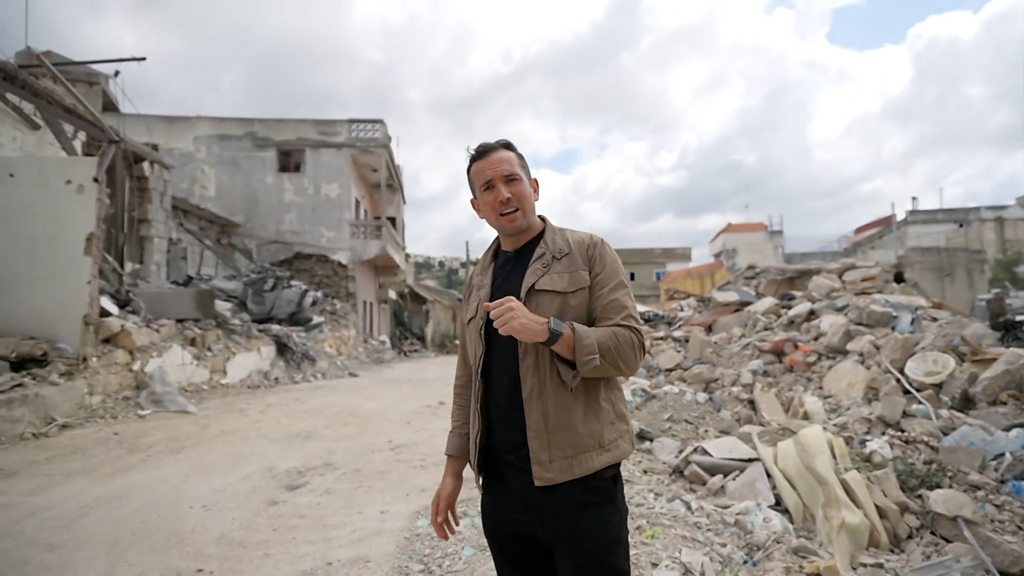

Escalating Tensions: Israel Establishes ‘Yellow Line’ Military Zone Amid Rising Lebanon Border Fears
The Middle East teeters on the brink of another potentially devastating conflict as Israel announces the creation of a military exclusion zone along its northern border with Lebanon. Dubbed the “Yellow Line,” this 10-kilometer stretch of land has been declared off-limits to civilians, signaling heightened military preparedness in response to escalating tensions with Hezbollah, the Iran-backed militant group operating in southern Lebanon. The move raises alarm bells across the international community, already grappling with the fallout of the Israel-Hamas war in Gaza and fears of a broader regional conflagration.
The establishment of the Yellow Line is more than a precautionary measure—it is a stark reminder of the fragile balance of power in the region and the potential for conflict to spiral out of control. As global powers watch nervously, the question looms: will this buffer zone prevent a wider war, or will it become a flashpoint for one?
The Yellow Line: A Strategic Defense or Provocation?
Israel’s decision to demarcate the Yellow Line comes amid a series of cross-border skirmishes and rocket attacks between Israeli forces and Hezbollah militants. The Israeli Defense Forces (IDF) describe the move as a necessary measure to protect civilians and secure military operations in the area. The 10-kilometer zone, stretching from the Lebanese border into northern Israel, is now under strict military control, with civilians urged to evacuate or seek shelter.
The timing of this decision is critical. Lebanon, already grappling with a severe economic crisis and political instability, remains a volatile neighbor. Hezbollah, which wields significant influence in southern Lebanon, has intensified its rhetoric against Israel, threatening retaliation for Israel’s ongoing military operations in Gaza. In recent weeks, the group has launched rockets and drones into northern Israel, prompting retaliatory airstrikes by the IDF.
Global security experts warn that the Yellow Line could exacerbate tensions. While Israel frames it as a defensive measure, Hezbollah may perceive it as a provocative act, further straining an already precarious situation.
Global Context: A Region on Edge
The Middle East is no stranger to conflict, but the current geopolitical landscape is particularly combustible. The Israel-Hamas war, now in its second month, has drawn international condemnation and sparked protests worldwide. Hamas’ October 7 attack on southern Israel, which killed over 1,400 people and took hundreds hostage, marked a turning point in the decades-long Israeli-Palestinian conflict. Israel’s subsequent military campaign in Gaza has resulted in significant civilian casualties, drawing widespread criticism and calls for a ceasefire.
Against this backdrop, the Yellow Line’s establishment underscores Israel’s determination to prevent a second front from opening in its conflict with Hamas. Hezbollah, a longstanding adversary of Israel, has historically functioned as a proxy for Iran, which funds and arms the group. Tehran’s involvement complicates the situation, as any escalation between Israel and Hezbollah could draw Iran and its allies—including Syria and Yemen’s Houthi rebels—into the conflict.
The international community is deeply concerned. The United Nations has called for restraint on both sides, warning of the catastrophic humanitarian consequences of a wider war. The U.S., Israel’s closest ally, has deployed military assets to the region, including aircraft carriers and missile defense systems, to deter Hezbollah and Iran from escalating hostilities.
Why This Matters Globally
The Yellow Line is not just a local military maneuver—it has far-reaching implications for global security. The Middle East remains a strategic hub for energy production, and any significant conflict could disrupt oil supplies, sending shockwaves through the global economy. Additionally, the potential for a proxy war between Israel and Iran raises the specter of a broader confrontation involving major powers, including the U.S., Russia, and China.
For European nations, the prospect of renewed conflict in the Middle East is deeply troubling. The region has long been a source of migration crises, and another war could trigger a new wave of refugees, straining already overburdened systems.
Moreover, the Yellow Line underscores the fragility of international peacekeeping efforts in the region. The United Nations Interim Force in Lebanon (UNIFIL), tasked with maintaining peace along the Israeli-Lebanese border, has struggled to prevent clashes between Israel and Hezbollah. The Yellow Line’s creation highlights the limitations of diplomacy in the face of entrenched hostilities.
Humanitarian Concerns: Civilians Caught in the Crossfire
As military tensions escalate, civilians on both sides of the border bear the brunt of the conflict. In northern Israel, residents have been ordered to evacuate or remain in bomb shelters amid ongoing rocket attacks. In southern Lebanon, communities face the dual threat of Israeli airstrikes and Hezbollah’s militant activities.
The humanitarian toll of a wider conflict would be devastating. Lebanon, already reeling from economic collapse and political dysfunction, lacks the resources to respond to a large-scale crisis. Israel, while better equipped, would face significant challenges in managing the fallout of a two-front war.
International aid organizations are preparing for the worst, stockpiling supplies and mobilizing teams to respond to potential emergencies. The World Health Organization has warned that any escalation could overwhelm healthcare systems in the region, already strained by years of conflict and instability.
A Precarious Future
The Yellow Line is a testament to the growing volatility of the Middle East, where decades-old grievances and geopolitical rivalries continue to fuel conflict. While Israel’s move may be intended to de-escalate tensions by establishing a clear boundary, the risk of miscalculation remains high. With Hezbollah’s leadership vowing to retaliate against perceived Israeli aggression, the stage is set for a potentially explosive confrontation.
As the international community scrambles to prevent a wider war, the Yellow Line serves as a stark reminder of the fragility of peace in the region. The stakes could not be higher—not just for Israel and Lebanon, but for the world at large. In an era of interconnected crises, the ripple effects of conflict in the Middle East are felt far beyond its borders. The question now is whether diplomacy can prevail, or whether the Yellow Line will become another tragic chapter in the region’s long history of strife.
