


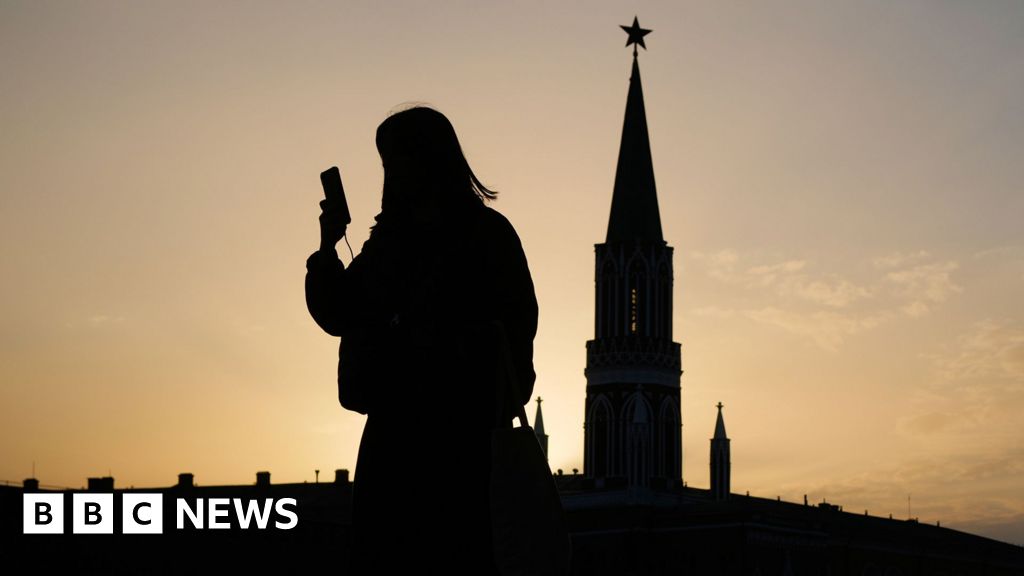

Russia’s Digital Iron Curtain: Internet Crackdown Sparks Fears of a New Era of Censorship
Moscow, Russia – In the dead of night, screens across Russia flicker into darkness. Social media platforms vanish without warning, news sites return error messages, and virtual private networks (VPNs) falter under relentless state pressure. For millions of Russians, the internet—once a window to the world—is rapidly shrinking, drawing unsettling parallels to the rigid censorship of the Soviet era. The government’s escalating crackdown on digital freedoms has ignited fears that the country is entering an unprecedented age of information control, with global implications for cybersecurity, human rights, and geopolitical stability.
The Anatomy of a Digital Blackout
Over the past year, Russian authorities have intensified their grip on online spaces, deploying a multi-pronged strategy to stifle dissent and control narratives. Independent media outlets like Meduza and Dozhd have been blocked, while platforms such as Facebook, Twitter, and Instagram face near-total restrictions. Even LinkedIn, long banned in Russia, remains inaccessible.
The tactics extend beyond simple website blocks. Internet service providers (ISPs) are now required to install deep packet inspection (DPI) technology, enabling real-time surveillance and throttling of encrypted traffic. VPN services, a lifeline for citizens seeking uncensored information, are systematically targeted, with popular providers like NordVPN and ExpressVPN struggling to bypass Kremlin-backed firewalls.
Experts warn that these measures mirror China’s Great Firewall but are being implemented at a breakneck pace. “This isn’t just about silencing opposition—it’s about reshaping reality,” says Ekaterina Petrova, a digital rights researcher at Access Now. “The Kremlin wants a sanitized internet where only state-approved narratives exist.”
Global Context: A Wave of Digital Authoritarianism
Russia’s internet crackdown is not an isolated phenomenon. From Iran’s intermittent shutdowns during protests to Myanmar’s military-enforced social media blackouts, governments worldwide are weaponizing connectivity to suppress dissent. According to Freedom House, global internet freedom has declined for the 12th consecutive year, with 28 countries imposing nationwide internet shutdowns in 2022 alone.
What sets Russia apart is the scale and sophistication of its censorship apparatus. As a major cyber power, its actions could embolden other regimes to adopt similar tactics. Already, Belarus and Kazakhstan have mirrored Russian-style internet restrictions, raising concerns of a domino effect across Eurasia.
The economic fallout is equally alarming. Foreign tech firms face an impossible choice: comply with Kremlin demands and betray user trust or exit the market entirely. Google and Meta have already scaled back operations, while domestic platforms like VKontakte and Yandex—now under state influence—fill the void with heavily curated content.
Why This Matters Beyond Russia’s Borders
The ramifications of Russia’s digital lockdown extend far beyond its own citizens. First, the erosion of online freedoms sets a dangerous precedent for democracies grappling with misinformation and polarization. If a G20 nation can dismantle internet autonomy overnight, what stops others from following suit?
Second, the crackdown exacerbates global cybersecurity risks. As VPNs and encrypted services are dismantled, Russians are turning to riskier alternatives, exposing themselves to malware and state surveillance. This digital arms race could spill over into neighboring states, destabilizing an already fragile cyber landscape.
Finally, the information vacuum fuels geopolitical tensions. With independent journalism stifled, Kremlin-controlled narratives dominate, distorting perceptions of the Ukraine war and other critical issues. “A censored Russia is a more unpredictable Russia,” warns Ian Bremmer, president of the Eurasia Group. “When truth becomes collateral damage, miscalculations and conflicts become harder to prevent.”
The Human Cost: Voices from the Digital Frontlines
Behind the statistics are real people navigating an increasingly hostile digital terrain. Anna, a 32-year-old journalist in St. Petersburg (name changed for safety), describes relying on mesh networks and USB drives to share uncensored news. “It feels like we’re back in the 1980s, passing samizdat [underground publications],” she says. “But now, the KGB has algorithms.”
Others face dire consequences for circumventing bans. In March, a Moscow student was fined $5,000 for using a VPN to access opposition content—a sum exceeding the average annual salary in some regions. Meanwhile, elderly Russians, less tech-savvy, are left vulnerable to state propaganda with no alternative sources.
What Comes Next?
As Russia’s digital iron curtain descends, the international community faces tough questions. Should Western governments impose sanctions on Russian tech firms enabling censorship? Can decentralized technologies like blockchain-based networks offer a workaround? And how far will the Kremlin go—could a complete internet disconnection, akin to North Korea’s Kwangmyong, be next?
For now, the battle lines are clear. On one side, a state determined to monopolize truth. On the other, ordinary citizens and activists fighting to preserve the last remnants of a free internet. The outcome will shape not just Russia’s future, but the global balance between security and liberty in the digital age.
In the shadows of firewalls and filters, a silent war rages—one that will define whether the internet remains a tool for liberation or an instrument of control. The world is watching.
