


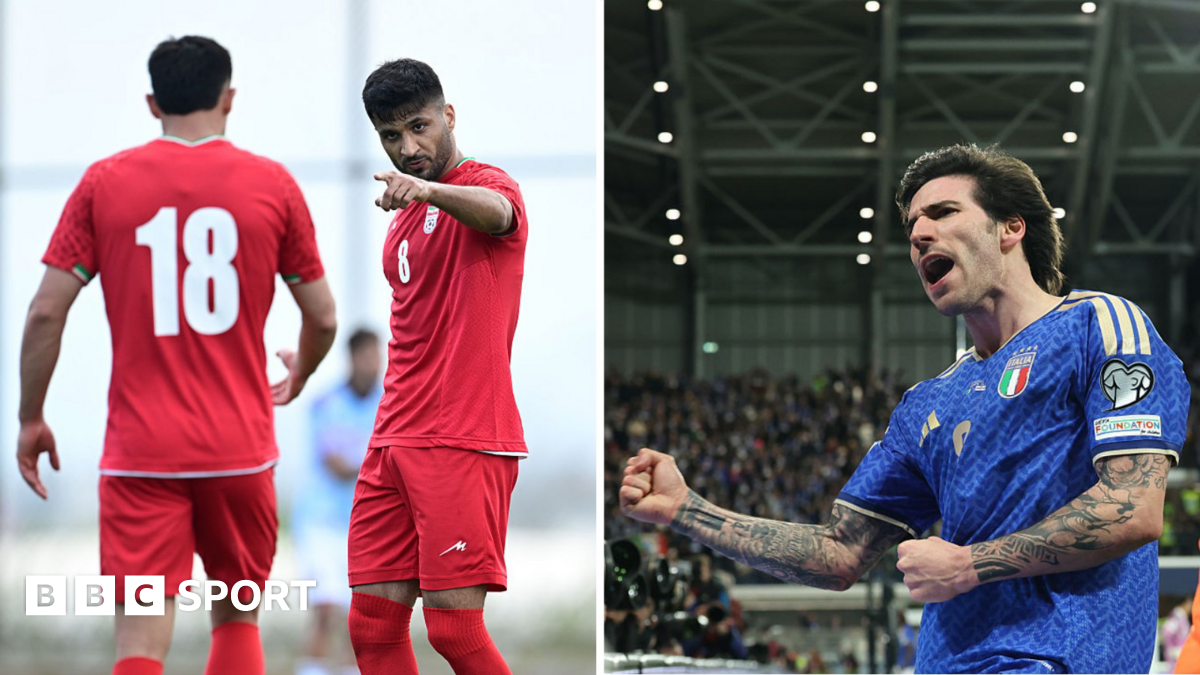

Global Tensions Rise as US Proposal to Replace Iran in World Cup Sparks Diplomatic Firestorm
A Controversial Suggestion Ignites International Outrage
The 2026 FIFA World Cup, set to be hosted across the US, Canada, and Mexico, has become an unexpected battleground in global diplomacy. A leaked proposal by US officials to replace Iran’s national team with Italy—after Iran’s political tensions with Washington—has triggered fierce backlash from Tehran, Rome, and football governing bodies. The suggestion, framed by Iran as “moral bankruptcy,” underscores how sports and geopolitics are increasingly colliding in an era of heightened global divisions.
The US Proposal and Iran’s Fiery Response
Reports indicate that US diplomat Anthony Zampolli floated the idea of Italy taking Iran’s World Cup spot as a conciliatory gesture after Italian Prime Minister Giorgia Meloni criticized former President Donald Trump. The Iranian embassy swiftly condemned the move, accusing Washington of political interference in sports.
“Italy has earned its greatness in football on the pitch, not thanks to political privileges,” the embassy stated on X (formerly Twitter). “The attempt to exclude Iran reveals the ‘moral bankruptcy’ of the United States, which fears even the presence of 11 young Iranians on the field.”
The statement reflects Tehran’s long-standing grievances over US sanctions and diplomatic isolation. Iran’s participation in international sports has frequently been entangled with politics, particularly after the 2022 protests and crackdowns that led to calls for the team’s exclusion.
Italy’s Firm Rejection: “You Qualify on the Pitch”
The proposal was met with immediate disdain in Italy, where officials and football authorities rejected the idea outright. Economy Minister Giancarlo Giorgetti called it “shameful,” while Sports Minister Andrea Abodi emphasized that World Cup qualification must be earned through competition, not political maneuvering.
Luciano Buonfiglio, president of the Italian Olympic Committee, echoed the sentiment: “In order to go to the World Cup, you have to earn it.” Italy, a four-time champion, failed to qualify for the third consecutive tournament after a playoff loss to Bosnia and Herzegovina—a fact that only deepened resentment over the suggestion that they could bypass the usual qualification process.
FIFA’s Rules and the Precedent of Political Interference
Under FIFA regulations, the governing body holds “sole discretion” in cases where a team withdraws or is excluded. Article six of the World Cup rules states that FIFA “may decide to replace the Participating Member Association in question with another association.” However, such decisions are rare and typically reserved for emergencies like war or natural disasters—not political disputes.
Historically, FIFA has resisted direct political interference, though controversies persist. Russia was banned from the 2022 World Cup following its invasion of Ukraine, while apartheid-era South Africa faced decades of exclusion. If FIFA were to act against Iran under US pressure, it could set a dangerous precedent, further eroding the separation between sports and geopolitics.
Why This Matters Globally
The controversy highlights three critical issues:
- The Weaponization of Sports – Governments increasingly use international competitions as leverage in diplomatic disputes, risking the integrity of global sports.
- The Fragility of Neutral Governance – If FIFA bends to political pressure, its credibility as an impartial governing body weakens, inviting future interference.
- Escalating US-Iran Tensions – The dispute is a microcosm of broader hostilities, with Iran framing the US as a bully attempting to sideline its athletes unjustly.
Conclusion: A Test for Football’s Independence
As the 2026 World Cup approaches, the fallout from this proposal will test whether FIFA can maintain its neutrality in an increasingly polarized world. For now, Iran remains scheduled to face New Zealand, Belgium, and Egypt in the group stage—but the diplomatic storm is far from over. If sports become just another arena for geopolitical battles, the beautiful game risks losing its unifying power. The world will be watching to see if football’s governing bodies can stand firm—or if politics will dictate who gets to play.
