



Russia Scales Back Military Parade Amid Growing Global Tensions
In a surprising shift from tradition, Russia announced late Tuesday that its annual Victory Day parade, a cornerstone of national pride and military display, will be significantly scaled back this year. The decision to exclude cadets from elite military academies and forego the customary procession of armored vehicles has sparked speculation about the broader implications for Russia’s geopolitical posture. Against the backdrop of ongoing conflicts in Ukraine and escalating tensions with Western powers, this move signals a possible recalibration of Moscow’s priorities—and a sobering reminder of the deepening strains on its military and economy.
A Quiet Departure from Tradition
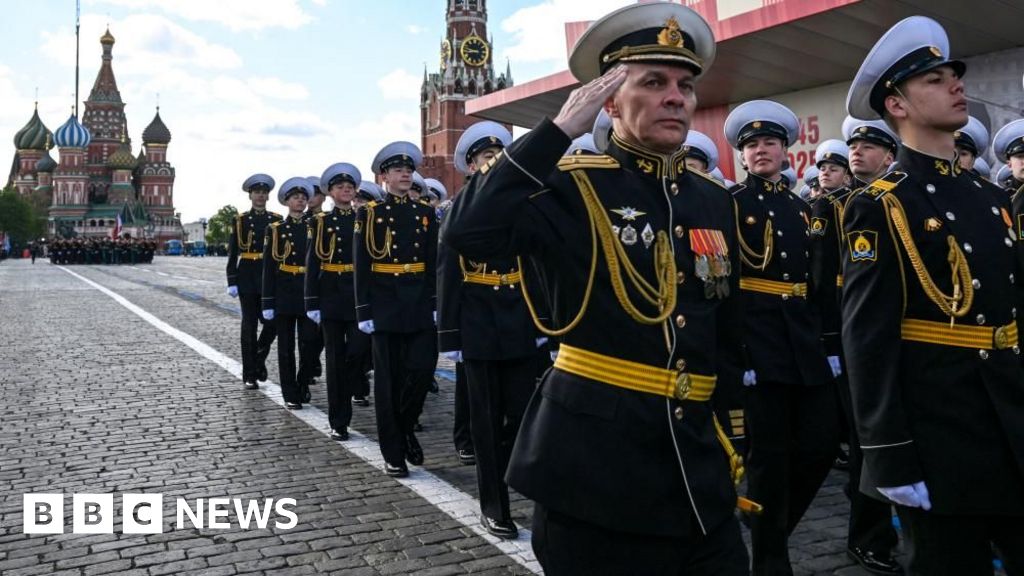
Victory Day, commemorated on May 9th, marks the Soviet Union’s triumph over Nazi Germany in World War II and has long been a stage for Russia to showcase its military might. The parade in Moscow’s Red Square is a meticulously choreographed event, featuring thousands of troops, state-of-the-art weaponry, and aerial displays. This year, however, the Russian Defence Ministry confirmed that cadets from Suvorov military schools, Nakhimov naval schools, and other cadet corps will not participate. Additionally, the iconic column of military equipment, a symbol of Russia’s technological prowess, will be conspicuously absent.
While officials framed the changes as logistical, the decision has raised eyebrows among analysts. The exclusion of cadets and armored vehicles is seen as a departure from the parade’s usual grandeur, suggesting that Russia may be conserving resources or avoiding displays of vulnerability amid its protracted war in Ukraine.
Global Context: A World on Edge
Russia’s scaled-back parade comes at a time of heightened global uncertainty. The war in Ukraine, now in its third year, has drawn in NATO countries and strained international relations. European nations are ramping up defense spending, while the United States continues to supply Ukraine with advanced weaponry. Meanwhile, Russia’s economy faces mounting pressure from Western sanctions, and its military is stretched thin by the demands of the conflict.
The parade’s reduced scale may also be a tacit acknowledgment of these challenges. By scaling back, Moscow could be signaling a shift toward pragmatism, focusing resources on the battlefield rather than on ceremonial displays. Alternatively, it may be an attempt to project an image of restraint, countering Western narratives of Russian aggression.
Why This Matters Globally
The Victory Day parade is more than a national event; it is a barometer of Russia’s geopolitical ambitions and domestic stability. Its reduction has implications far beyond Moscow’s borders. For Russia’s adversaries, it could indicate vulnerabilities that might be exploited, whether through military strategy or economic pressure. For its allies, particularly China and North Korea, it may prompt a reassessment of their partnerships.
Moreover, the parade’s downsizing reflects broader trends in global security. As nations grapple with resource constraints and shifting alliances, military displays are increasingly being used as tools of diplomacy and deterrence. Russia’s decision underscores the precarious balance between projecting strength and managing real-world challenges.
Human Impact: The Faces Behind the Parade
Beyond the geopolitics, the scaled-back parade has a human dimension. For the cadets who train tirelessly at Suvorov and Nakhimov schools, participation in the parade is a rite of passage and a source of immense pride. Their exclusion, whether logistical or symbolic, represents a missed opportunity to inspire a new generation of military leaders.
Similarly, the absence of armored vehicles is a reminder of the toll exacted by war. Many of these machines are likely deployed in Ukraine, where they are engaged in fierce combat rather than parading through Red Square. The decision to withhold them from the parade underscores the grim reality of Russia’s military engagements and their cost to both soldiers and civilians.
Looking Ahead: What Comes Next for Russia
As Russia prepares for a more subdued Victory Day, the world watches closely. The parade’s reduction is a microcosm of the broader challenges facing the Kremlin: balancing domestic morale with international ambitions, managing economic pressures, and navigating a complex web of alliances and rivalries.
In the coming months, Russia’s actions will likely reveal whether this move is a temporary adjustment or a harbinger of deeper shifts in its strategy. Will Moscow reinvest in its military, seeking to reclaim lost ground, or will it pivot toward diplomacy, seeking to ease tensions with the West? The answers to these questions will shape not only Russia’s future but also the trajectory of global security.
Conclusion: A Moment of Reflection
Russia’s decision to scale back its Victory Day parade is a poignant reminder of the ever-evolving nature of global conflict. In a world where power is increasingly contested, even the most symbolic gestures carry weight. As the parade’s diminished scale reflects the strains on Russia’s military and economy, it also invites reflection on the broader costs of war—and the urgent need for diplomacy in an increasingly fractured world.
In the shadow of Red Square, as the echoes of past victories fade, the world is left to ponder what comes next. Will this moment mark a turning point, or is it merely another chapter in a long and turbulent story? Only time will tell, but one thing is certain: the stakes have never been higher.
