


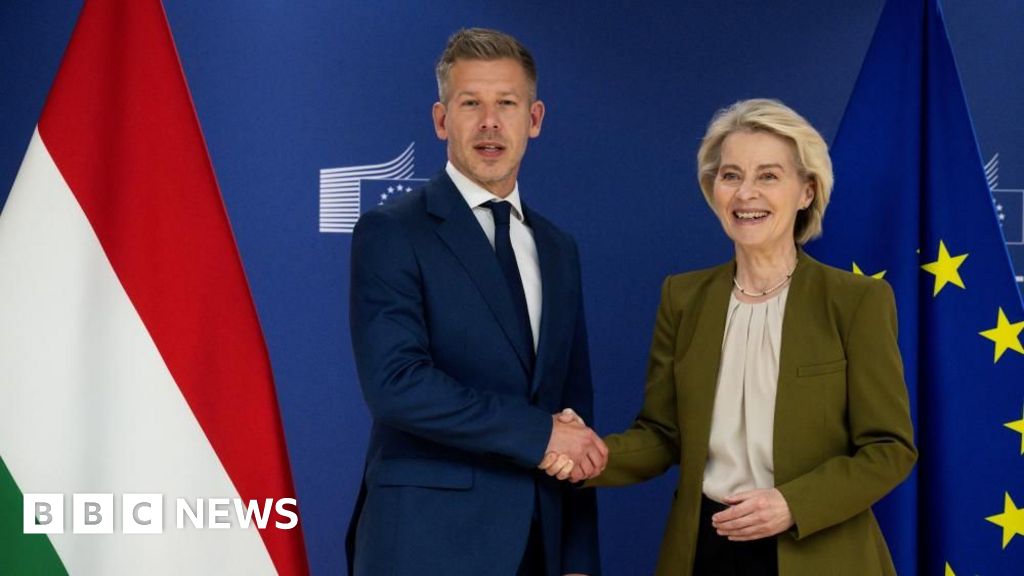

Hungary’s New Government Faces Daunting Anti-Corruption Reforms Amidst Rising Scrutiny
Budapest, Hungary – The clock is ticking for Hungary’s newly formed government as it confronts a sweeping demand: root out systemic corruption and safeguard judicial independence—or risk losing public trust in a nation long criticized for democratic backsliding. The ultimatum, delivered by Márton Hajdu, a senior party figure, underscores the precarious balancing act facing Prime Minister Péter Magyar’s administration. With Hungary’s international reputation at stake and EU funds hanging in the balance, the stakes could hardly be higher.
A Nation Under the Microscope
Hungary has spent years in the crosshairs of global watchdogs, accused of eroding democratic norms under former Prime Minister Viktor Orbán’s lengthy tenure. The European Union has repeatedly clashed with Budapest over rule-of-law violations, freezing billions in recovery funds over concerns about graft and political influence over courts. Now, Magyar’s government—eager to distance itself from Orbán’s legacy—must prove it can deliver tangible reforms in record time.
The demands laid out by Hajdu are non-negotiable: an end to corruption and an independent judiciary. Yet analysts warn that dismantling entrenched networks of power will require more than rhetoric. “This isn’t just about changing policies; it’s about dismantling a system built over a decade,” says Dr. Livia Kovács, a Budapest-based political scientist. “The question is whether Magyar has the political capital—and the time—to pull it off.”
Global Implications of Hungary’s Struggle
Hungary’s battle against corruption isn’t just a domestic issue—it has far-reaching consequences for Europe’s stability and the West’s geopolitical cohesion. As a NATO member and EU state, Hungary’s alignment with democratic standards is critical at a time when Russia’s war in Ukraine has heightened scrutiny over authoritarian leanings in the region.
The European Commission has made clear that further delays in reforms could result in permanent cuts to Hungary’s funding, exacerbating economic strain in a country already grappling with inflation and energy crises. Meanwhile, Washington and Brussels are watching closely, wary of Orbán’s past ties to Moscow and Beijing. A failure to reform could isolate Hungary further, weakening the EU’s united front against external threats.
The Human Cost of Corruption
Behind the political wrangling lies a population weary of scandals and economic disparity. Corruption has siphoned off public funds meant for healthcare, education, and infrastructure, leaving ordinary Hungarians to bear the brunt. “We’ve seen hospitals without medicine, schools without textbooks—all while politicians enrich themselves,” says András Varga, a teacher in Debrecen. “People are fed up.”
Magyar’s promises of transparency resonate with voters, but skepticism runs deep. Many remember Orbán’s early reformist pledges, which gave way to centralized control. “Trust is the currency Magyar needs most,” says Kovács. “Without it, even the best policies will fail.”
A Race Against Time
The new government faces an almost impossible timeline. EU officials expect measurable progress within months, not years, to unlock frozen funds. Legal overhauls must be passed, anti-graft bodies strengthened, and judicial appointments depoliticized—all while navigating a fractious parliament.
Magyar’s allies insist they’re prepared. “We know what’s at stake,” says Hajdu. “This isn’t just about complying with Brussels; it’s about restoring faith in Hungary’s future.” But opponents argue the reforms are a smokescreen, accusing Magyar of repackaging old promises.
Why the World Should Care
Hungary’s success or failure will send a signal far beyond its borders. If reforms stall, it could embolden other illiberal leaders in Europe, undermining the EU’s credibility. Conversely, a breakthrough might prove that democratic backsliding can be reversed—a lesson for nations like Poland and Slovakia, where similar battles rage.
For the West, the stakes are strategic. A stable, transparent Hungary strengthens NATO’s eastern flank; a faltering one risks becoming a liability. As U.S. diplomat Laura Hughes noted recently, “Democracy isn’t just a moral imperative—it’s a security imperative.”
The Path Ahead
As Magyar’s team scrambles to draft legislation, the world watches. The coming months will test whether Hungary can turn the page on its troubled past—or whether it remains a cautionary tale of democratic erosion. For Hungarians, the choice is stark: reform or regression. For the world, it’s a litmus test of democracy’s resilience in an era of rising authoritarianism.
One thing is certain: the clock won’t stop ticking.
