


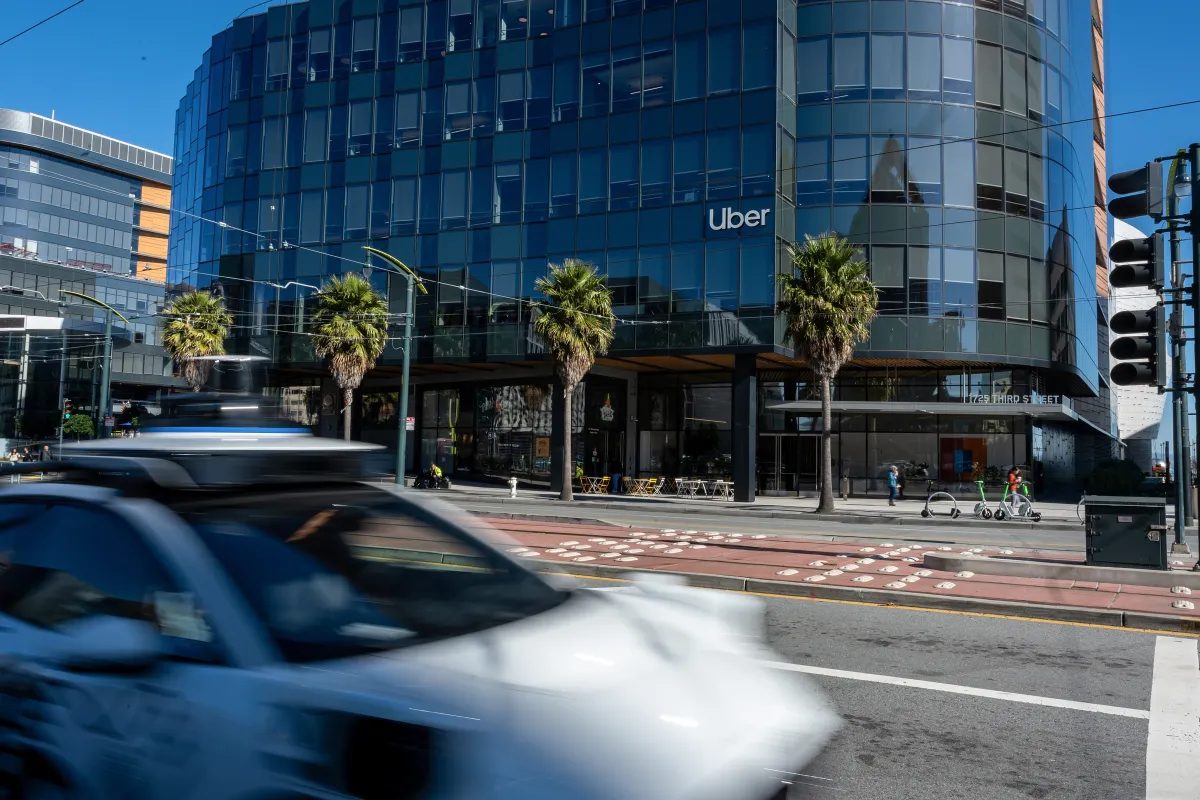

Uber Aims to Transform Global Driver Fleet into AI Data Collection Network
San Francisco, October 14, 2026 – Uber is quietly positioning itself as the backbone of the autonomous vehicle (AV) revolution, with ambitions far beyond its ride-hailing roots. In a bold long-term strategy, the company plans to equip its vast network of human-driven cars with advanced sensors, turning millions of vehicles into real-world data harvesters for AI training—a move that could reshape the future of self-driving technology.
The revelation came from Uber’s Chief Technology Officer, Praveen Neppalli Naga, during an exclusive interview at TechCrunch’s StrictlyVC event in San Francisco. While Uber’s immediate focus remains on its recently launched AV Labs—a small fleet of sensor-equipped cars gathering road data—the company’s ultimate vision is far grander. “That is the direction we want to go eventually,” Naga confirmed, hinting at a future where Uber’s global driver fleet becomes a decentralized data-gathering powerhouse.
The Data Bottleneck in Autonomous Driving
The AV industry’s biggest hurdle isn’t just perfecting self-driving algorithms—it’s accessing vast, diverse, and high-quality real-world driving data. Companies like Waymo, Cruise, and Tesla spend billions deploying test vehicles to capture edge-case scenarios: unpredictable pedestrians, erratic weather, or complex urban intersections. But even the best-funded AV firms struggle to match the sheer scale of Uber’s potential reach.
“The bottleneck is data,” Naga explained. “AV companies need to collect different scenarios—say, a school intersection at rush hour—to train their models. But most don’t have the capital to deploy enough cars globally.” Uber’s solution? Leverage its 4.4 million drivers worldwide, transforming their vehicles into mobile sensor platforms. If successful, the initiative could provide AV developers with an unprecedented dataset, dwarfing what any single company could compile alone.
From Ride-Hailing to AI Infrastructure
Uber’s pivot comes after years of turbulence in its AV ambitions. The company famously abandoned its self-driving car project in 2020, selling its autonomous unit to Aurora Innovation—a decision co-founder Travis Kalanick later called a “missed opportunity.” Now, instead of competing with AV manufacturers, Uber is positioning itself as their indispensable partner.
Through AV Labs, Uber has already partnered with 25 AV firms, including London-based Wayve, offering a cloud-based repository of labeled sensor data. Partners can query this library to refine their AI models or run simulations in “shadow mode”—testing how their autonomous systems would perform against real Uber trips without physical deployment.
But the real game-changer lies in scaling up. While AV Labs currently relies on a limited fleet of Uber-owned sensor cars, integrating data collection into third-party driver vehicles could unlock near-limitless expansion. Regulatory hurdles remain—states differ on sensor legality and data-sharing policies—but Naga expressed confidence in overcoming these challenges.
The Business of Democratizing Data
Uber insists its goal isn’t short-term monetization. “We want to democratize this data,” Naga emphasized. Yet the commercial implications are undeniable. The company has already made strategic investments in AV startups like Lucid and Nuro, and its control over critical training data could grant it outsized influence in the sector.
Critics question whether Uber’s altruistic stance will hold. As AV firms increasingly rely on its platform for both data and customer access, Uber could wield significant leverage—potentially dictating terms in an industry racing toward full autonomy.
A Future Beyond Human Drivers?
The initiative also raises existential questions for Uber’s driver workforce. While Naga assured that human drivers remain central to Uber’s operations, the long-term vision suggests a gradual shift toward AI-driven mobility. Some analysts speculate that Uber’s data play could eventually reduce its reliance on human drivers altogether—though company officials dismiss such claims as premature.
For now, Uber’s strategy reflects a pragmatic middle ground: bridging the gap between today’s human-driven rides and tomorrow’s autonomous fleets. By becoming the data layer of the AV ecosystem, Uber ensures its relevance in an industry it once struggled to dominate.
As Naga put it: “This isn’t about replacing drivers—it’s about empowering the next generation of mobility.” Whether that vision leads to collaboration or consolidation in the AV space remains to be seen. One thing is certain: Uber is no longer just a ride-hailing company—it’s betting its future on becoming the AI infrastructure of the roads.
— Reporting by [Your Name], with additional insights from industry analysts.
