


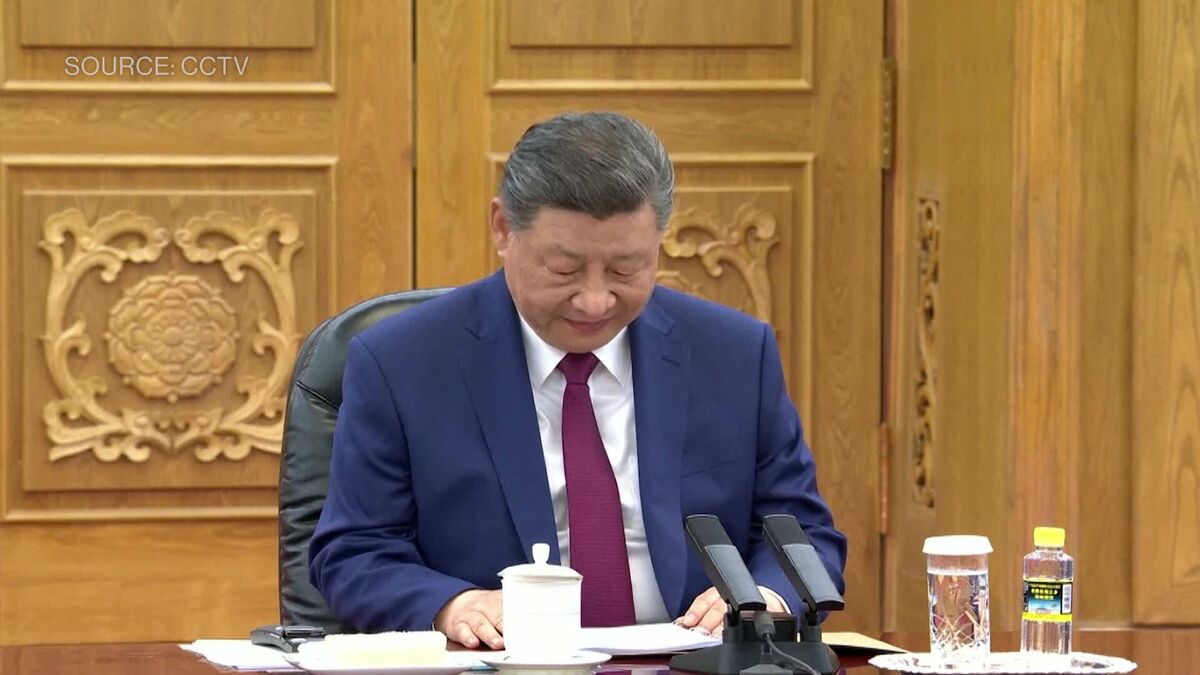

Global Powers Meet: Trump and Xi Emphasize Common Interests Amid Rising Tensions
BEIJING—In a carefully choreographed display of diplomacy, U.S. President Donald Trump and Chinese President Xi Jinping convened at Beijing’s iconic Great Hall of the People on Wednesday, marking a pivotal moment in a relationship fraught with both cooperation and confrontation. Against the backdrop of escalating trade tensions, technological rivalry, and geopolitical maneuvering, the two leaders struck a conciliatory tone, underscoring the importance of collaboration in addressing global challenges.
“The common interests between China and the United States far outweigh our differences,” Xi declared during his opening remarks, emphasizing the necessity of mutual respect and constructive dialogue. Trump, for his part, lauded the “strong and productive” relationship between the two nations, while acknowledging the complexities of their interactions on the world stage.
The meeting comes at a critical juncture for the U.S.-China relationship, as both countries grapple with divergent economic policies, human rights concerns, and strategic ambitions. With the world’s two largest economies increasingly at odds over issues ranging from trade tariffs to technological supremacy, the outcome of this summit could have far-reaching implications for global stability and prosperity.
A Relationship Defined by Competition and Cooperation
The U.S.-China relationship has long been characterized by a delicate balance of competition and cooperation. Over the past decade, economic interdependence has been a cornerstone of their ties, with China emerging as the United States’ largest trading partner and a major creditor. However, this interdependence has also led to friction, particularly under the Trump administration, which has accused China of unfair trade practices, intellectual property theft, and market manipulation.
Trump’s aggressive stance on trade has resulted in a protracted tariff war that has rattled global markets and disrupted supply chains. In 2018, the U.S. imposed tariffs on billions of dollars’ worth of Chinese goods, prompting retaliatory measures from Beijing. While both sides reached a partial trade agreement in early 2020, many contentious issues remain unresolved, including China’s subsidies for domestic industries and its restrictions on foreign companies.
Beyond trade, technological competition has emerged as a flashpoint in the bilateral relationship. The United States has taken steps to curb China’s access to advanced technologies, particularly in the semiconductor and telecommunications sectors. The Trump administration’s crackdown on Chinese tech giant Huawei and its push to ban TikTok, a popular social media app owned by Beijing-based ByteDance, have further strained ties.
Xi’s Call for Dialogue and Pragmatism
In his remarks, Xi struck a pragmatic note, calling for a renewed commitment to dialogue and cooperation. “China is willing to work with the United States to manage differences, expand consensus, and enhance mutual trust,” he said. The Chinese leader also highlighted the importance of upholding multilateralism, a veiled reference to Trump’s “America First” policies, which have often been at odds with international institutions and agreements.
Xi’s emphasis on common interests reflects Beijing’s broader strategy of positioning China as a responsible global player, particularly amid the ongoing COVID-19 pandemic and climate crisis. China has sought to expand its influence on the world stage through initiatives such as the Belt and Road Initiative, a massive infrastructure development project aimed at enhancing global connectivity. However, critics argue that Beijing’s rise has been accompanied by authoritarian practices and a disregard for human rights, particularly in regions like Xinjiang and Hong Kong.
Trump’s Mixed Legacy on China
For Trump, the meeting with Xi represents both a continuation of his “tough on China” rhetoric and an opportunity to secure wins ahead of the upcoming U.S. presidential election. While Trump has frequently criticized China for its trade practices and handling of the COVID-19 pandemic, he has also praised Xi’s leadership and expressed a desire for a strong personal relationship with the Chinese president.
During his presidency, Trump has sought to recalibrate the U.S.-China relationship, shifting away from the engagement policies of his predecessors toward a more confrontational approach. This shift has been driven by bipartisan concerns over China’s growing economic and military power, as well as its assertive behavior in regions like the South China Sea.
However, Trump’s approach has drawn criticism from both domestic and international observers, who argue that his unilateral actions have undermined alliances and weakened America’s standing in the world. The president’s decision to withdraw from the Trans-Pacific Partnership, a trade agreement designed to counter China’s influence in Asia, and his frequent threats to impose tariffs on allies have raised questions about the long-term impact of his policies.
What’s at Stake for the Global Community
The outcome of the Trump-Xi summit has significant implications not only for the U.S. and China but also for the broader international community. As the world’s two largest economies, their relationship shapes global trends in trade, technology, and security. A prolonged trade war or escalation of tensions could destabilize the global economy, which is already reeling from the effects of the COVID-19 pandemic.
Moreover, cooperation between the U.S. and China is essential to addressing pressing global challenges such as climate change, nuclear proliferation, and public health crises. The COVID-19 pandemic has underscored the interconnectedness of the modern world, highlighting the need for coordinated action to tackle shared threats.
Looking Ahead: The Path Forward
While the meeting between Trump and Xi was marked by cordiality, it remains to be seen whether their rhetoric will translate into tangible progress on the issues that divide them. Both leaders face domestic pressures that could complicate efforts to reach a comprehensive agreement.
For Trump, securing concessions from China could bolster his reelection campaign, but he must also navigate concerns from American businesses and workers who have been harmed by the trade war. For Xi, maintaining China’s economic growth and geopolitical influence while addressing demands for reform and accountability will be a delicate balancing act.
As the world watches, the U.S.-China relationship continues to evolve, shaped by both cooperation and competition. In an increasingly interconnected world, the ability of these two global powers to manage their differences and work together will be crucial to ensuring stability and prosperity for all.
The path forward is uncertain, but one thing is clear: the stakes have never been higher.
