


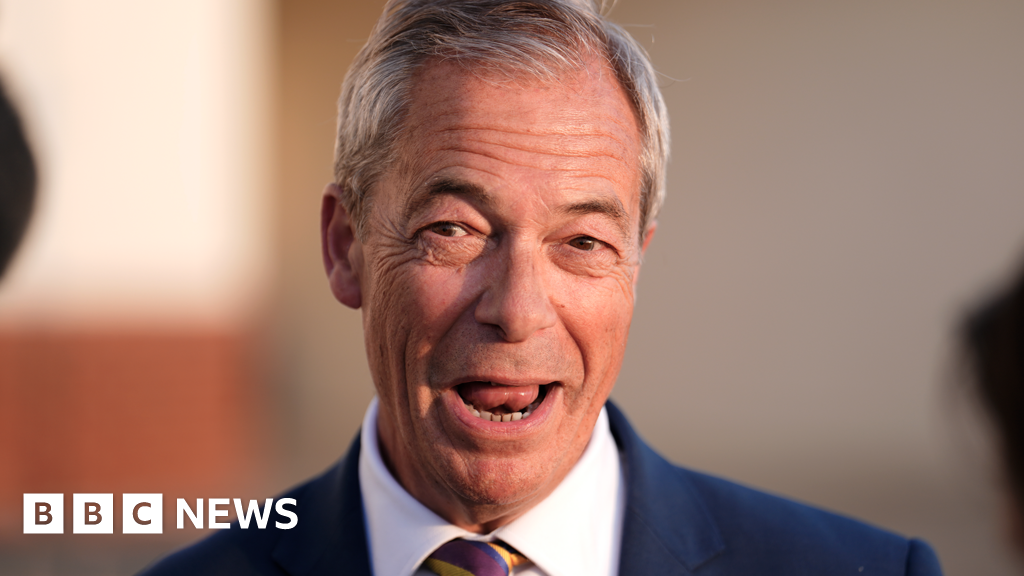

Reform UK Leader Asserts Integrity Amidst Commons Standards Probe
The leader of Reform UK, currently under investigation by the House of Commons Standards Committee, has firmly declared that he “cannot be bought by anybody” in a defiant statement addressing the ongoing probe. The announcement comes as the political figure faces heightened scrutiny over allegations of misconduct, though specific details of the case remain undisclosed.
The investigation, launched by the parliamentary watchdog, centers on potential breaches of the MPs’ Code of Conduct, a set of ethical guidelines designed to ensure transparency and accountability among lawmakers. While the exact nature of the allegations has not been made public, the probe has sparked significant debate over the integrity of elected officials and the robustness of oversight mechanisms in British politics.
In a public statement, the Reform UK leader pushed back against the allegations, emphasizing his commitment to ethical leadership. “I have always operated with honesty and transparency. I cannot be bought by anybody, nor will I ever compromise my principles for personal gain,” he said. The remarks were delivered against a backdrop of growing political tensions, as Reform UK seeks to position itself as a credible alternative to established parties in the UK.
The controversy unfolds at a critical juncture for Reform UK, a party that has gained traction in recent years by championing issues such as economic reform, stricter immigration policies, and reduced bureaucratic intervention. The party has positioned itself as a voice for disenfranchised voters, particularly in regions where traditional parties have lost favor. However, the current probe threatens to undermine its credibility at a time when it is striving to expand its influence ahead of upcoming elections.
Political analysts note that the investigation could have far-reaching implications for both the leader and the party. “Any allegations of misconduct, particularly those involving ethical breaches, can erode public trust,” said one expert. “For a party that prides itself on challenging the status quo, this is a significant test of its leadership and resilience.”
The House of Commons Standards Committee, tasked with upholding parliamentary integrity, has not provided a timeline for the probe’s conclusion. However, the process is expected to be thorough, with potential outcomes ranging from exoneration to sanctions, depending on the findings. The committee’s decisions are closely monitored, as they often set precedents for how ethical lapses are addressed in public office.
Public reaction to the investigation has been mixed. Supporters of Reform UK have rallied behind their leader, viewing the probe as a politically motivated attack aimed at stifling dissent. Critics, however, argue that the allegations underscore the need for greater accountability in politics, particularly among emerging parties that seek to disrupt traditional power structures.
The broader context of this investigation highlights ongoing challenges in British politics, where trust in public officials has been eroded by scandals and controversies in recent years. Transparency International’s 2023 Corruption Perceptions Index ranked the UK as having relatively low levels of corruption, but noted that public confidence in institutions remains fragile. The Reform UK probe is seen as a litmus test for the effectiveness of parliamentary oversight in restoring faith in the political system.
As the investigation proceeds, all eyes will be on the Standards Committee’s findings and their potential impact on Reform UK’s trajectory. The party’s ability to navigate this crisis will likely shape its future, particularly as it seeks to consolidate its position in a highly competitive political landscape.
Looking ahead, the case raises important questions about the intersection of ethics and ambition in politics. Will Reform UK’s leader emerge unscathed, reinforcing his party’s message of integrity and reform? Or will the probe expose vulnerabilities that could hinder the party’s aspirations?
One thing is certain: the outcome of this investigation will resonate far beyond the confines of Westminster. It will serve as a benchmark for how emerging political movements are held accountable and how the public perceives their commitment to ethical governance. In an era of heightened skepticism toward politicians, the stakes could not be higher.
As the story unfolds, the nation waits to see whether Reform UK’s leader can weather the storm—and whether his assertion that he “cannot be bought” will withstand the test of scrutiny.
