


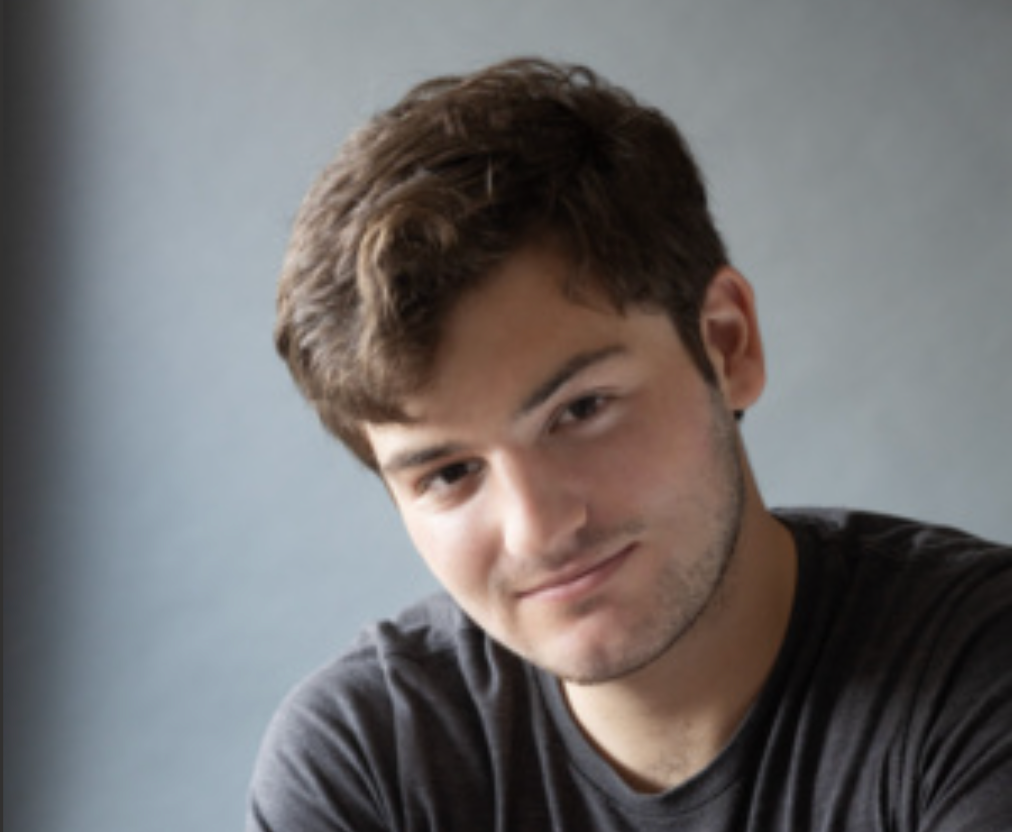

From Freshman to Journalism Phenom: Theo Baker’s Stanford Journey and the Rise of “How to Rule the World”
Stanford University, often hailed as the cradle of Silicon Valley’s brightest minds, is no stranger to ambition. Its students are frequently pegged as the next titans of tech, finance, and innovation. But Theo Baker, a member of Stanford’s Class of 2026, has already etched his name into history—not as a founder or CEO, but as a journalist whose freshman-year investigation led to the resignation of Stanford’s then-president, Marc Tessier-Lavigne. Now, as Baker prepares to graduate, he’s publishing How to Rule the World, a sweeping exploration of Stanford’s complex relationship with venture capital and the hidden mechanisms that propel young talent into the global elite. Early buzz suggests the book could be a bestseller, cementing Baker’s status as a rising force in journalism.
Baker’s journey is remarkable not just for its outcome, but for its unexpected trajectory. Arriving at Stanford in 2022 with aspirations of becoming a tech entrepreneur, Baker immersed himself in coding and hackathons. But a deeply personal connection—his late grandfather’s passion for student journalism—led him to join The Stanford Daily. What began as a way to honor his grandfather quickly evolved into a groundbreaking career. Within months, Baker was investigating allegations of research misconduct against Tessier-Lavigne, a story that would dominate headlines and ultimately force the president’s resignation.
The investigation began with a pseudonymous website called PubPeer, where scientists scrutinize published research. Baker stumbled upon seven-year-old comments questioning the integrity of images in papers co-authored by Tessier-Lavigne. This discovery sparked a 10-month investigation marked by intense pushback from Stanford’s highest ranks. Despite repeated warnings and mounting pressure, Baker persisted, uncovering conflicts of interest within the university’s internal probe. Tessier-Lavigne’s lawyers issued threats, and the president himself accused Baker of spreading “breathtakingly outrageous” falsehoods. Yet, Baker’s reporting prevailed, earning him the prestigious George Polk Award—a rare feat for a college freshman.
While Baker’s investigation thrust him into the spotlight, How to Rule the World delves into a much broader narrative: the so-called “Stanford inside Stanford.” This parallel universe, as Baker describes it, is where the university’s most promising students are groomed for success—often before they even realize it. The book explores the shadowy networks of venture capitalists, entrepreneurs, and mentors who scout, mentor, and fund Stanford’s next generation of tech leaders. Baker paints a vivid picture of yacht parties, slush funds, and clandestine meetings with billionaires—a world where access is currency and ambition is commodified.
The book’s title is more than a metaphor; it’s a reference to a clandestine “class” taught by a Silicon Valley CEO. Known informally as “How to Rule the World,” this 12-person seminar functions as a modern-day Skull and Bones for aspiring tech elites. Though it offers no formal credit, its allure lies in its exclusivity and the promise of unparalleled networking opportunities. Baker describes it as a microcosm of Stanford’s talent-extraction system, where the next Zuckerberg or Musk is identified and nurtured—or exploited, depending on one’s perspective.
Baker also sheds light on the darker side of this ecosystem, where the lines between mentorship and exploitation blur. He recounts how venture capitalists employ older students to scout freshmen, often targeting those who avoid mainstream entrepreneurship clubs—a perceived “anti-signal” of authenticity. The book also highlights the risks of vesting immense power and resources in young, untested minds, a dynamic Baker argues fosters the conditions for frauds like FTX’s Sam Bankman-Fried.
The timing of Baker’s arrival at Stanford—just as FTX imploded and ChatGPT launched—added another layer of intrigue to his reporting. “It was almost absurd,” he recalls. “Crypto was the assumed path to fortune, and then it all collapsed. Within weeks, AI became the new gold rush.” Baker observed firsthand how Silicon Valley’s obsession with the “next big thing” drives its cycles of innovation and crisis. He notes that the AI boom has intensified competition for talent, with entry-level jobs disappearing as startup funding soars. “It’s easier to raise money for a startup than to get an internship,” Baker observes—a commentary on the shifting priorities of today’s elite graduates.
Baker’s insights resonate beyond Stanford’s hallowed halls. As he prepares to graduate, he reflects on the pressures facing his peers. “Entrepreneurship has become an expected path,” he says. “It’s no longer the non-conformist outsider thing it once was. That changes everything.” His advice to incoming students? “Be conscious of why you’re doing what you’re doing. Don’t follow trends because they’re easy. Follow your passion.”
As for Baker’s own future, journalism seems to have claimed him. “I fell in love with it,” he says. “It’s a temperament, almost an affliction.” Yet, he leaves the door open to new ventures. “Whatever I do, it will intersect with journalism.”
How to Rule the World is more than a memoir or exposé; it’s a cautionary tale about ambition, privilege, and the systems that shape our brightest minds. Whether it becomes a bestseller or not, Baker’s work serves as a reminder that the path to success is rarely straightforward—and that sometimes, the most transformative journeys begin with a single step into the unknown.
