


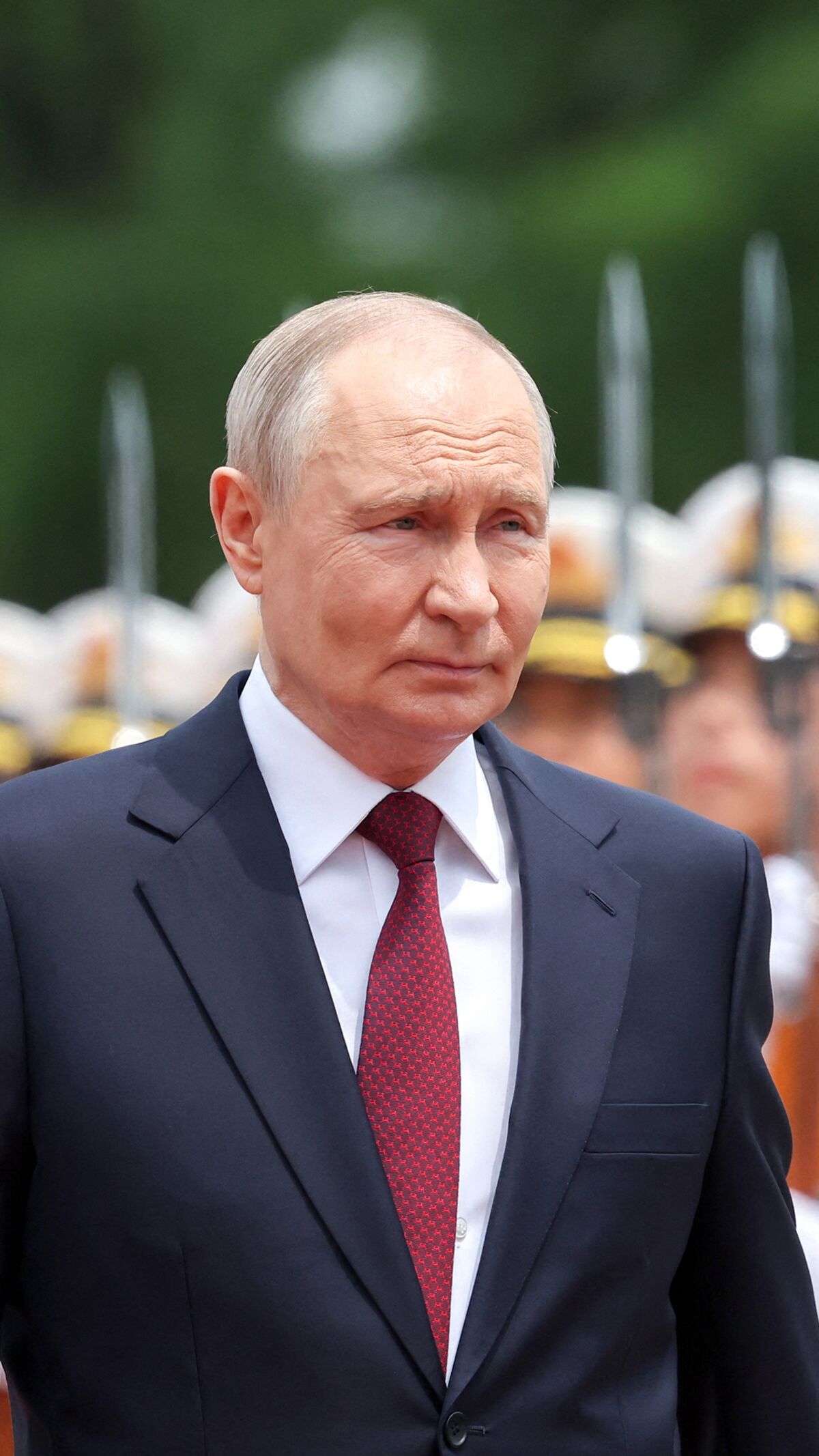

Putin Hails “New Era” in Russia-China Relations as Trade and Energy Ties Deepen
MOSCOW/BEIJING – Russian President Vladimir Putin and Chinese leader Xi Jinping have reaffirmed their commitment to strengthening bilateral ties, with both leaders touting record trade volumes and expanded energy cooperation as evidence of a strategic partnership aimed at reshaping the global order. In high-level talks this week, Putin praised the growing economic alignment between Moscow and Beijing, declaring that the two nations are collaborating to foster a more “democratic world order”—a thinly veiled challenge to Western dominance.
The meeting, held against the backdrop of Russia’s prolonged war in Ukraine and escalating U.S.-China tensions, underscores the deepening alliance between the two authoritarian powers. As Western sanctions continue to squeeze Russia’s economy, China has emerged as a critical lifeline, absorbing Russian oil and gas exports while supplying Moscow with much-needed technology and consumer goods. Meanwhile, Beijing sees Moscow as a key partner in its broader campaign to counterbalance American influence, particularly in Asia and beyond.
A Flourishing Economic Partnership
Trade between Russia and China has surged to unprecedented levels, reaching $240 billion in 2023—a staggering 26% increase from the previous year and far surpassing initial projections. Energy exports form the backbone of this relationship, with Russia now supplying nearly a third of China’s crude oil imports, making it Beijing’s top supplier ahead of Saudi Arabia.
“Russia and China are setting an example of mutually beneficial cooperation,” Putin declared during the talks. “Our trade turnover is growing dynamically, and we are actively developing new transport and logistics corridors.” Among these is the Power of Siberia 2 gas pipeline, a megaproject that, once completed, will funnel an additional 50 billion cubic meters of Russian gas annually to China, further reducing Europe’s leverage over Moscow’s energy exports.
Beyond hydrocarbons, the two nations are expanding collaboration in agriculture, technology, and infrastructure. Russian grain shipments to China have spiked, while Chinese automakers like Chery and Geely have filled the void left by departing Western brands in Russia’s car market. Huawei, despite U.S. sanctions, has become a dominant player in Russia’s telecommunications sector, supplying 5G equipment and cloud services.
The Geopolitical Calculus
The burgeoning economic ties are inseparable from the geopolitical ambitions of both nations. Since Russia’s invasion of Ukraine in 2022, China has walked a delicate line—stopping short of openly endorsing the war while providing Moscow with diplomatic cover and an economic cushion. For Putin, China’s support has been indispensable in mitigating the impact of Western sanctions.
Xi, meanwhile, views Russia as a cornerstone of his vision for a “multipolar world”—one where U.S. hegemony is diminished and Beijing plays a leading role in shaping global norms. “China-Russia relations have withstood the test of international turbulence,” Xi remarked during the talks. “We will continue to uphold fairness and justice in the international community.”
Analysts note that while the partnership is robust, it is not without asymmetries. “Russia is increasingly the junior partner,” said Alexander Gabuev, director of the Carnegie Russia Eurasia Center. “It’s dependent on China for trade and technology, whereas Beijing benefits from discounted energy without fully endorsing Moscow’s geopolitical gambits.”
Challenges and Limits of the Alliance
Despite the rosy rhetoric, fissures remain. China has cautiously avoided violating Western sanctions outright, refraining from supplying Russia with weapons—a red line that could trigger secondary sanctions from the U.S. and EU. Additionally, Central Asian nations, traditionally within Russia’s sphere of influence, have grown wary of Beijing’s expanding economic footprint in the region.
Moreover, while both leaders speak of a “democratic world order,” their interpretation diverges sharply from Western democratic ideals. “This is about authoritarian solidarity,” said Bonnie Glaser, managing director of the German Marshall Fund’s Indo-Pacific program. “They define ‘democracy’ as state sovereignty free from Western interference, not liberal governance.”
What Lies Ahead?
As NATO strengthens its eastern flank and the U.S. bolsters alliances in Asia, the Russia-China axis is likely to tighten further. Military cooperation, including joint drills in the Pacific and Arctic, signals a growing strategic alignment. Yet whether this partnership evolves into a full-fledged alliance—or remains a marriage of convenience—depends on how both nations navigate their respective challenges.
For now, the message from Moscow and Beijing is clear: They are building an alternative world order, one transaction at a time. Whether the West can—or should—counter this shift remains a defining question of our era.
As global power dynamics continue to evolve, the Russia-China partnership stands as both a testament to economic pragmatism and a challenge to the existing international system.
