



South Korea’s AI Chip Boom Fuels Stock Market Surge, But Won Weakness Looms
Seoul, South Korea – As artificial intelligence reshapes global technology markets, South Korea’s semiconductor giants are reaping unprecedented profits, propelling the country’s stock market to dizzying heights. The benchmark Kospi index has surged more than 150% over the past year, outpacing every major equity market worldwide—a staggering rally fueled by soaring demand for high-performance AI chips. Yet beneath this economic triumph lies a paradox: despite corporate windfalls, the South Korean won remains one of Asia’s weakest currencies, raising questions about the sustainability of the nation’s tech-driven boom.
Semiconductor Titans Power Historic Stock Rally
At the heart of South Korea’s market dominance are its two chipmaking behemoths: Samsung Electronics and SK Hynix, which together control nearly 70% of the global memory chip market. As AI applications—from generative chatbots to autonomous vehicles—trigger an insatiable demand for advanced semiconductors, these firms have become indispensable to tech giants like Nvidia, Microsoft, and Google.
SK Hynix, the sole mass producer of high-bandwidth memory (HBM) chips used in AI accelerators, reported a fivefold increase in operating profits in early 2024. Samsung, meanwhile, has aggressively expanded its foundry business to challenge Taiwan’s TSMC in manufacturing cutting-edge AI processors. Investors have taken notice: Samsung’s shares hit record highs this year, while the Kospi’s tech-heavy composition has turned it into a global standout.
“The AI revolution is a golden goose for South Korea’s chip sector,” said Park Jae-hyun, an analyst at Mirae Asset Securities. “But the question is whether this can offset broader macroeconomic vulnerabilities.”
The Won’s Decline: A Troubling Counterpoint
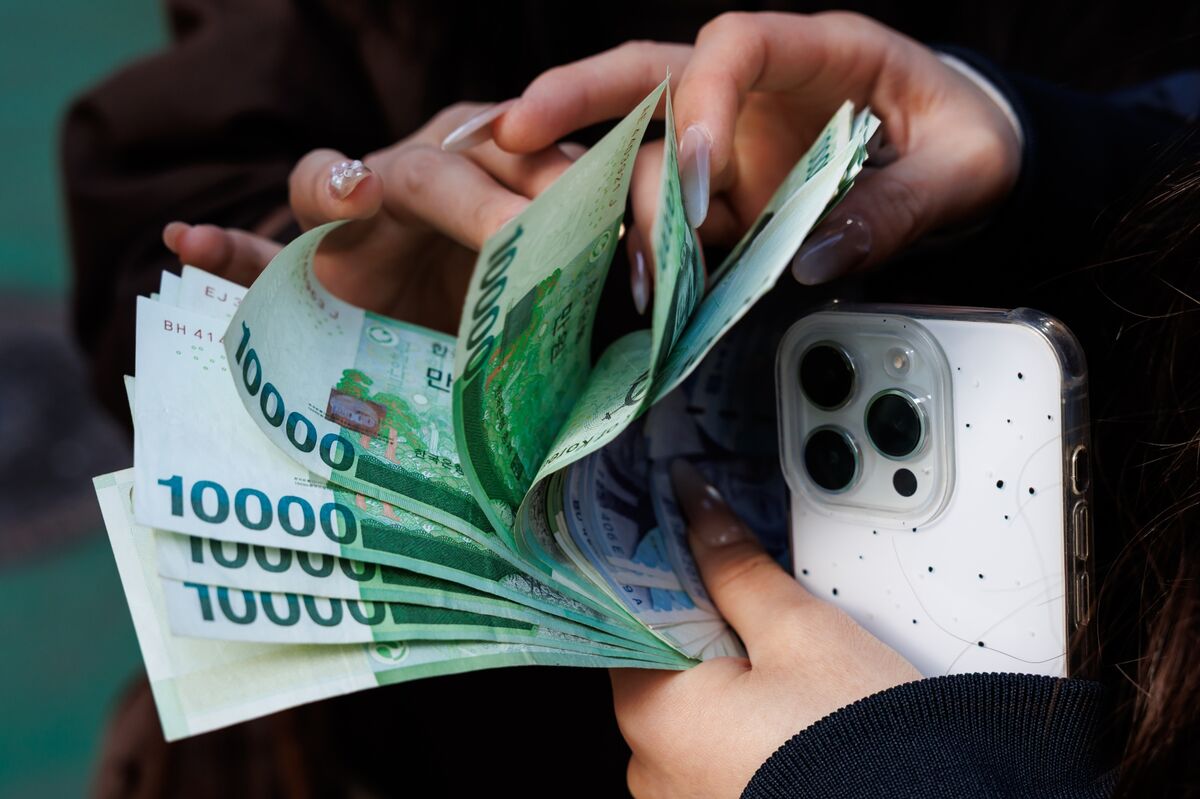
While stocks soar, the South Korean won has languished, depreciating nearly 10% against the U.S. dollar since 2023—a stark contrast to regional peers like the Japanese yen and Chinese yuan. Analysts attribute this to multiple factors:
- Trade Deficits – Despite chip exports hitting record highs, rising energy imports and weak demand for non-tech goods have kept South Korea’s trade balance in deficit for 14 consecutive months.
- Geopolitical Risks – Tensions with North Korea and China’s economic slowdown have dampened investor confidence in the won.
- Interest Rate Divergence – The U.S. Federal Reserve’s hawkish stance has strengthened the dollar, while the Bank of Korea faces pressure to cut rates to stimulate domestic consumption.
“The won’s weakness reflects structural issues beyond the chip boom,” noted Kim Hyung-kyu, a currency strategist at KB Kookmin Bank. “Without reforms in other industries, South Korea’s growth story remains lopsided.”
Global Implications and Future Risks
The divergence between corporate profits and currency health presents a dilemma for policymakers. While the government has celebrated the Kospi’s rise as proof of South Korea’s “AI supremacy,” economists warn that overreliance on semiconductors—which account for 20% of total exports—could backfire if demand slows or competition intensifies.
- U.S.-China Tech War: Export controls on advanced chipmaking equipment threaten to disrupt supply chains.
- Market Saturation: Rivals like Taiwan and the U.S. are pouring billions into domestic chip production, potentially eroding South Korea’s edge.
- Household Debt: Soaring stock prices haven’t translated into broad consumer prosperity, with household debt at 105% of GDP.
Balancing Act Ahead
For now, the AI boom continues to buoy South Korea’s economy. The government has pledged $19 billion in semiconductor R&D investments, while Samsung and SK Hynix are expanding factories domestically and abroad. Yet experts urge diversification, pointing to emerging sectors like batteries, biotech, and green energy as critical for long-term stability.
“The stock market tells one story, but the currency tells another,” said Lee Ji-young, an economist at the Korea Development Institute. “South Korea must leverage its tech strengths while addressing deeper imbalances—or risk a reckoning when the AI hype cycle cools.”
As the world watches South Korea’s semiconductor juggernauts rewrite market records, the nation faces a pivotal choice: ride the AI wave at all costs, or build an economy resilient enough to endure its eventual ebb.
