


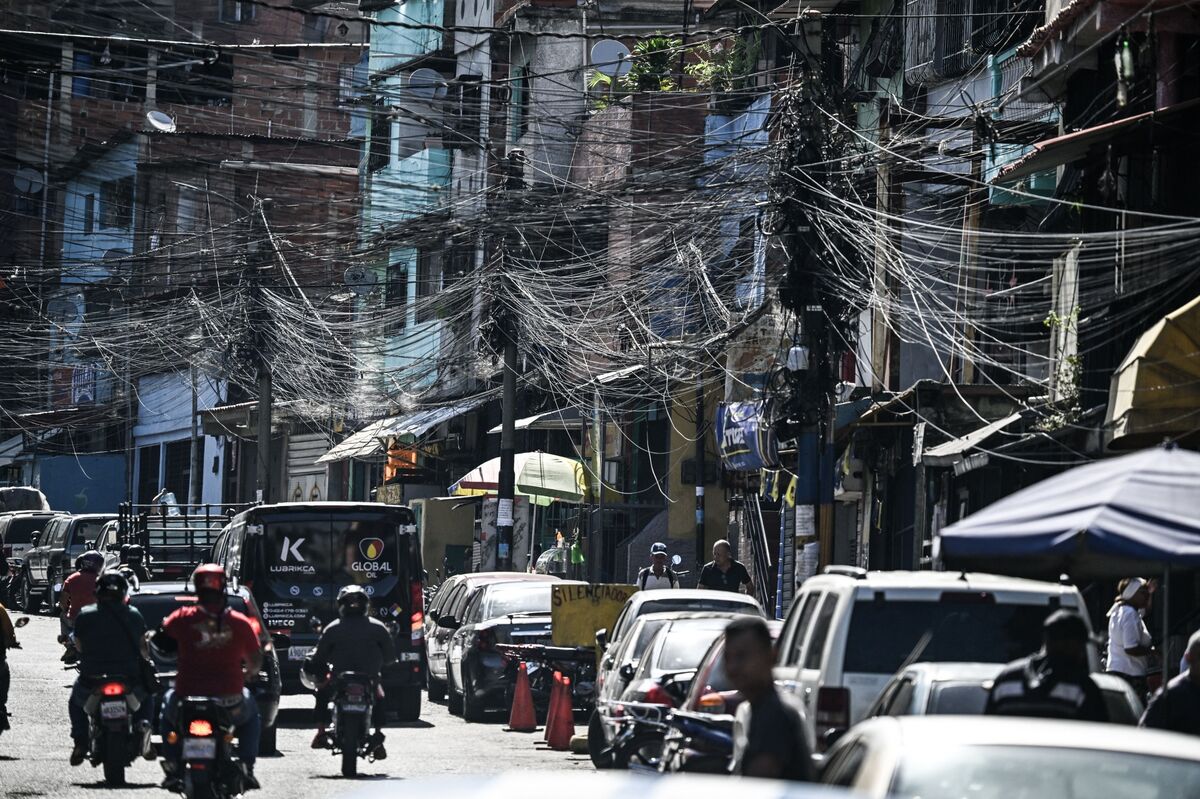

Venezuela Moves to Restructure $170 Billion Debt Amid Economic Crisis
Government Signals Readiness for Negotiations as Investors Watch Closely
CARACAS, Venezuela – In a move that could reshape the country’s financial future, Venezuela’s government has announced plans to begin restructuring its staggering $170 billion debt burden, offering a glimmer of hope to creditors who have waited years for repayment. Acting President Delcy Rodríguez confirmed the administration’s intent to swiftly enter negotiations, marking a potential turning point for a nation ravaged by hyperinflation, sanctions, and one of the worst economic collapses in modern history.
The decision comes as Venezuela’s bonds—long traded at pennies on the dollar—have seen renewed interest from speculative investors betting on a future settlement. With the government now signaling willingness to engage, the question remains: Can a deal be struck that satisfies both creditors and a nation struggling to rebuild?
A Debt Crisis Decades in the Making
Venezuela’s debt crisis is the culmination of years of economic mismanagement, political turmoil, and reliance on oil revenues that proved disastrous when global crude prices plummeted. Once Latin America’s wealthiest nation, Venezuela saw its economy shrink by more than 80% between 2013 and 2023, according to IMF estimates.
The country defaulted on its sovereign bonds in 2017, leaving creditors in limbo. Since then, bondholders—including hedge funds and institutional investors—have traded the debt at steep discounts, gambling on eventual repayment. Some bonds, originally issued at face value, have changed hands for as little as 5% of their worth.
Now, with Rodríguez’s administration pushing for restructuring talks, analysts suggest Venezuela may be seeking to normalize relations with international markets. “This is the first real signal that the government is serious about addressing its obligations,” said Raúl Gallegos, a Caracas-based economist. “But the path forward is fraught with political and legal hurdles.”
The Challenges Ahead: Sanctions, Legitimacy, and Competing Claims
Any debt restructuring deal faces significant obstacles. The U.S. and European Union maintain strict sanctions on Venezuela’s oil and financial sectors, limiting the government’s ability to access foreign currency. Additionally, the legitimacy of Rodríguez’s administration remains contested—opposition leader Juan Guaidó is still recognized by some nations as Venezuela’s rightful president, complicating any binding financial agreements.
Another major hurdle is the sheer complexity of Venezuela’s debt. Beyond sovereign bonds, the country owes billions to China and Russia through oil-for-loan deals, while unpaid bills to multinational corporations and arbitration awards add to the burden. “You can’t just restructure one piece without addressing the others,” said Siobhan Morden of Amherst Pierpont Securities. “Creditors will demand equal treatment.”
Legal battles also loom. Some bondholders have already won court judgments allowing them to seize Venezuelan assets abroad, including refineries and oil cargoes. A restructuring deal would need to resolve these claims while preventing further litigation.
Investor Optimism vs. Economic Reality
Despite the challenges, some investors remain cautiously optimistic. Venezuela still holds the world’s largest proven oil reserves, offering long-term repayment potential if production recovers. Recent modest economic stabilization—partly due to relaxed currency controls and dollarization—has also raised hopes.
Yet skepticism abounds. “Even if a deal is reached, Venezuela’s ability to pay depends on oil prices staying high and production increasing substantially,” warned Francisco Rodríguez, an economist at Torino Capital. “That’s a big ‘if’ given the state of its energy infrastructure.”
The government has not yet detailed its proposed restructuring terms, but analysts expect steep haircuts—potentially up to 90%—for bondholders. Previous sovereign debt crises, like Argentina’s in 2001 and Greece’s in 2012, suggest protracted negotiations ahead.
What Comes Next?
The immediate focus will be on whether Venezuela can secure interim agreements with major creditors to avoid further legal actions. The International Monetary Fund (IMF) and other multilateral bodies may play a mediating role, though Venezuela’s strained relations with Washington complicate IMF involvement.
For ordinary Venezuelans, burdened by inflation and shortages, debt restructuring alone won’t bring relief. But if successful, it could pave the way for renewed foreign investment and economic recovery—a distant prospect, yet one that offers a flicker of hope.
As the government prepares for talks, the world watches to see whether Venezuela can finally turn the page on its financial crisis—or whether this latest effort will collapse under the weight of politics and distrust. Only time will tell if this is the beginning of a solution or merely another chapter in a long-running saga.
