


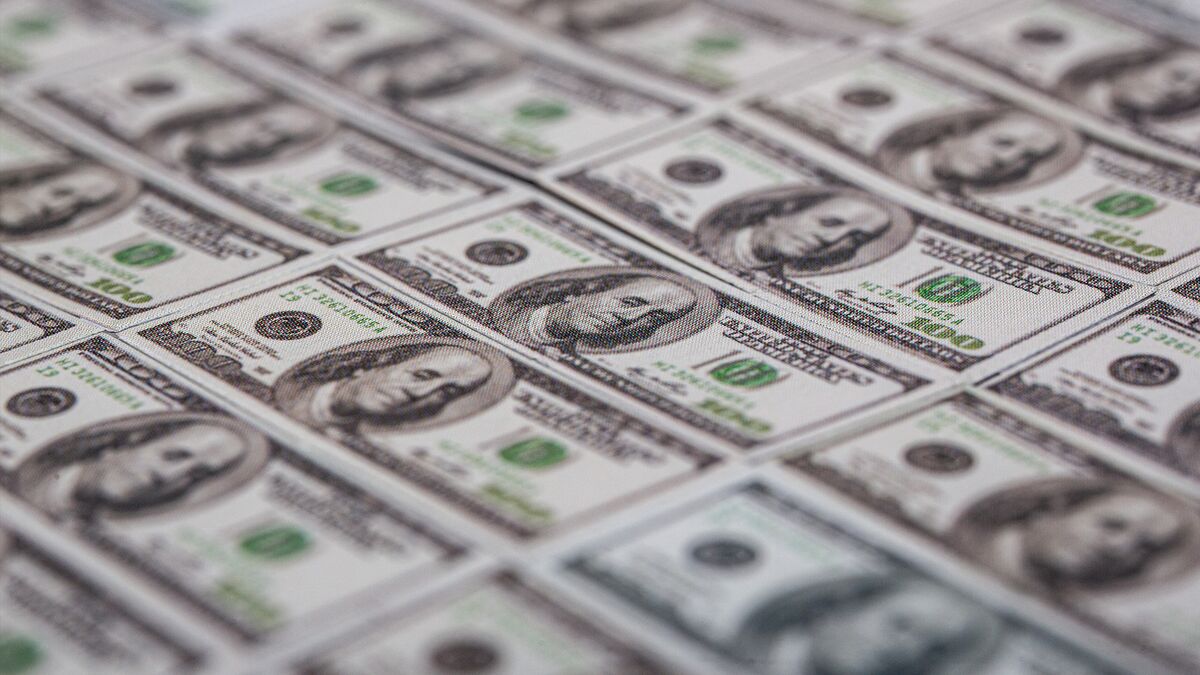

The Almighty Dollar: How the U.S. Currency Became the World’s Financial Powerhouse
For more than 75 years, the U.S. dollar has reigned supreme as the world’s reserve currency, underpinning global trade, stabilizing economies, and serving as a bedrock of international finance. Yet its journey to dominance is a story centuries in the making, rooted in colonial politics, wartime strategies, and the rise of American economic power. As the world grapples with rapid technological advancements and shifting geopolitical dynamics, the dollar’s future role is being questioned like never before.
In a recent interview on Bloomberg This Weekend, Brendan Greeley, author of the newly released book The Almighty Dollar: 500 Years of the World’s Most Powerful Money, delved into the currency’s storied past and explored its evolving role in an increasingly cashless, digitized world. Greeley’s insights shed light on how the dollar ascended to its unparalleled position and what its future might hold as financial systems undergo seismic transformations.
A Currency Born Before the Nation
The dollar’s origins predate the United States itself. Emerging in the colonial era, the term “dollar” was derived from the German word “Thaler,” a silver coin widely used in European trade. In the American colonies, a patchwork of currencies circulated, including Spanish pesos, British pounds, and locally issued paper money. The need for a unified currency became apparent as the colonies sought economic independence and cohesion during the Revolutionary War.
The U.S. dollar was officially established in 1792 under the Coinage Act, which created the U.S. Mint and standardized the nation’s monetary system. Early on, the dollar was pegged to gold and silver, reflecting the global adherence to the gold standard. This foundation of stability and trust would later prove instrumental in the currency’s rise to prominence.
The Dollar’s Global Ascent
The dollar’s journey to becoming the world’s reserve currency was cemented in the aftermath of World War II. The Bretton Woods Agreement of 1944 established a new international monetary system, with the U.S. dollar at its center. Participating countries agreed to peg their currencies to the dollar, which was itself convertible to gold at a fixed rate. This system provided much-needed stability to a war-ravaged global economy and facilitated the post-war recovery.
The U.S. emerged from World War II as the world’s largest economy, its industrial base unscathed and its financial system robust. The dollar’s dominance was further reinforced by the creation of institutions like the International Monetary Fund (IMF) and the World Bank, both of which were funded predominantly in dollars.
Even after the collapse of the Bretton Woods system in 1971—when President Richard Nixon ended the dollar’s convertibility to gold—the currency retained its central role in global finance. Its stability, liquidity, and the sheer size of the U.S. economy ensured its continued dominance. Today, approximately 60% of global foreign exchange reserves are held in U.S. dollars, and the currency remains the preferred medium for international trade and investment.
Challenges to Dollar Dominance
Despite its enduring strength, the dollar faces mounting challenges in the 21st century. The rise of digital currencies, the increasing use of alternatives like China’s yuan, and geopolitical tensions are all testing the dollar’s supremacy.
Cryptocurrencies, such as Bitcoin and Ethereum, have emerged as potential disruptors to traditional monetary systems. While still far from replacing fiat currencies, these digital assets offer decentralized, borderless transactions that appeal to some investors and nations wary of U.S. financial hegemony.
China, meanwhile, has been actively promoting the international use of its yuan in trade and investment. The establishment of the Asian Infrastructure Investment Bank (AIIB) and the Belt and Road Initiative (BRI) are part of broader efforts to reduce reliance on the dollar. However, the yuan’s adoption remains limited by China’s capital controls and the lack of transparency in its financial system.
Geopolitical tensions, particularly between the U.S. and China, have also fueled discussions about de-dollarization. Sanctions imposed by the U.S. on countries like Russia and Iran have prompted some nations to seek alternatives to the dollar in trade settlements.
The Cashless Future
As the world transitions toward digital payments and cashless economies, the very nature of money is being redefined. Greeley emphasizes that this shift could reshape the dollar’s role, particularly if central banks embrace digital currencies.
The Federal Reserve has been exploring the potential launch of a digital dollar, which could enhance financial inclusion, streamline cross-border transactions, and counter the rise of private cryptocurrencies. However, such a move would require careful consideration of privacy concerns, cybersecurity risks, and the impact on the banking system.
Conclusion: A Currency at a Crossroads
The U.S. dollar’s history is a testament to its resilience and adaptability. From its colonial beginnings to its status as the cornerstone of global finance, the dollar has weathered countless challenges and emerged stronger each time.
Yet in a world marked by rapid technological change, shifting economic power, and geopolitical uncertainty, the dollar’s future is anything but assured. While alternatives like the yuan and cryptocurrencies pose significant challenges, the dollar’s deep entrenchment in global systems and the strength of the U.S. economy suggest it will remain a dominant force for the foreseeable future.
As Greeley aptly notes, the dollar’s story is far from over. Its evolution will continue to shape—and be shaped by—the broader trends transforming the global economy. Whether it remains the almighty dollar of centuries past or adapts to a new era of financial innovation, its legacy as the world’s most powerful money is undeniable.
The dollar’s journey is a reminder that currency is not just a medium of exchange but a reflection of economic power, political influence, and human innovation. As the world watches its next chapter unfold, one thing is clear: the dollar’s story is inextricably linked to the story of global progress itself.
