



Solar-Powered Smart Collars Revolutionize Cattle Management: Halter’s $220 Million Bet on Agriculture’s Future
In the world of venture capital, few firms have earned the reputation of Founders Fund, the investment powerhouse co-founded by Peter Thiel. Known for backing groundbreaking companies like Facebook, SpaceX, and Palantir—entities that didn’t merely iterate on existing ideas but created entirely new paradigms—Founders Fund has now turned its attention to a surprising frontier: smart collars for cows. The firm’s latest bet, Halter, a New Zealand-based agricultural technology startup, recently closed a $220 million Series E funding round at a $2 billion valuation. While it may lack the flashiness of AI or robotics, Halter is tackling a profound and pervasive challenge: how to manage cattle across vast, remote landscapes without relying on traditional methods like dogs, horses, motorbikes, or helicopters.
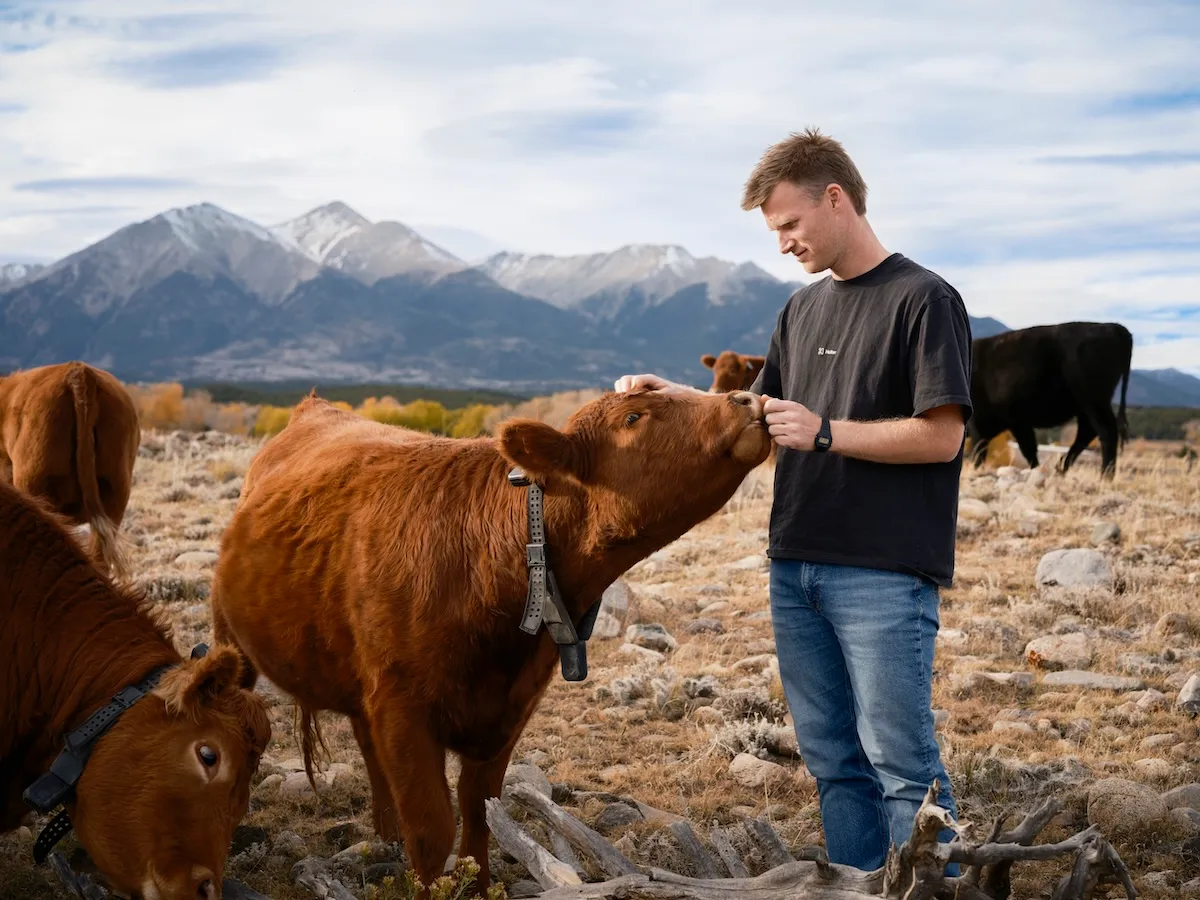
For decades, cattle farming has relied on labor-intensive practices that are increasingly unsustainable in the face of rising labor costs and environmental pressures. Enter Halter, which has developed a solar-powered smart collar system designed to revolutionize how farmers manage their herds. Founded by Craig Piggott, a 30-year-old engineer who grew up on a New Zealand dairy farm, Halter’s technology combines hardware, software, and data analytics to create a seamless, virtual solution for cattle management.
From Virtual Fences to Data-Driven Farming
At its core, Halter’s system allows farmers to create “virtual fences” using solar-powered collars, low-frequency towers, and a smartphone app. These collars emit audio and vibration cues to guide cattle, eliminating the need for physical fences and reducing reliance on manual labor. Piggott likens the process to a car’s parking sensors: cattle learn to respond to the cues within just three interactions, allowing farmers to herd animals remotely with remarkable precision.
But Halter’s ambitions extend far beyond fencing. The collars continuously collect behavioral data, enabling farmers to monitor animal health, track fertility cycles, and identify potential illnesses in real-time. This capability has been refined over five generations of hardware and is backed by what Piggott claims is the world’s largest dataset on cattle behavior. The company’s reproduction-focused product is currently in beta testing with U.S. customers, with new features being rolled out weekly.
“The product that ranchers use today is radically different from what they bought a year ago,” Piggott said in a recent interview. “Every week, we’re releasing new things to our customers.”
A Farm Kid’s Vision: From Rocket Lab to Cattle Collars
Piggott’s journey to founding Halter is as unconventional as the technology itself. After growing up on a dairy farm, he pursued engineering and briefly worked at Rocket Lab, a New Zealand-based rocket company. It was there that he first encountered the world of startups and venture capital. “Realizing you could raise money, hire a team, and chase an ambitious mission was inspiring,” he recalled. “I wanted to do that in agriculture.”
At just 21, Piggott launched Halter—a decision he now describes as “probably a bit naive in hindsight.” Yet, nine years later, the company has scaled dramatically, with more than one million cattle across 2,000 farms in New Zealand, Australia, and the United States now wearing Halter collars.
The Financial Case for Smart Farming
Halter’s value proposition is straightforward: by giving farmers precise control over grazing patterns, the system can increase land productivity by up to 20%. This improvement isn’t just about reducing labor costs—though farmers save time and money by eliminating the need for manual herding—but also optimizing grass utilization. “In some cases, we see customers literally doubling the output off their land,” Piggott noted. “The upper ceiling for returns is very, very strong.”
The company’s success stands in stark contrast to the broader agricultural technology sector, which has struggled in recent years to attract investment and persuade farmers to adopt innovative solutions. Piggott attributes Halter’s traction to its relentless focus on financial return. “From day one, Halter has been built around a really strong financial ROI,” he said.
Competition and the Road Ahead
Halter isn’t the only player in the emerging field of virtual fencing. Pharmaceutical giant Merck offers its own system, Vence, while newer entrants like Grazemate—a startup that envisions autonomous drones replacing collars—are entering the fray. Yet Piggott remains unfazed. “Can I see drones playing some small part in the future? Probably,” he acknowledged. “But I don’t think a drone is the right form factor for the core fencing element of virtual fencing. A collar will probably be the right form factor for a very long period of time.”
What truly sets Halter apart, Piggott argues, is the engineering complexity of its solution. Managing thousands of animals requires unparalleled reliability—even a 1% failure rate could leave dozens of cattle untracked at any given time. “Chasing those many nines of reliability takes time,” he said, citing Halter’s years of refining its technology in New Zealand before expanding globally.
A Global Opportunity
While Halter’s expansion into the U.S. market is a significant milestone, Piggott emphasizes that agriculture is a global industry. “The U.S. market is important for us, but it’s not the world’s biggest market,” he noted. The company has raised approximately $400 million to date and plans to prioritize growth in the U.S., South America, and Europe.
The scale of the opportunity is staggering. While Halter’s collars are now used on one million cattle, there are an estimated one billion cattle worldwide. Even in its home market of New Zealand, penetration is less than 10%. “We have a long way to go, and a lot of product still to build,” Piggott said.
Balancing Innovation and Tradition
As Halter continues to scale, it faces the dual challenge of convincing farmers to embrace new technology while demonstrating its financial and operational benefits. For Piggott, the company’s mission is as much about solving a practical problem as it is about modernizing an industry often overlooked by innovation. “The biggest competition is just not changing anything,” he said. “It’s doing what you did last year.”
In the end, Halter’s success may hinge not just on its technology but on its ability to bridge the gap between Silicon Valley’s ambition and agriculture’s pragmatism. As the company looks to the future, its story serves as a reminder that innovation can flourish in the most unexpected places—even in the fields of a New Zealand dairy farm.
