



IMF Warns of Global Growth Slowdown as Geopolitical Tensions Threaten Economic Stability
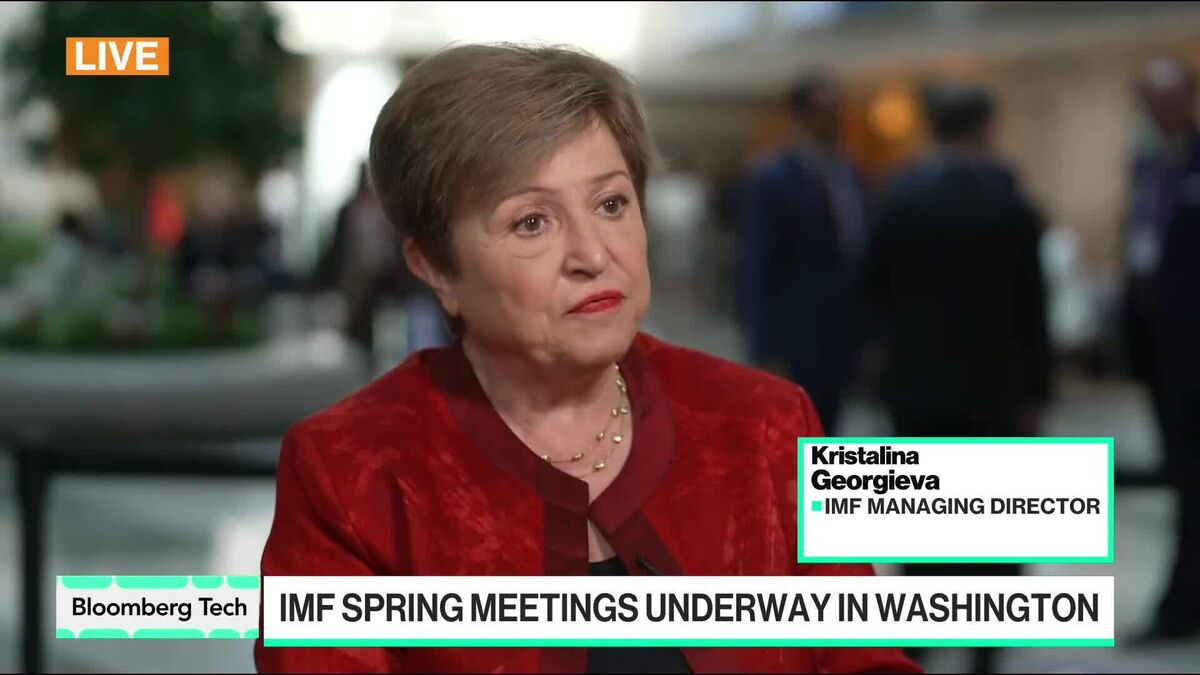
Washington, D.C. — The International Monetary Fund (IMF) has slashed its global growth forecast, citing persistent inflation, financial volatility, and the looming risk of escalating conflicts in the Middle East. In a sobering assessment delivered during the IMF-World Bank Spring Meetings, Managing Director Kristalina Georgieva cautioned that a protracted war involving Iran could destabilize energy markets and push the world economy toward recession.
The warning comes as policymakers grapple with an increasingly fragile recovery, where stubborn price pressures, high borrowing costs, and geopolitical shocks threaten to derail progress made since the pandemic. With central banks hesitant to cut interest rates prematurely and global trade showing signs of strain, the IMF’s latest projections signal a precarious road ahead for both advanced and emerging economies.
A Downgraded Outlook Amid Mounting Risks
The IMF now expects global GDP to expand by 3.2% in 2024, a slight downward revision from its January forecast. While this figure suggests the world will avoid an outright contraction, Georgieva stressed that growth remains “weak by historical standards,” with risks tilted firmly to the downside.
“The global economy has shown remarkable resilience, but we cannot ignore the gathering storm clouds,” she told Bloomberg’s Francine Lacqua in an interview. “An escalation of conflict in the Middle East—particularly involving Iran—could trigger a sharp oil price spike, financial market turmoil, and a loss of confidence that would reverberate across all economies.”
Energy markets remain a critical vulnerability. Brent crude prices have already climbed above $90 a barrel this year, fueled by supply concerns linked to Houthi attacks on Red Sea shipping and tightening sanctions on Russian and Iranian oil. A direct confrontation between Iran and Israel, or a disruption to Strait of Hormuz transit—through which 20% of global oil supply flows—could send prices skyrocketing, reigniting inflation and forcing central banks to delay rate cuts.
The Inflation Conundrum and Central Bank Dilemma
Despite cooling from 2022 peaks, inflation remains stubbornly high in major economies, complicating the policy path for the Federal Reserve, European Central Bank, and Bank of England. The IMF noted that while wage growth is easing in the U.S., services inflation remains elevated, and premature monetary easing could risk a resurgence of price pressures.
“Markets have been too optimistic about the speed of rate cuts,” Georgieva warned. “Central banks must remain vigilant—bringing inflation down to target is the priority, even if that means keeping borrowing costs higher for longer.”
Emerging markets face an even tougher balancing act. Countries with high dollar-denominated debt, such as Egypt and Pakistan, remain vulnerable to tighter U.S. monetary policy, while weaker currencies exacerbate import costs. The IMF has urged stronger international cooperation to prevent debt crises, particularly in low-income nations where fiscal buffers are depleted.
Geopolitical Wildcards and the Threat of Fragmentation
Beyond the Middle East, the IMF highlighted growing risks from escalating U.S.-China tensions, trade protectionism, and the weaponization of economic policies. The war in Ukraine continues to disrupt grain shipments, while U.S. and EU tariffs on Chinese electric vehicles and clean-tech exports threaten to fracture global supply chains further.
“Economic fragmentation is not cost-free,” Georgieva said. “If trade and investment flows splinter into competing blocs, the world could lose up to 7% of GDP in the long run—a scenario we must avoid.”
The Fund has called for renewed efforts to strengthen multilateral frameworks, including reforms to the World Trade Organization (WTO) and expanded debt relief initiatives for struggling nations. However, with geopolitical rivalries intensifying, prospects for cooperation appear dim.
A Call for Prudence in an Uncertain Era
As finance ministers and central bankers convene in Washington, the overarching message is one of caution. While recession risks are not yet the base case, the IMF’s downgrade reflects a recognition that the global economy is navigating uncharted waters—where any shock, whether from conflict, inflation, or financial instability, could tip the scales toward downturn.
For now, policymakers are advised to maintain fiscal discipline, shore up social safety nets, and prepare contingency plans for potential energy disruptions. Investors, meanwhile, are being urged to temper expectations of rapid rate cuts and brace for continued volatility.
“The world is at an inflection point,” Georgieva concluded. “The choices we make today—on monetary policy, on trade, on conflict resolution—will determine whether we secure stable growth or face a decade of stagnation.”
With uncertainty as the only certainty, the path forward demands both vigilance and cooperation—lest the fragile recovery unravels entirely.
